Burton Escapade Re:Flex Bindings Review: The Comfortable Workhorse
Some bindings get replaced every couple of seasons. The Burton Escapade is the kind people hold onto. It is not flashy and it does not chase the stiffest, lightest build on the market. What it does is disappear under your feet, day after day. This review looks at why riders stay loyal to it, and where it starts to feel limited.
What the Escapade Is
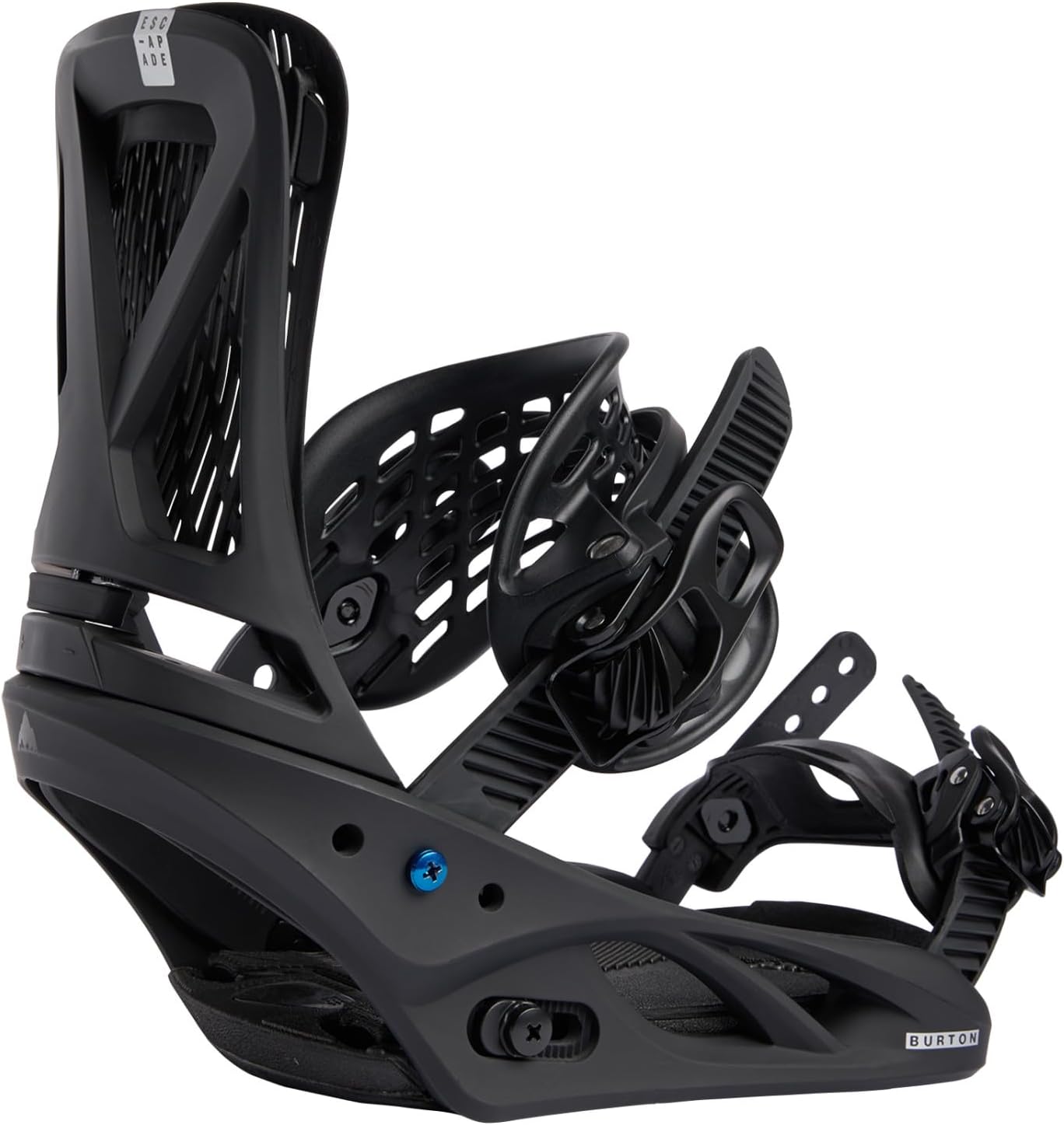
The Escapade is a two-strap binding built on Burton's Re:Flex mounting system, which lets the board flex more naturally and trims weight by removing a conventional disc. It works with all mounting systems, so it fits most boards.
The build is a single-component nylon composite baseplate (blended with short glass fiber for strength) paired with a Kickback Hammock highback that cradles the heel in suspension. The straps are Burton's Hammockstrap ankle strap and Supergrip Capstrap 2.0 toe strap, joined by Double Take buckles that engage quickly and need fewer cranks to tighten. Underfoot you get AutoCANT FullBed cushioning, with dual-density EVA and B3 gel to take the sting out of landings.
Burton backs the baseplate with a lifetime warranty. Straps and highbacks carry a one-year warranty. Both the women's and men's versions follow this same recipe.
How It Rides
The Escapade sits in the medium-to-soft range. That is the honest summary. It supports you on heelside carves, but it does not feel like a stiff plate that fires the board across the hill. Edge response is smooth and progressive rather than instant.
That suits a lot of riding. In the glades and on all-mountain terrain, the forgiving flex lets you adjust your stance and pressure without fighting the binding. The highback has enough lateral give to let you add style, tweak a grab or press a nose, but enough backbone to hold you on a heelside turn. On firm, icy mornings the nylon and cushioning take the edge off chatter, and your knees notice the difference by the end of the day.
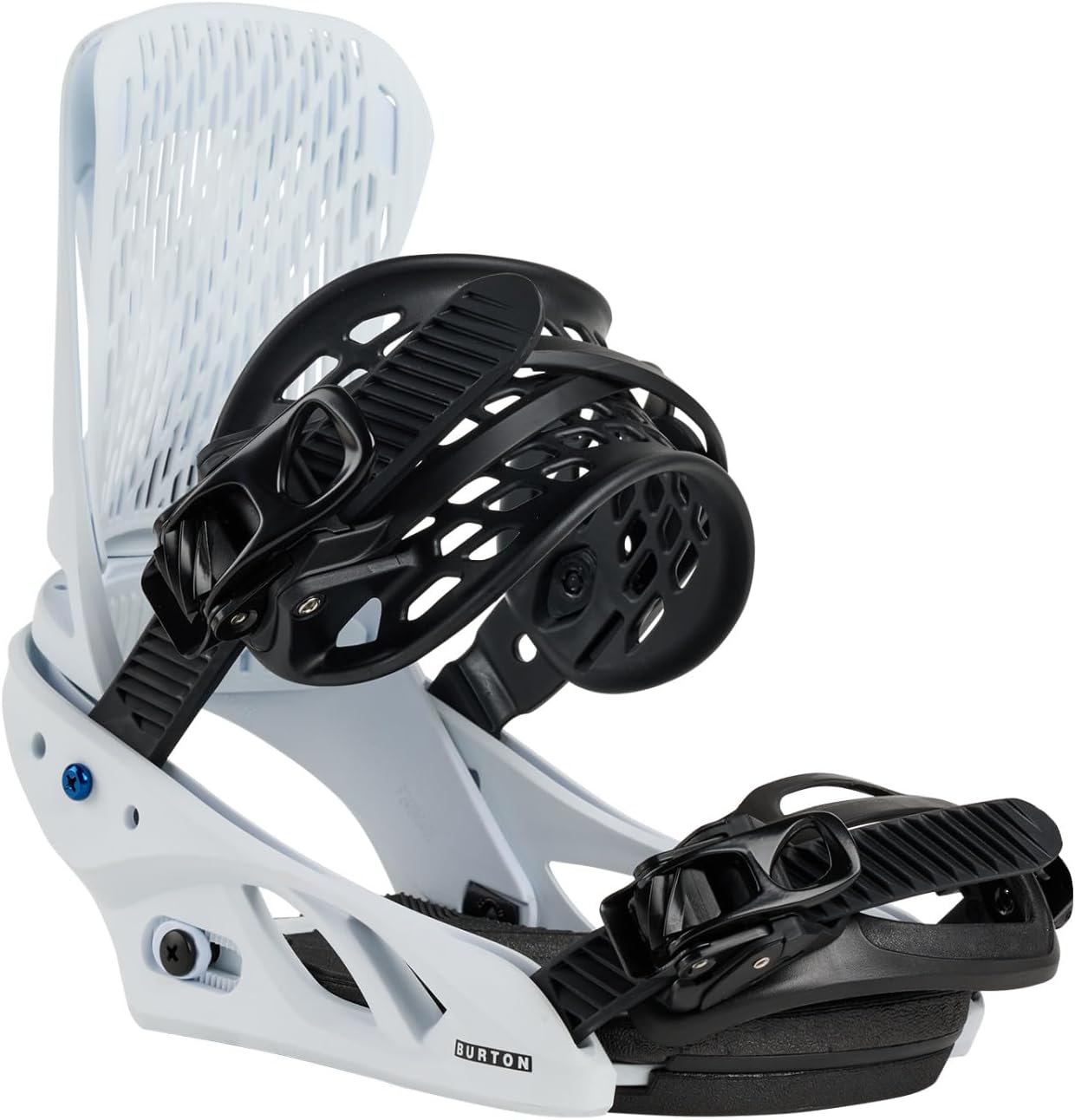
The straps are the quiet star. They spread pressure evenly across the boot, so you can ride long days without loosening them for relief. The buckles ratchet smoothly and predictably, which is exactly what you want when your hands are cold.
Where It Excels
Comfort. This is the main reason owners keep reaching for them. Straps, cushioning and the hammock highback combine for an easy fit that rarely causes pressure points.
Versatility. One binding for park in the morning, trees after lunch, and a mellow carve to the lift at the end. It does not lock you into a single style.
Durability. Owners who have logged hundreds of days on Escapades report straightforward longevity. One long-time owner reached roughly 350 days on a pair, praising how comfortable and smooth they stayed even as the bindings got battered. The nylon holds up in cold temperatures without turning brittle, and the hardware stays predictable.
Warranty. A lifetime warranty on the baseplate removes a lot of worry.
Where It Falls Short
If you want a hard-charging, ultra-responsive binding, the Escapade will feel soft. Riders who step up to a stiffer binding often say they notice more power transferred to the board, particularly with stiffer boards. The Escapade is not a high-speed carving tool.
There is a fit issue worth knowing about. One owner reported that the Re:Flex baseplate has a sharp corner at the heel side that can bite into a topsheet with hard riding. It is not universal, but if you ride aggressively, check the contact points and consider a thin protective pad.
It is also a more mid-range design. It does not have the mechanical edge-to-edge feel of the more expensive Burton bindings, or the skate-tech wobble some riders love.
The Upgrade Debate
Escapade fans often hit the same plateau. After years of riding something that never fails, curiosity wins and they start looking at alternatives. The Now Conda is the one that comes up most.
Owners who have ridden both say the Now offers a slight performance boost, helped by its skate-tech motion and the option of stiffer bushings for carving or softer ones for playful riding. They also describe the Now buckles as feeling a little cheap, though they hold up unless abused. Everyone agrees that both are good bindings.
Here is a sensible way to think about it. If the Escapade works for you, there is no rule that says you have to upgrade. Stiffer bindings reward better technique and stiffer boards. If you are not asking for more response, you may be upgrading to something you do not need.
Pro tip: If your board is getting stiffer, or you want more drive, try a stiffer Burton model before leaving the brand entirely. The jump in response is noticeable.
Who Should Buy It, and Who Shouldn't
Buy the Escapade if you are an intermediate rider or a relaxed advanced rider who values comfort, rides a mix of terrain, and wants bindings that outlast the board. It suits a surfy, all-mountain feel and long days.
Look elsewhere if you carve at high speed on a stiff board, or you want an extremely damp, ultra-responsive binding for steeps. Riders who live in the park may also prefer something built purely for freestyle.
Alternatives
The Now Conda is the standout alternative: slightly more responsive, with skate-tech flex and swappable bushings. The Burton Cartel is the stiffer step up within the brand. For a lighter, tougher feel, the Flux TT and DS are worth comparing.
Verdict
The Burton Escapade earns its reputation. It is comfortable, forgiving and tough, with enough support for most resort riding. It is not the stiffest or most technical binding, and aggressive riders will outgrow it. For everyone else, the Escapade is hard to beat as the binding that lets you stop thinking about your feet.