Mention an aluminum-chassis binding in a shop and you will get opinions. Too rigid. No soul. Not as forgiving as a composite frame. The Ride A-8 sits at the center of that argument. It is built for advanced riders who want an immediate, connected feel, and it does not apologize for being stiff. So the question is simple: is the metal a problem, or just noise?
What the A-8 Is
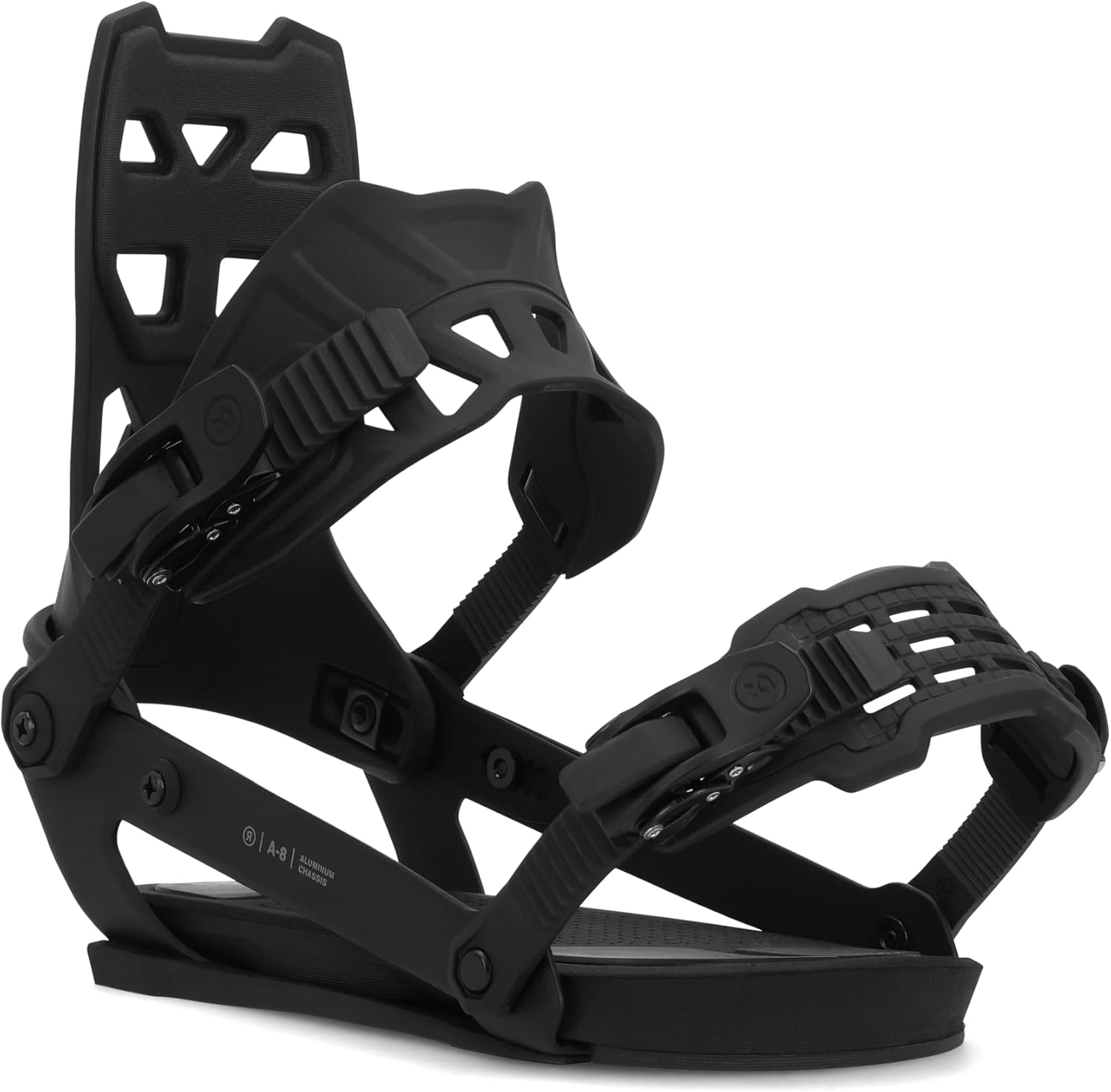
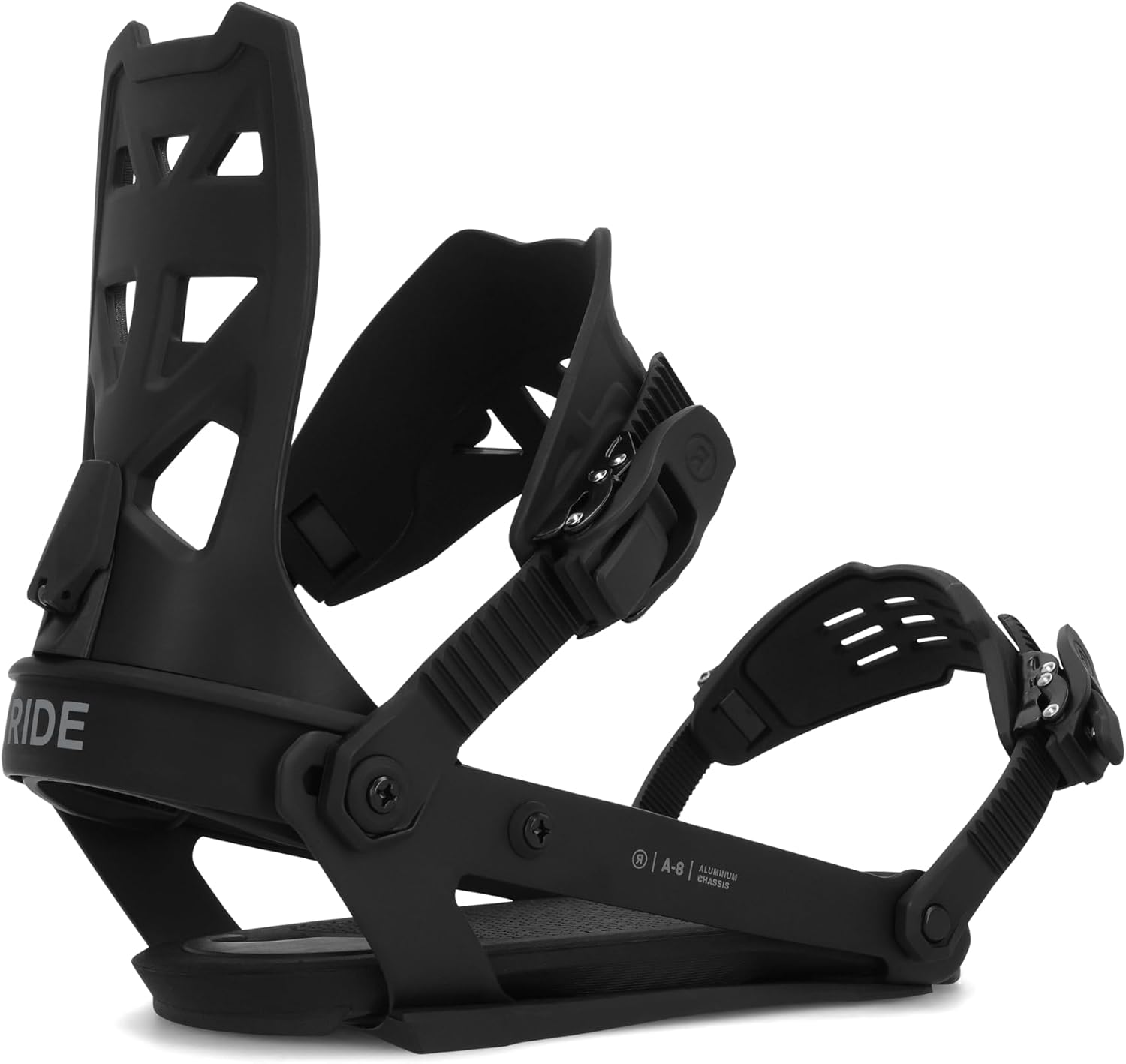
The "A" stands for aluminum, and the aluminum is the point. The A-8 uses a metal chassis in place of the nylon or composite baseplates found on most bindings. Ride lists the aluminum disc as more rigid than its plastic version, aimed at the rider who demands precision.
The rest of the build is traditional. The highback is nylon, Ride's "predictable mix of response and comfort." The ladders use Linkage Ratchets, designed to improve ladder durability and cut down ratchet wag, which is the little bit of play you feel when a strap is cinched but still moves. Skill level is listed as advanced.
On paper that is a no-nonsense, mid-to-high-tier binding. The weight is the one thing you notice before you ride: aluminum is heavier than composite, and you feel it in the hand.
On Snow: Immediate and Planted
The first thing you feel is speed of response. When you lean into a carve, there is almost no delay between your foot and the edge. Power transfer is instant. Nothing takes up slack, nothing feels elastic. The binding goes where you point it.
That is the opposite of the soft "hammock" feel some riders love in other bindings, and it is worth being clear about. If you want a binding that cushions and forgives, this is not it. If you want to feel connected to the board, it is.
On side hits and natural features the stiffness helps. Landings feel stable, and an off-balance touchdown has more margin because the binding does not flex out from under you. The extra mass reads as damp and planted rather than heavy. Chatter at speed gets filtered out well.
The nylon highback gives some lateral give for tweaks and butters, so the whole package is not as rigid as the chassis alone suggests. Think of it as a stiff base with a highback that still lets you move.
Pro tip: Because the base is stiff, pair it with a board and boots that bring their own forgiveness. A very stiff board plus a very stiff binding can feel harsh on rough, icy snow.
Where It Excels
Response. Edge-to-edge transitions are quick and clean. For carving, steep terrain and anything where you want the board to react the moment you ask, the A-8 delivers.
Ratchets. The Linkage Ratchets feel smooth and sturdy. Owners and reviewers who have used them report no sticking or ladder trouble, which is exactly what you want when you are strapping in on a cold chairlift or after a hike.
Stability. The platform stays calm under you at speed and through choppy snow. It suits an all-mountain rider who hunts side hits and steeps more than jibs and boxes.
Where It Falls Short
It is heavier than most composite bindings. You will notice it on a flat traverse and on the lift.
It is also stiff, and that is a trade, not a flaw. In the park, on slow rolling terrain or on a soft, playful board, the lack of dampening on flat landings can feel blunt. Riders who prefer the cushioned feel of a hammock-style highback will probably not warm up to it.
Then there is build quality, covered next.
The Debate: Adhesive and Durability
Owner reports are not all positive, and one theme repeats. On the current generation, the aluminum frame is glued to the base pad, and owners have posted about that adhesive failing, in one case before the bindings were ever mounted. Other owners say the glue only holds the pad in place before mounting, and that once the binding is bolted to the board the pad is clamped securely and the joint does not matter. A few mention the same issue on other Ride aluminum models and say a sanded, re-glued pad stayed put once mounted.
Owners also flagged that one small part, a bushing, looked cheap compared with the rest of an otherwise solid binding. The common advice is sensible: inspect the pads when you unbox, file a warranty claim if anything is loose, and do not mount a binding that arrives damaged.
My read: this is a fit-and-finish annoyance more than a structural weakness, but it is a real QA complaint at this price tier. Check yours before the season starts.
Who Should Buy It
Buy the A-8 if you ride the whole mountain, you value response over cushioning, and you want a binding that feels bolted to the board. It suits advanced riders who carve, hit natural features and ride varied terrain.
Look elsewhere if you want a soft, forgiving, hammock-style ride, if you ride mostly park on a playful board, or if low weight matters to you. A composite-chassis binding will be lighter and softer underfoot.
Alternatives
The Burton Genesis is a softer composite option with a cushioned, flexier feel and a very different ride.
The Union Atlas sits stiffer than the Genesis and closer to the A-8 in spirit, with a different chassis and a reputation for being bombproof. Read our full Union Atlas review.
The Burton Cartel X is a stiff, responsive binding with more cushioning underfoot. Read our full Burton Cartel X review.
None is a clear winner. They are different feels.
Verdict
The aluminum chassis is not something to be afraid of. It is the reason the A-8 rides the way it does: quick, precise and planted. If that is what you want, it earns its place on an all-mountain board. Just inspect the build when it arrives, and go in knowing it is stiffer and heavier than the composite crowd.