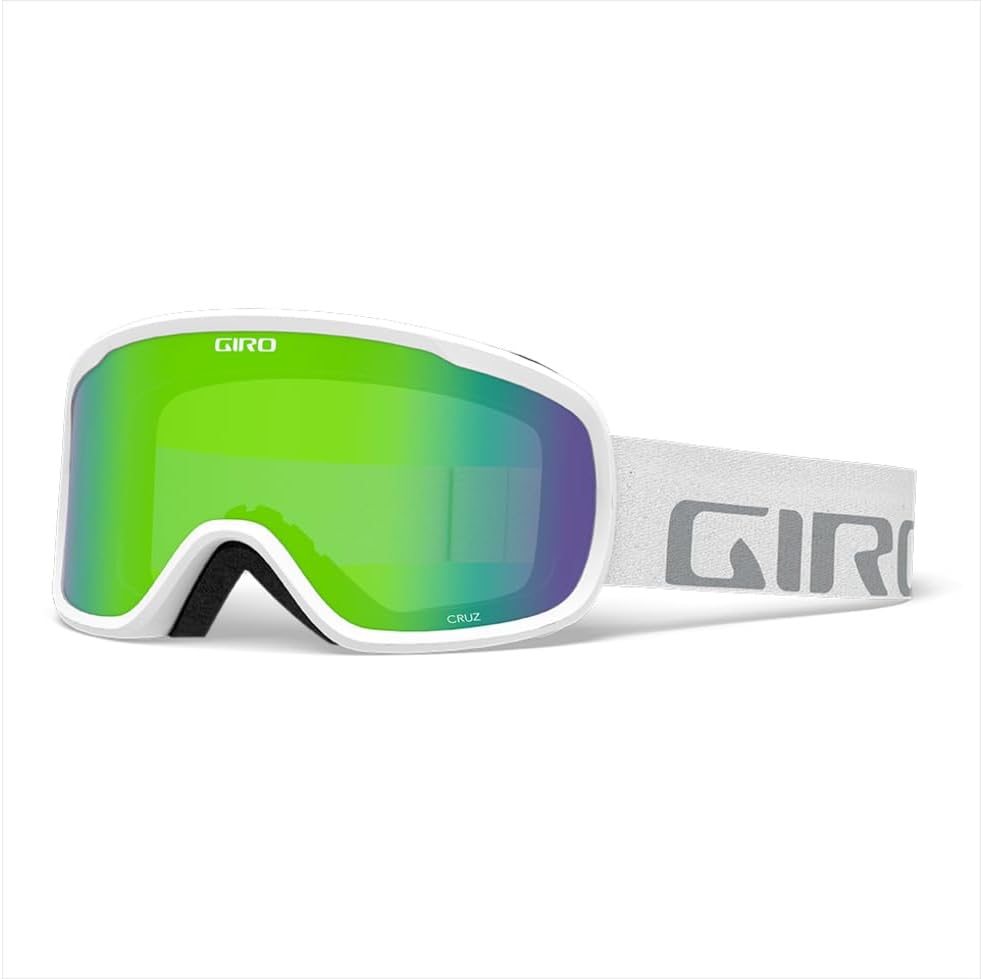
Most riders spend two hundred dollars on goggles and then worry about scratching them every time they brush a branch in the trees. The Giro Cruz is the opposite. It is a tool for the rider who values function and a full wallet. You get a frame, two lenses, and enough change left over for a lift ticket.
The question is whether a budget goggle holds up when the weather turns sour or the pace picks up on a steep groomer.
What It Is: Simple by Design
The Cruz does not try to be anything it isn't. It uses a cylindrical thermoformed lens, a dual-pane lens that is flat side to side and sits close to your face. Giro trimmed the frame rim to widen your peripheral view, and it works. When you are spotting a landing or checking over your shoulder for other riders, the view is wide and clear.
The build is where the price shows. The plastic feels thin, without the dense, premium feel of a high-end frame. The strap adjusts easily and stays put on a helmet, but it lacks the heavy silicone grip you find on pricier models. This is a basic setup built on simple mechanics, not high-tech materials.
On the Mountain: Comfort First
The first couple of runs feel good. The double-layer face foam with a microfleece cover is soft and fits without pressure points. If you wear glasses, the OTG (over-the-glasses) fit is a real win. There is enough room inside the frame for most glasses without pushing them into your nose.
The foam shows its limits after a few hours. If you are hiking for turns or riding hard enough to sweat, it gets damp. It does not move moisture away quickly, and once it is wet, it stays wet. After a full day it can feel compressed and soggy. You notice it most when you put them back on after lunch.
The lens does well in normal light. Clarity is decent for a thermoformed lens. It lacks the optical precision of a high-end injection-molded lens, but most riders will not notice on a sunny day. Flat light is the real test, and the Cruz struggles there. Without contrast-boosting tech, gray bumps on a gray day blend together. You slow down and trust your feet more than your eyes.

Where It Excels: Extras and Toughness
The extras are a big win. The Cruz comes with a spare low-light lens and a bag. A second lens at this price is rare now. Swapping is manual: you flex the frame and snap the new lens into the grooves. It is slower than a magnetic system, and you will probably leave fingerprints on the lens. But it works. If you ride under the lights or in a storm, that yellow lens is your best friend.
Durability is the other strength. These are not goggles you have to baby. Toss them in a gear bag or drop them in the parking lot and they keep going. Owners on Reddit report using them for five or more seasons at thirty days a year. They are not flashy, but they are consistent.
Where It Falls Short: Fog
The main drawback is fogging. The anti-fog coating works up to a point, but the venting is basic. Tuck your face mask too high under the frame and you will see mist within minutes. Be smart about airflow. If you stop moving in humid weather, keep them on your face rather than pushing them up onto a sweaty forehead. Once fog gets between the two lens layers, the day gets much harder.
Pro tip: Keep your face mask below the bottom of the frame and give the goggles a few seconds of airflow on the first chair before you pull them down.
The Budget Goggle Debate
Riders argue about whether budget goggles are worth it. Some say you need contrast lenses like Giro Vivid or Oakley Prizm to ride safely and that flat-light performance is a dealbreaker. Others argue that for forty or fifty dollars you get ninety percent of the performance.
For a beginner or an intermediate rider on groomers, the Cruz is more than enough. You do not need to spend three hundred dollars to see the snow. The gap only matters when the terrain gets technical and the light goes flat at the same time.
Who Should Buy It
If you are a beginner buying your first gear, the Cruz is a smart move. It leaves more money for boots, which matter more. It is also a great pick for night riders who want a dedicated low-light setup, and for anyone who wears glasses.
Look elsewhere if you spend your days in technical trees or fast bowls. You will want the contrast of a premium lens, and the Cruz will feel like it is holding you back.
Alternatives
The Giro Contour keeps the wide view but adds Vivid contrast lenses and a magnetic lens change. It is a more refined goggle at a higher price. If you want top-tier lens tech, the Oakley Flight Deck with a Prizm lens makes flat light much easier to read, though it costs several times as much.
Verdict
The Giro Cruz is an honest, no-frills goggle. It has issues with sweat and fog, but it delivers on its promise of affordable protection. For the rider who cares more about the turns than the logo on the strap, it is a solid buy.