The Burton Counterbalance was one of the most talked-about boards of 25/26 before it reached shops. The pitch is bold: the best of the Thinkers in one deck. The Free Thinker is the poppy, twin-leaning park-and-everything board. The Deep Thinker is the directional, powder-slashing freerider. Squeezing both into one board sounds like a recipe for a mediocre compromise. The question this review answers is whether it is.
What It Is
The Counterbalance sits between two very different Burton boards. It does not scream directional the way the Deep Thinker does, but it carries more poise than a straight twin. Owners and demo riders describe it as a cross of the two, with a little extra float in powder and the energy of a camber board underfoot.
Burton's own riders put it in clear terms: compared to a Custom or a Goliath, it offers similar versatility but leans a little more toward freeride. Park laps are no problem, though the Custom still does that job better. In soft snow it floats much better. One rider called it the board that bridges the gap between the Custom and the Hometown Hero.
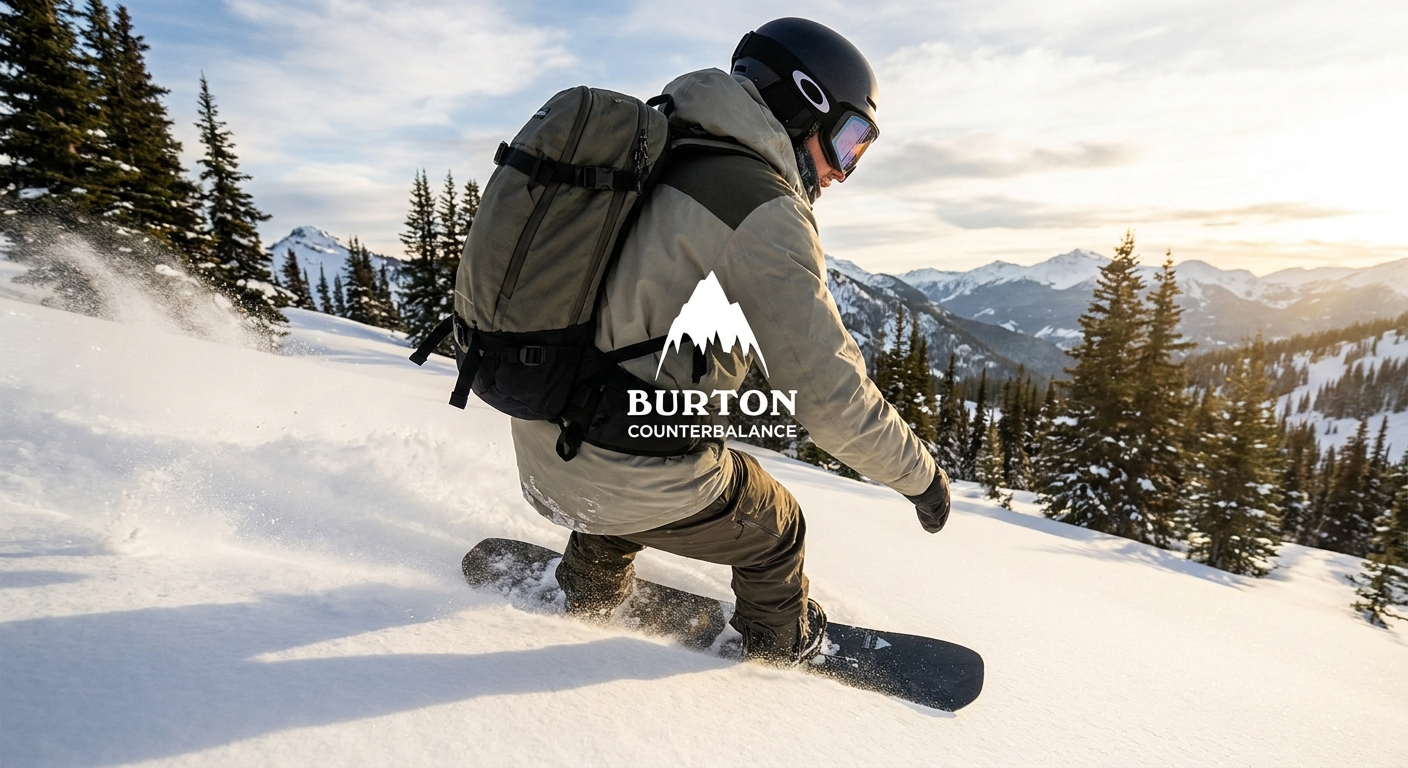
On Snow: Groomers and Carves
On morning groomers, you feel that familiar camber bite. The board has an energetic snap out of the turn that makes every side hit on the run feel mandatory. If you know the Free Thinker's pingy character, you will recognize it here: the board wants to be in the air.
It holds an edge well enough to carve at speed, and it transitions from a long carve to buttery, playful turns without fighting you. Many high-end Burton decks demand your full attention at all times. The Counterbalance is still an expert-level tool, but it feels more intuitive than that.
On Snow: Soft Snow and Slush
This is where the Deep Thinker influence kicks in. In a pocket of soft snow off the side of a trail, the board planes easily and does not need the back-leg burn a traditional twin demands. By the afternoon, when the snow turns into heavy, tracked-out chunder, a pure park twin would buck and deflect, and a pure powder board would feel sluggish. The Counterbalance stays composed. The damping is good, and you can point it through messy snow with confidence you would usually reserve for a heavier freeride board.
It absorbs chatter through the middle of the board while the tips stay stiff enough for heavy landings.
In the Park and on Jumps
It is not a dedicated jib board, and rail-only riders will find it too much board. On medium and large jumps, though, it feels stellar. The swing weight feels centralized, so rotations are predictable and controlled. You do not get the anchor feeling in the tail that some directional boards have when you spin off a lip.
Where It Falls Short
It is not for beginners. The snap and the stiffness that make it fun at speed will punish a rider who is still learning to link turns.
It is a premium board. Like most of Burton's flagship line, it is priced accordingly, and it is new, so shop availability can be thin.
It is not the carver some riders want. The Hometown Hero is a common comparison, and one east-coast rider asked whether the Counterbalance has more bite on hardpack. The answer from a rider who tested it: not really. If you skid on ice, a board built for speed is a better call.
The Debate: How Does It Compare to the High Fidelity and Hometown Hero?
You will see riders weigh the Counterbalance against its siblings. The High Fidelity is the speed and big-carve board. The Counterbalance is the more versatile all-mountain pick with a little extra float. One demo rider preferred the High Fidelity, describing it as more damp and smooth, and thought the Counterbalance felt like a slightly different Hometown Hero. Taste matters here. If your day is long carves, go High Fidelity. If your day is stashes, side hits and a couple of park laps, the Counterbalance makes more sense.
Pro tip: Demo it against the Custom or Hometown Hero if you can. The differences are in feel, and they are easier to notice than to read about.
Who Should Buy It
Buy it if you are an intermediate to advanced rider who hunts stashes in the morning, hits side hits midday, and finishes with park laps. It suits riders who want one board instead of two.
Look elsewhere if you are a pure rail rider, a backcountry rider who wants the extreme taper of a dedicated powder board, or a beginner. If hardpack is your daily terrain and you want maximum bite, consider a stiffer carving board.
Verdict
The Counterbalance is a strong hybrid: fast, poppy, and surprisingly forgiving. It captures the Thinker spirit and puts it into one package that handles most of the mountain. It will not replace every board in your quiver, but for riders who want one deck that does a bit of everything well, it is a very good option.
Rating: 8.8/10