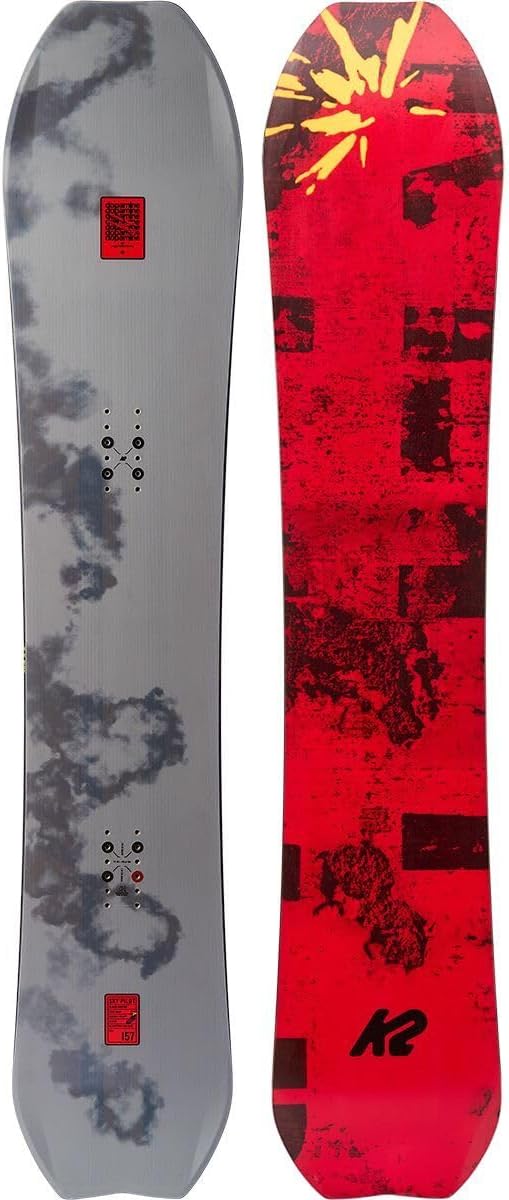
There is a growing category of boards that borrow freeride shapes and keep them loose and playful. Jones builds the Howler, Capita the Matriarch, Rome the Stale Crewzer, Nidecker the Mons, and K2 builds the Sky Pilot. The profiles look alike. The question: what does the Sky Pilot do better or worse than its rivals, and who is it for?
What It Is
The Sky Pilot is a freeride-leaning all-mountain board with a playful streak. Some riders describe it as volume shifted, and its shape does read that way. The flex is approachable rather than punishing. It does not ride like a stiff freeride plank, so you do not need a lot of leg strength to drive it.
The idea is simple: give you the character of a freeride board without the work. That makes it friendly for riders who want to hunt side hits, ride trees and still lay a decent carve on a blue groomer.
First Impressions: Turn Initiation Is the Headline
I demoed the Sky Pilot on a week of groomers, in a size that was too small for me. Even so, the first thing that stood out was how turny it felt. Edge-to-edge transitions are snappy and eager. The board comes around with almost no effort, and it makes tight spots feel manageable.
On lower-angle blue groomers at moderate speed it was a blast. The shape encourages you to find little side hits and flick from edge to edge without the heavy lifting you expect from a freeride-oriented board. K2 clearly knows how to balance a shape to feel intuitive.
The Stability Trade-Off
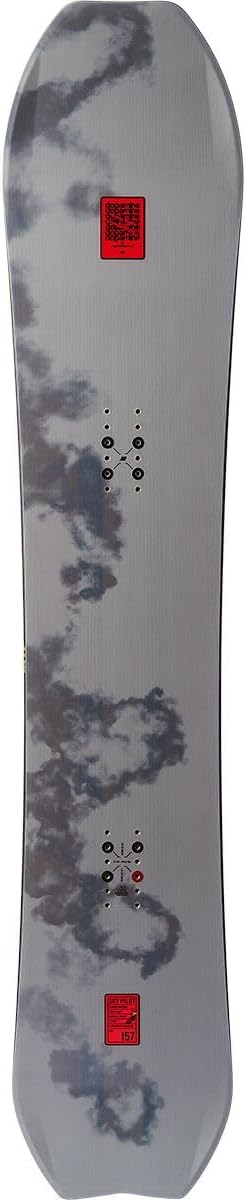
The honeymoon ended as soon as I pointed the nose downhill and carried real speed. The board felt twitchy and unstable, and it lost that locked-in feeling you want on a bumpy late-afternoon groomer. I do not think that is a design flaw. It is what happens when you ride a board that is too short for you. A board on the small end of your range will always feel like a wet noodle when the forces ramp up.
An owner who rode the 160 reports the opposite experience: a confident yet playful freeride board. Another rider noted that the Sky Pilot is supposed to be volume shifted, so it can feel squirrelly if you size down too far and overpower it. The lesson is simple. Respect the size chart, and lean to the longer end if you ride fast.
Where It Excels
Quick turns and trees. The short effective feel makes it a pleasure in tight terrain.
Side hits and play. Easy to pop, easy to land, easy to flick around.
An approachable flex. You do not have to be a heavy hitter to get the board moving.
Intuitive manners. It does not demand constant attention, which makes long days easier.
Where It Falls Short
Stability at speed. Even at the right size, this is not a charger. It rewards a playful line, not a straight one.
Deep snow. Owners of similar freeride-freestyle boards say float is only decent. In a foot or more of fresh, a dedicated powder deck is better. Riders note that this whole category is good in lighter snow and on side hits, but not the best for a true powder day.
Park. It is not built for park-first riding. It will handle a lap, but it is not a park board.
Sizing is critical. The gap between the right and wrong length is bigger than on a standard board.
The Debate: Do You Need This Category?
Some owners of freeride-freestyle boards come away wondering whether they need one at all. These boards are fun, but they sit between two extremes. If you already own a dedicated powder board and a good carver, this style may feel redundant. If you want a single deck that does a bit of everything with a playful accent, it is a very good idea. That is the honest answer to the "do-it-all" promise: they do most things well and none at an extreme.
Sky Pilot, Excavator or Dinghy?
Owners also compare the Sky Pilot with K2's own boards and with the Nitro Dinghy. One rider who has ridden both the Sky Pilot and the Excavator would take the Excavator on a powder day and the Sky Pilot every other day. That rider rides mostly firm East Coast snow and calls it stable at speed, saying they could not go fast enough to make it fail. Another owner who rides the Commonwealth prefers it, though it depends on how much powder you ride. Riders moving up from the K2 Raygun call the Sky Pilot a big step up in performance on hard snow.
The Dinghy comparison comes up for intermediate riders. Most owners would pick the Sky Pilot for an all-day board that is easy on the knees. The Dinghy is wide, so it takes more effort to tip from edge to edge on slow runs. Dinghy fans answer that it turns easily, but they describe it as a powder, trees and tight-turns board, not a daily driver.
Who Should Buy It
Intermediate to advanced riders who want one lively board for groomers, trees, chop and side hits. It suits riders who like to play on the way down, and it fits well as a daily driver with personality.
Who Should Look Elsewhere
Powder chasers, speed demons and park riders should look at more specialized boards. If you ride fast, go up a length rather than down.
Alternatives
The Jones Howler is a similar freeride-freestyle shape with plenty of pop, though some owners find it less special at any one thing. Read our full Jones Howler review. The Capita Matriarch and Nidecker Mons sit in the same neighborhood.
The K2 Excavator is the better pick for deep powder days. Read our full K2 Excavator review. The K2 Commonwealth has more camber and more pop, but less float. Read our full K2 Commonwealth review.
Pro tip: Demo if you can, and ask for the length that matches your size chart, not the one left on the rack.
Verdict
The Sky Pilot is fun, nimble and easy to turn. Size it carefully, and it rewards you with a loose, energetic ride across the mountain. It does most things well and none at an extreme. For riders who want character over specialization, it is a good bet.
