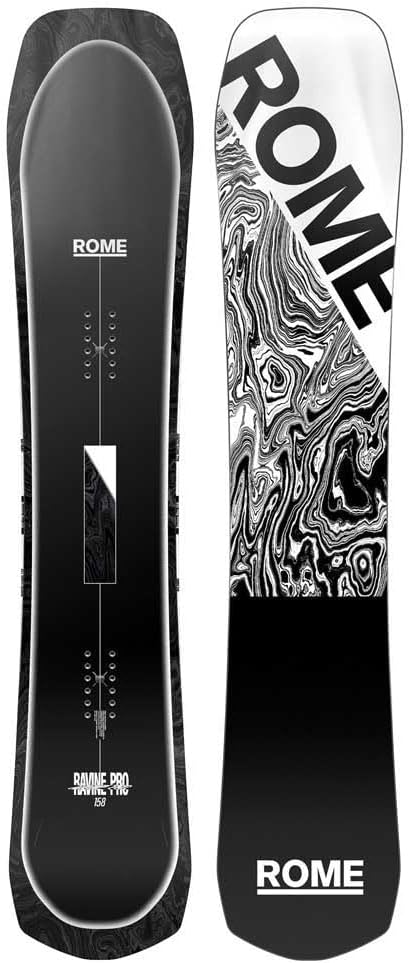
The Rome Ravine Pro is the burly end of Rome's freeride range. It's a directional, tapered board with a stiff 8 out of 10 flex rating, aimed at steep terrain, powder and fast all-terrain riding. It also has the most talked-about top sheet of the season. We will cover both.
What It Is
The Ravine Pro uses a Free-the-Ride camber profile: rocker in the nose, a flat section under the front foot and positive camber in the tail. The shape is directional with taper, so the nose is wide and the tail is pulled in. That combination is built for float in the deep and quick, nimble turns when the terrain tightens.
Rome puts a lot of tech into it. A Directional Diamond 3D nose and the taper handle float. Carbon Omega HotRods supply ollie power and response. Directional Flax Walls in the nose dampen chatter and add power. The result is a board with real backbone and a premium feel.
This board features a gorgeous monochromatic graphic that I think looks amazing and will look great on the rack.
The Graphic Debate
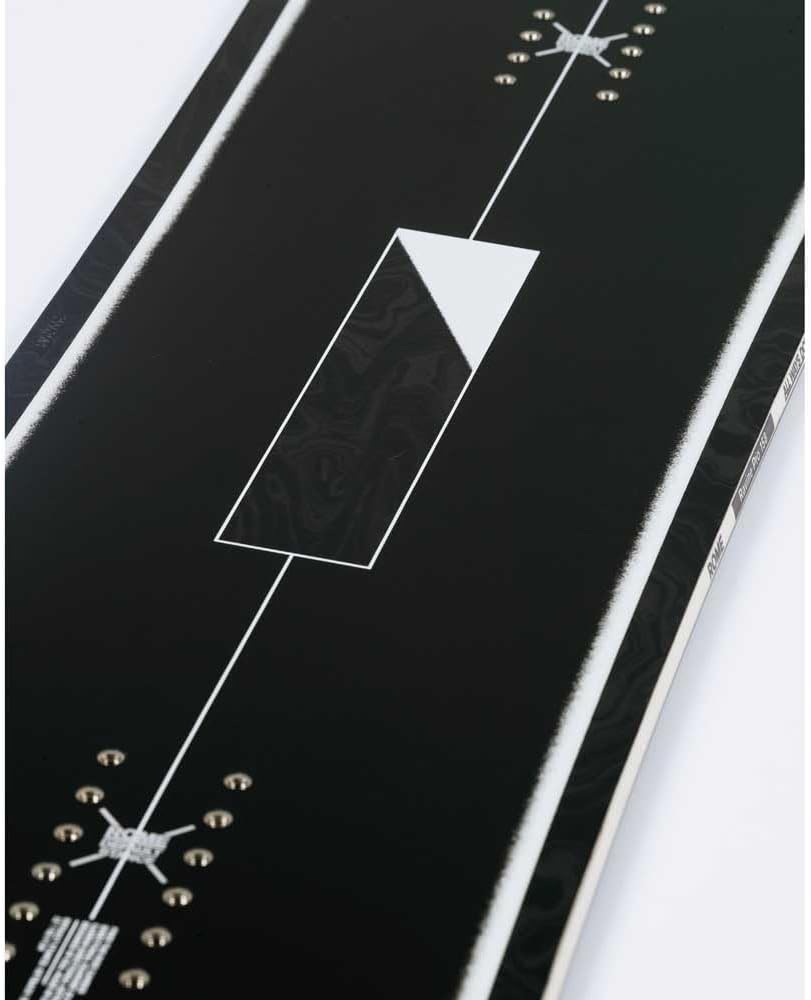
You will hear about the graphic before you hear about anything else. The top sheet has an inner shape drawn inside the board outline, so it looks like a smaller snowboard nested in a bigger one. Some riders find it ugly or cluttered. Others like it, and some say it reminds them of surfboard design.
Here is the take. The inner outline traces the wide nose and pulled-in tail, so it actually shows you the shape. Owners also point out that a board built for deep snow spends most of its life covered in it, so the top sheet is rarely the first thing you notice. It's a matter of taste, and it has no effect on how the board rides. Don't let it make or break the decision.
In the Deep and on the Steeps
This is where owners are happiest. The Ravine Pro gets called a favorite for resort powder days, and the reasons are clear: the rocker nose and taper keep it floating, and the stiff flex keeps it stable when you open it up. On big, steep lines it feels planted and confident.
Owners also report that it feels very hard to catch an edge on, even doing things that should feel sketchy on other boards. It holds well and feels natural at speed. That's a strong report for a stiff board.
On Groomers and Firm Snow
It's not a pure carving board, and owners are honest about it. The profile is not full camber, so on firm snow the flat section under the front foot can feel a little washy when you push hard. If your main goal is railing trenches on hardpack, a full-camber deck will hold an edge better.
That said, it still makes a good turn in the right conditions. Riders who struggled with it often say it felt slow edge to edge or hooky. The common fixes: drive the front foot, start the turn with pressure on it, and follow the full arc of the board instead of skidding the back foot. The stiffness is the cause, and technique is the fix.
The Debate: Too Much Board?
You will find riders who say the Ravine Pro is cumbersome and catchy, and riders who call it immune to catching edges. Both are describing the same stiff board. This is a burly freeride deck, and it rewards control and the right input.
It also needs the right setup. Owners say you want stiffer boots and stiffer bindings. Soft gear wastes energy flexing the equipment instead of the board, and the Ravine Pro will feel unresponsive. Add the stiff flex and the lack of tail rocker, and it makes sense that it demands more from an intermediate rider than a rockered board does.
Pro tip: If you are between sizes, remember it is a wide-nosed, tapered board. Size to your preferred float and stability, not to a carving board's chart.
Who Should Buy It
Buy it if you ride a lot of powder, steeps and trees, you already have the skills to drive a stiff board, and you want something that floats and stays composed at speed. It suits advanced riders and strong intermediates who want a dedicated freeride tool.
Look elsewhere if you want a forgiving first board, a park board, or a dedicated hardpack carver. A softer rockered board will be easier, and a full-camber deck will carve harder on firm snow.
Alternatives
If you want more camber and more edge hold on firm days, look at full-camber all-mountain boards. If you want the same shape in a less stiff package, the standard Ravine in Rome's range is softer and more forgiving. Both give up some of the Ravine Pro's float and power.
The Verdict
The Ravine Pro is a serious freeride board with strong float, stable speed and plenty of power. Its weak points are firm-snow carving and a high demand on the rider. The graphic splits opinion. The ride does not. If you ride deep snow and steeps, it's an easy board to like.