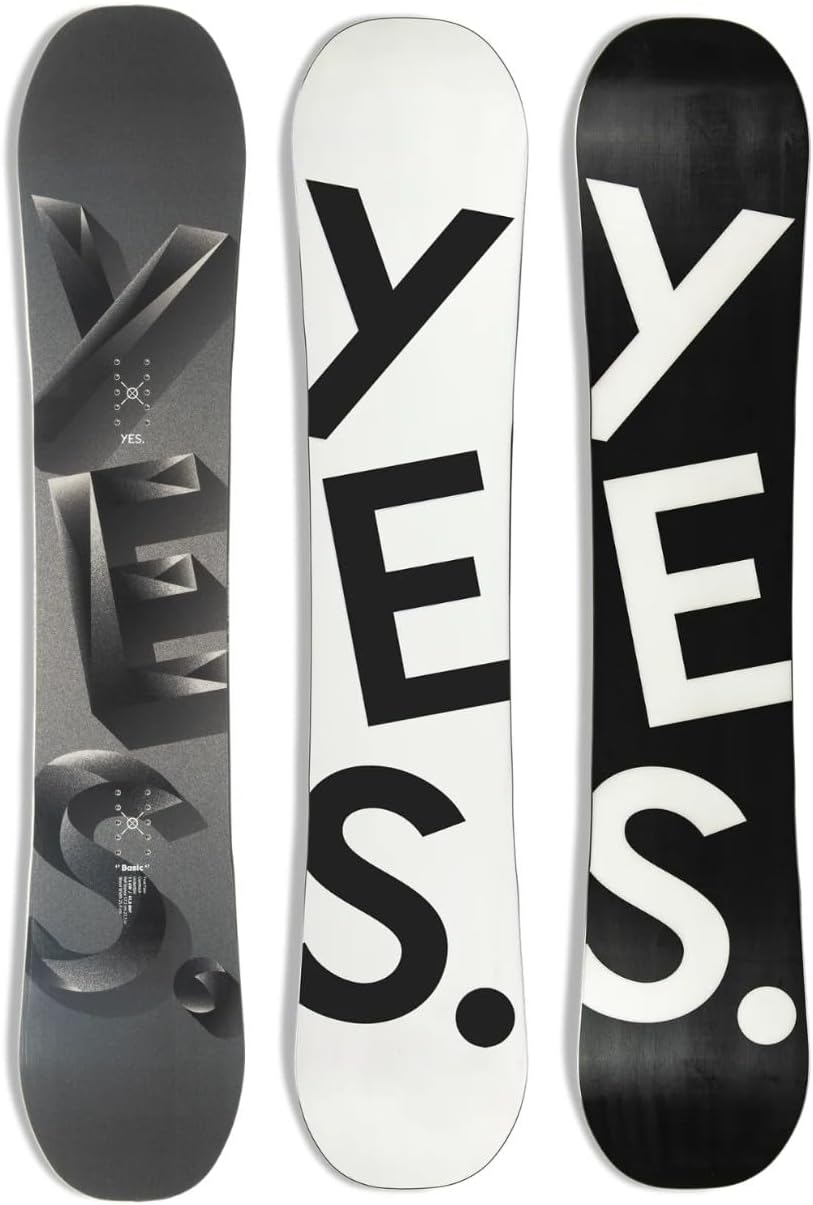
Moving to a new state is always a bit of a reset, both for your lifestyle and your gear. After 14 years of riding and working in the industry, the transition to Colorado’s unique terrain from those high alpine backcountry lines to the manicured park laps at places like Copper or Woodward demands a board that can keep up without feeling like a chore. That’s exactly where I found myself when I started looking into the YES Basic. I’ve been on a Capita for a while now, and while that board has its place, I’ve been craving something with a bit more give. I wanted something softer, something a bit more playful that wouldn't fight me when I was trying to mellow out a bit, yet still handle the variety of a Colorado season.
The interesting thing about the YES Basic is the air of mystery that seems to surround it for some riders. Despite being a staple in the YES lineup, finding a deep, community driven dive into its soul can be surprisingly tough. You see the name 'Basic' and you might think it’s just a beginner’s deck, but for those of us who have spent over a decade on the snow, 'Basic' often translates to 'Foundational.' It’s about getting back to that core feeling of a snowboard that doesn't overcomplicate the ride. When I stumbled upon a killer deal for one, the curiosity I've had about YES as a brand finally hit a breaking point. I needed to know if this board could actually bridge the gap between the aggressive response of a stiff Capita and the buttery, forgiving feel I was looking for.
The Quest for a Softer Flex
One of my main drivers for looking at the Basic was the flex profile. When you’re riding every day, especially after moving to a place like Colorado, you start to realize that a stiff, unforgiving board can be exhausting. I love my Capita for those high speed, hair on fire days, but for everyday laps where I might be hitting a few boxes and then dipping into the trees, I wanted something that wouldn't punish me for being a little late on a transition. The YES Basic is often discussed in the context of being that approachable, mid flex twin that lets you dictate the pace rather than the board taking you for a ride.
The challenge, of course, is that 'softer' is relative. What feels soft to a 14 year veteran might feel like a plank to a novice. But the goal here was clear: find a board that feels intuitive. In the backcountry, you want something that can nose press through some unexpected crust or float a bit without requiring Olympic level leg strength. In the park, you want that same board to not hook up unpredictably on a rail entry. The Basic, from its reputation among those who know, seems to occupy that 'sweet spot' where it remains versatile enough for the whole mountain while leaning into that softer, more accessible side of the spectrum.
Versatility Across the Colorado Landscape
Colorado riding is a mixed bag. You might start your morning with a few inches of fresh powder in the trees and end it doing hot laps in the park while the sun softens everything into slush. That’s a tall order for any single piece of equipment. My interest in the YES Basic was piqued specifically because it doesn't try to be a specialized niche tool. It’s built as a go to. For someone like me, who wants to ride everything from backcountry stashes to the jib line, having a board that feels consistent across those environments is key.
The Mystery of the 'Basic' Performance
It is genuinely surprising how few deep-dive reviews exist for a board that seems so well-positioned in the market. Maybe it’s because the name itself suggests there isn't much to say—it’s 'Basic,' right? But as any experienced rider knows, the most basic things are often the hardest to get right. If YES has managed to create a board that can handle 14 years of riding experience, provide a softer alternative to the high-end stiff decks, and do it at a price point that makes it a 'killer deal,' then they’ve caught lightning in a bottle.
Ultimately, the appeal of the YES Basic for me comes down to that desire for a more relaxed ride without sacrificing the ability to charge when the terrain gets interesting. Whether I’m dropping into a steep face or just cruising the groomers with friends, the prospect of a board that is a bit more forgiving than what I’m used to is incredibly enticing. It’s about finding that joy in the flex and the turn again, rather than just surviving the mountain on a stiff piece of carbon and wood. If you can find a deal on one like I did, the risk seems minimal for a board that potentially offers so much versatility.