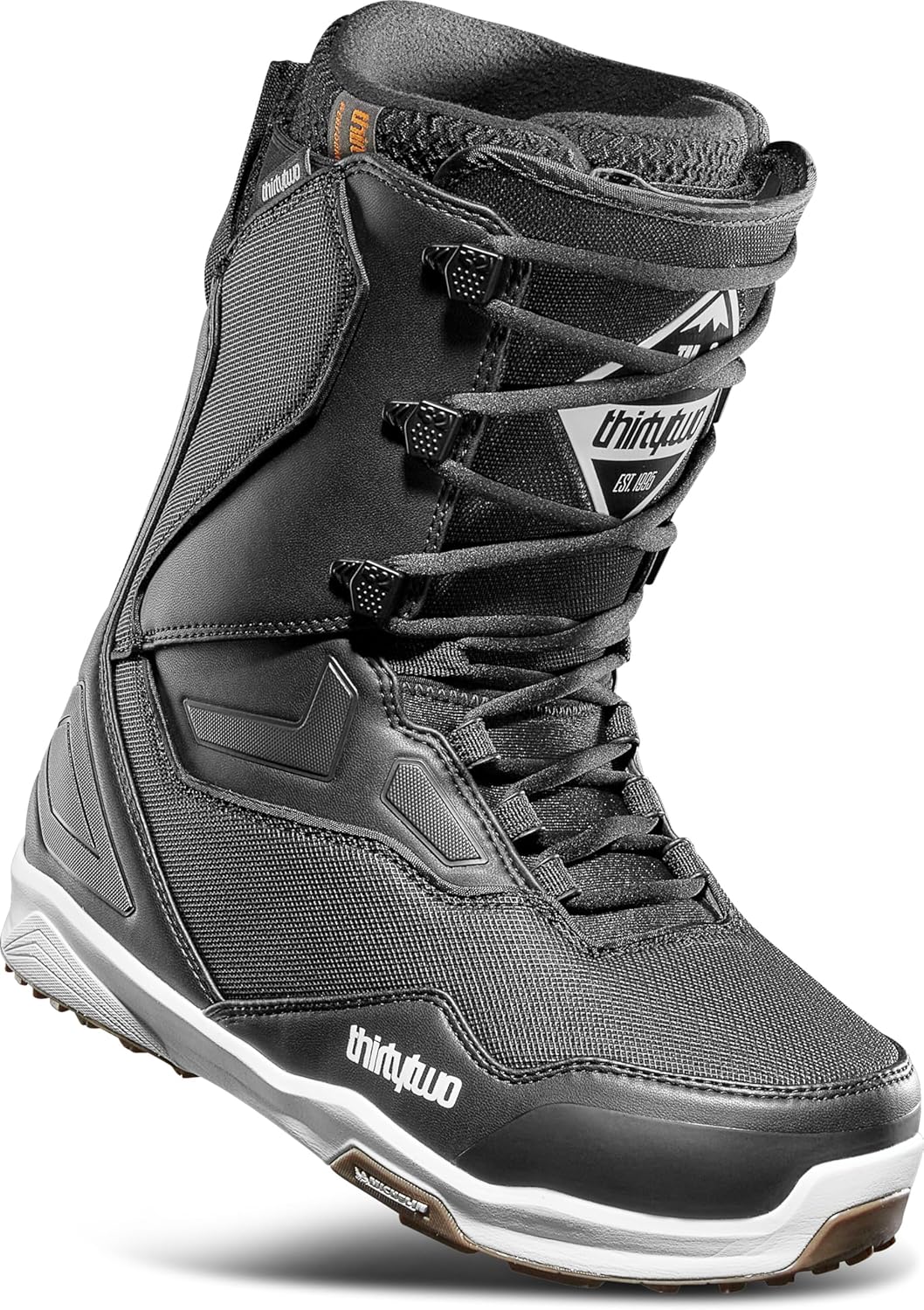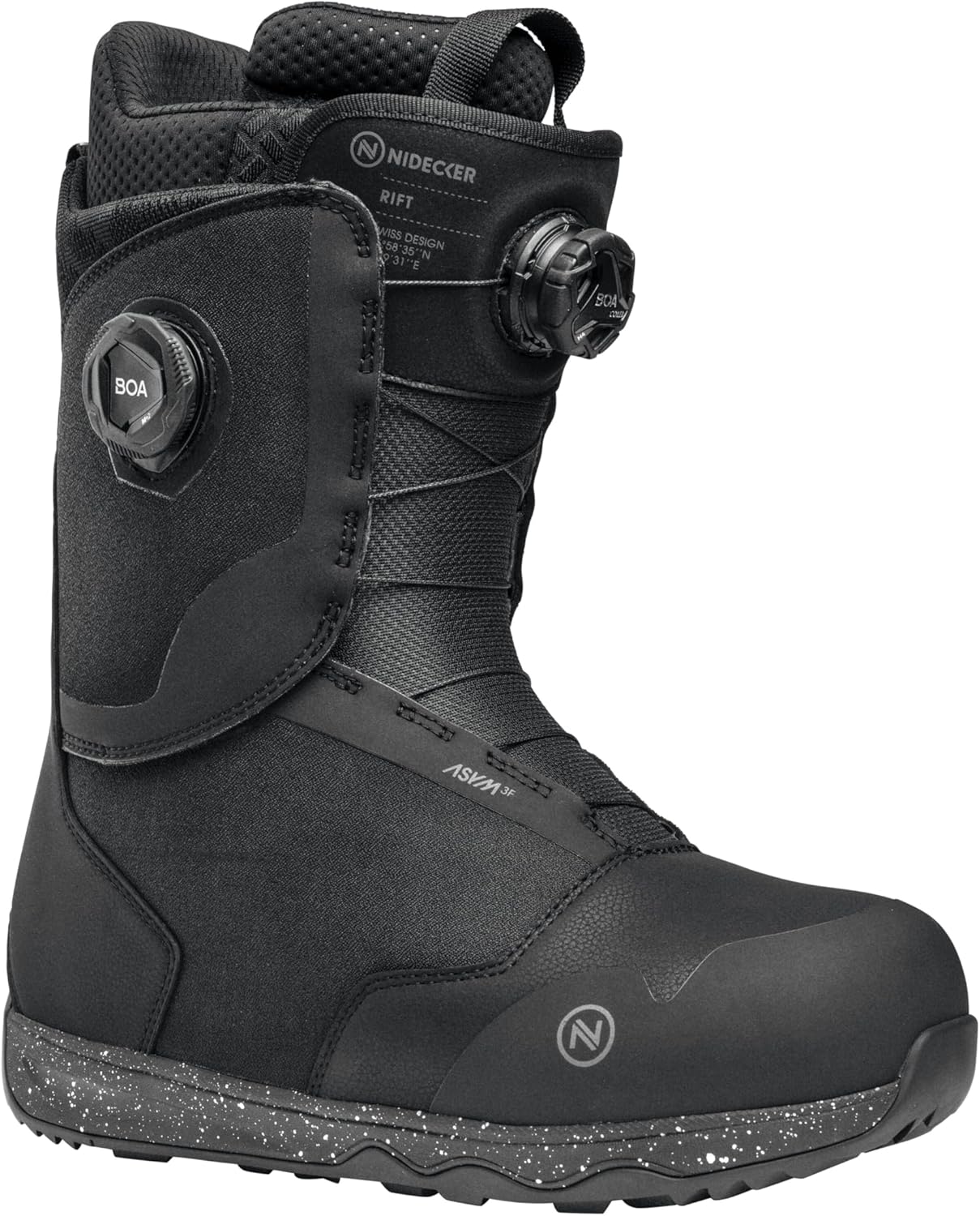
The Nidecker Rift is a medium-flex snowboard boot with dual BOA dials and a snug, performance-minded fit. It sits between a soft park boot and a stiff freeride boot, which is where most all-mountain riders spend their days. Out of the box it feels well built, and it settles in fast.
The short version: it breaks in quickly, holds your heel down and gives you good board feel. The catch is the fit. It runs snug, and it is a poor match for wide feet.
What You Are Strapping Into
The Rift uses two BOA dials. The lower dial pulls the forefoot and instep tight. The upper dial handles the cuff. That split matters more than it sounds, because you can run a firm heel hold with a looser shin, or the other way around.
Inside, the liner has its own double velcro strap and a draw cord. So before you touch a dial, you already have two ways to lock down your shin. Add the top dial and you get three. It is a lot of adjustment for one boot, and it is the reason riders with average feet find the Rift easy to dial in.
Nidecker pitches the Rift at intermediate to advanced riders who ride the whole mountain. The flex is medium, and the sole is Nidecker's Ascent outsole.
Fit and Break-In: Give It a Few Hours
The Rift fits close. Most riders feel pressure at the toe pack on the first day. That fades within a few hours as the liner compresses. A short wear-in at home helps, so put them on for an evening on the couch before your first day out. After that, owners describe a locked-in feel with little heel lift.
Sizing is the one place to slow down. Nidecker publishes a printable foot guide, and owners report it points to a half size up from their usual boot. Several say they would have been more comfortable had they followed it.
Pro tip: Print the Nidecker size guide and measure both feet in the evening, when they are at their largest. Order from the guide, not from your sneaker size.
How It Rides
The flex is medium, and it is a well-judged medium. It gives enough forgiveness to flex into a butter or soak up a landing. It also has enough backbone to drive an edge on groomers. Lateral support holds up when you carve, and the boot does not fold under a stiffer board and binding.
That makes it an all-mountain boot in the true sense. Groomers in the morning, side hits and trees after lunch, and the odd park lap on the way down. It does all of it without asking you to change anything.
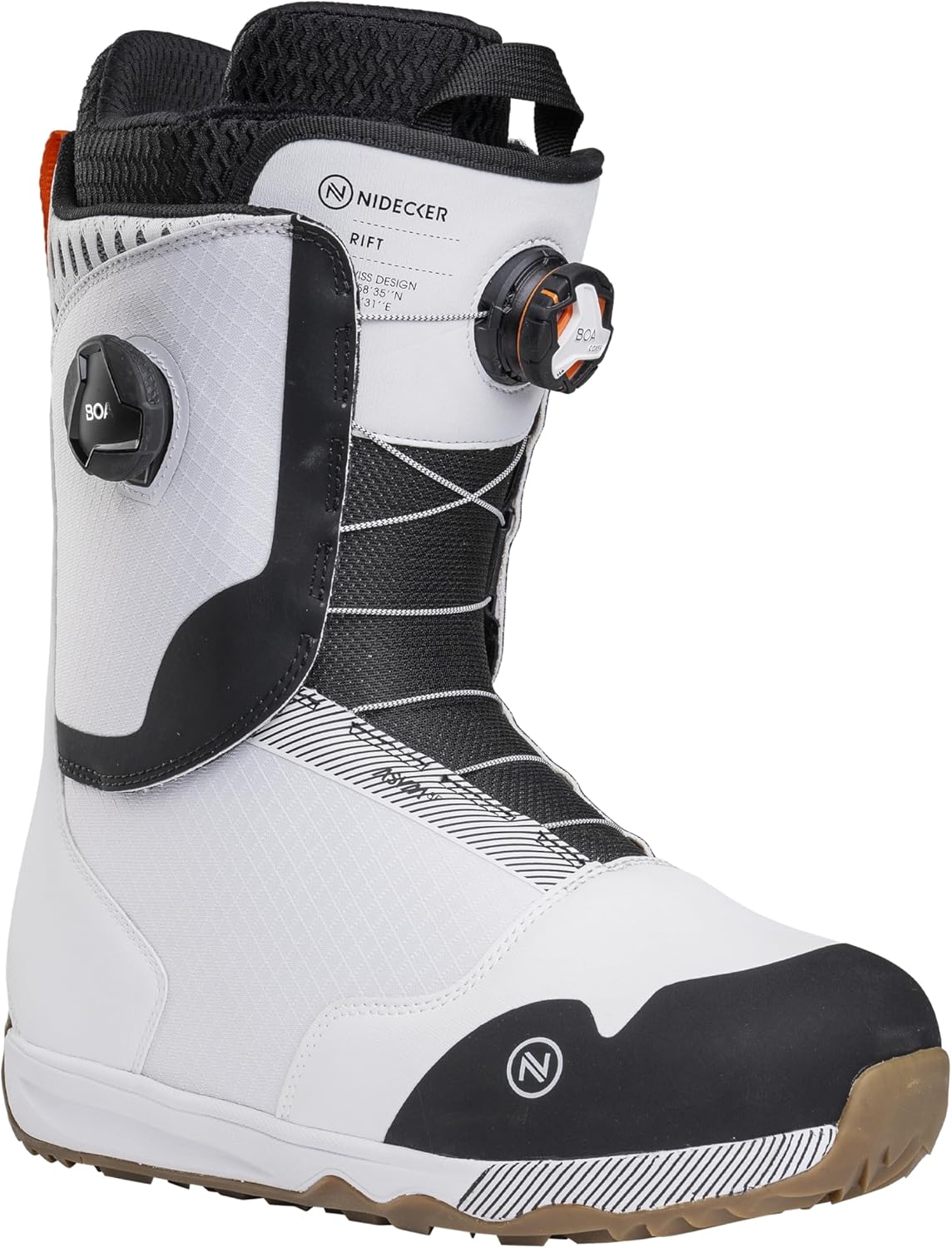
The dual BOA earns its keep on the lift. You can ease off the cuff on the ride up and cinch it again before you drop in. Owners rate the system highly. Because the liner is also adjustable, some riders find they loosen the dials as the day goes on and their feet swell.
Where It Falls Short
Wide feet are the big one. Owners with wide feet report the boot is tight. One owner who moulded the liner found that a size larger than their sneaker size fit very well, but that is a workaround, not a fit. If you know you have a wide foot, start with a boot built on a wider last.
The toe pack on day one is tight. If you skip the wear-in and ride a full first day, you will feel it. It does go away, but it is not the out-of-the-box comfort some boots give you.
A few riders also find the liner roomy around the shin, the opposite problem from the toe pack. If that is you, the liner's velcro and draw cord are the first thing to tighten.
And it is a middle boot. It is not the softest boot in the line-up, and it is not a stiff freeride boot. If you live in the park or ride big lines at speed, there are better tools.
What Owners Argue About
Sizing is the debate. Some owners order their usual size and live with a tight first few hours. Others follow the Nidecker guide, go a half size up, and say that was the right call from the first run. The owners who followed the guide sound happier.
The other split is about how much adjustment you need. Some riders love having liner laces, velcro and two dials. Others find themselves fiddling with it all day. Neither group says the system fails. They just use it differently.
Who Should Buy It (and Who Should Look Elsewhere)
Buy the Rift if you are an intermediate to advanced rider who rides the whole mountain and wants a medium flex with a snug fit. It suits narrow to average feet best. If you like your heel held down hard and you want to tune upper and lower tension separately, this boot was built for you.
Look elsewhere if you have wide feet, if you want a soft, buttery park boot, or if you want a stiff boot for charging. You will also want something else if you hate breaking in boots at all.
Alternatives
The Ride Lasso is the safe pick. It has a medium flex that suits most riders and all-day comfort with no gimmicks, and it is the boot plenty of riders measure others against. Read our full Ride Lasso review.
The Salomon Dialogue is a medium-flex all-mountain and freestyle boot with a dual BOA option. Owners find it stiffer than its price suggests, so it is a good fit if you want a touch more support than the Rift. Read our full Salomon Dialogue review.
The Burton Ruler BOA Wide is the one to try if the Rift is too tight across the foot. It is comfortable from day one with a wider last, though owners say it softens fast. Read our full Burton Ruler BOA Wide review.
Verdict
The Rift breaks in fast, holds the foot well and gives good board feel. The dual BOA and the adjustable liner let you tune the fit more than most boots at this level. Check the Nidecker size guide before you order, and expect a snug fit. For the right foot, it is an easy boot to like.