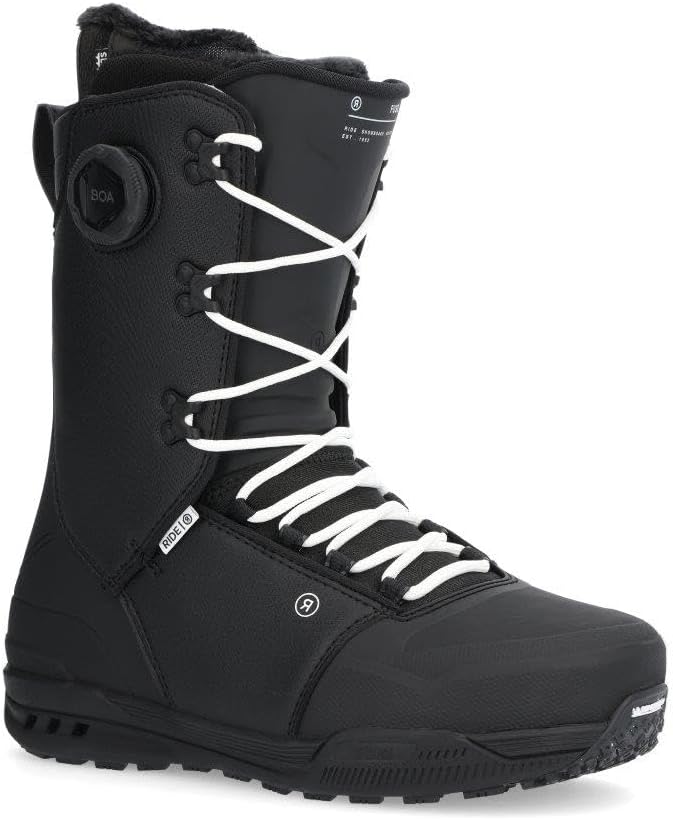
Plenty of riders want a stiffer boot but are not ready to give up traditional laces, and plenty want the convenience of BOA but not the one-size tension it brings. The Ride Fuse tries to give you both. It is a hybrid: traditional laces across the front, plus a BOA dial that tightens the tongue and holds the heel down. The question is whether that mix delivers real support, and for whom.
What It Is
The Fuse is one of the stiffer boots in Ride's lineup. Ride rates the feel at 8 out of 10 and describes it as a stiffer-flexing boot that riders of all ability levels will love. It is sold in Ride's park collection, but it works across the mountain: firm enough for steeps and carving and still responsive for freestyle terrain.
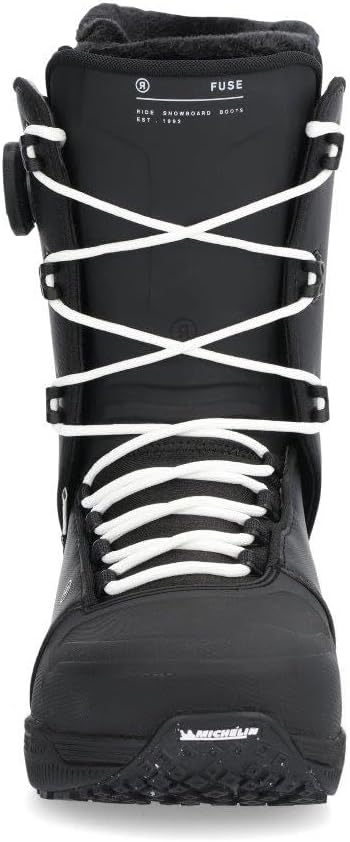
The closure is a traditional lace with a Tongue Tied BOA system. The laces on the outer let you set tension across the top of the foot exactly where you want it. The Tongue Tied dial pulls the tongue back and down, which tightens the heel pocket without cranking the whole shell. The sole is Ride's Hybrid Fiberlite outsole.
The Hybrid Lacing Advantage
Traditional laces are very good at one thing: letting you tailor pressure. You can snug the toe box, loosen over a sensitive instep, and lock the ankle, all by feel. The downside is that laces alone can struggle with heel lift, because the shell tends to pull forward and up when you are hammering a toeside turn.
The BOA Tongue Tied dial solves that. By pulling the tongue back and down, it seats the heel and holds it, so you can use a gentler lace tension elsewhere. It is a simple idea that works well in practice. You still have to tie laces at the start of the day, which takes longer than a one-dial BOA, but the trade is finer control and less pressure on the foot.
Flex and Feel
On snow, the Fuse is firm. It gives you a good deal of stiffness with some flex left in it, which makes it more livable than the most rigid boots. Owners say if the boot fits your foot, it is great: stiff but not locked solid.
The stiffness helps most where you would expect. When you are initiating a high-speed carve or standing on a steep face, the board responds right away, with little lag between your shin and the edge. When you are landing a drop, a boot that is too soft folds and costs you control; the Fuse has enough structure to be a stable platform and help you ride out landings rather than wash out.
Stiff boots demand more from your legs. You work harder to flex into them, and the first few days may feel unforgiving. That is normal. Expect a short break-in while the liner and shell settle.
The Fit Question
Fit is where Ride boots live or die, and owner comments suggest the Fuse does well. One rider who has tried the Insano, the K2 Thraxis and the Burton Ion described the Fuse as softer than those, but with a superior fit, and said they keep going back to it. Another said the burrito liner is comfortable and the asymmetric lacing eased pressure on their foot.
The takeaway is the usual one: the best boot is the one that fits your foot. If Ride's shape matches your foot, the Fuse is likely a great match. If it does not, the rest of the specs will not save you. Try it on, ideally in the shop, and walk around in it.
Where It Excels
- Support. A stiff, structured boot for steeps and carving.
- Heel hold. The Tongue Tied dial seats the heel without over-tightening.
- Fit. Owners rate the fit and the burrito liner highly.
- Tunability. Laces give you pressure control that single-dial BOA cannot.
Where It Falls Short
- Lace time. Slower to put on than a full BOA boot.
- Break-in. The stiffness takes a few days to adjust to.
- Leg demands. Stiff boots ask more of your muscles.
- Not the stiffest. Riders after maximum rigidity will find stiffer options.
Who Should Buy It
The Fuse is a good fit for intermediate to advanced riders who want a firmer boot for carving, steeps and aggressive all-mountain riding and who like the feel of laces with a BOA assist. It also suits freestyle riders who want a stiffer, more supportive boot than a typical park option. Look elsewhere if you want the fastest on-and-off, if you prefer a very soft and playful boot, or if you want the stiffest boot you can buy.
Alternatives
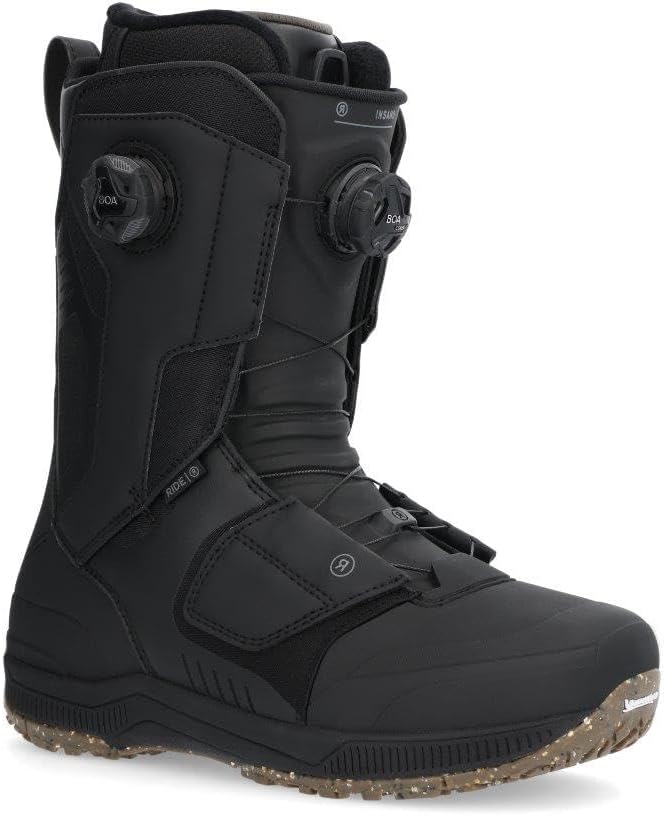
Ride's Insano is stiffer. The Ride Lasso and Lasso Pro are full BOA options with strong heel hold. K2's Thraxis is stiffer and uses a triple BOA system. Read our full Ride Lasso review.
Verdict
The Ride Fuse is a firm, supportive boot with a hybrid closure that works. It will not suit everyone, and it takes a little longer to put on. But if the fit works for your foot, it gives you real stiffness, a locked-in heel and the ability to fine-tune the pressure. That is a strong package.