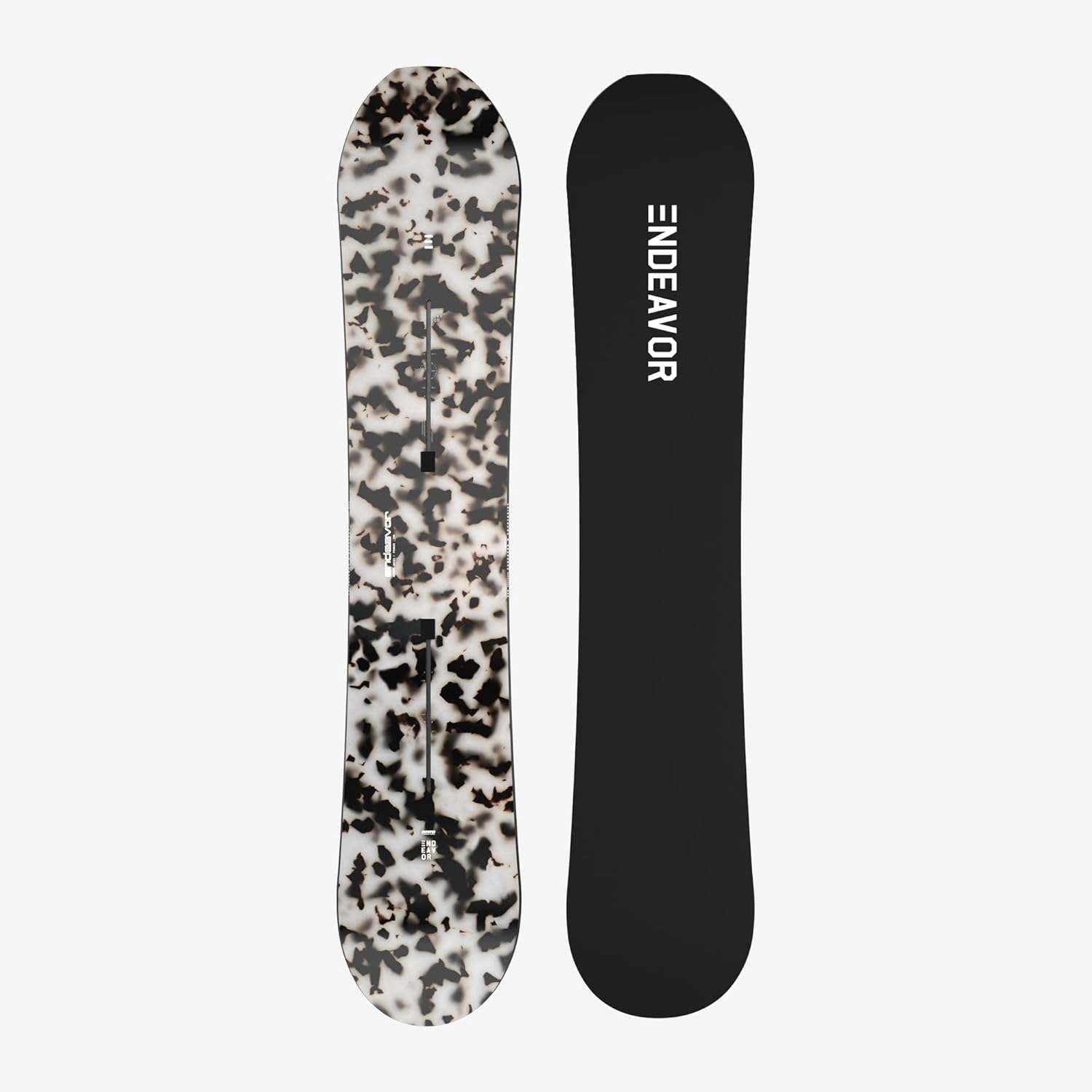
Looking for one board for the whole West Coast is a tall order. You get heavy maritime powder, bulletproof morning ice and afternoon slush, sometimes in the same week. The Endeavor Pioneer is one of those boards people mention as a best-kept secret or a good deal, but there is no big wall of reviews to back it up. Endeavor is a Vancouver-based company with a solid reputation, and the Pioneer is built for riders who want a do-everything deck. This review pulls together what the specs and owners say.
What It Is
Endeavor sells the Pioneer as a board for advanced riders who want performance across the mountain. It has a directional shape with a blunted nose and a traditional tail, which Endeavor describes as a directional twin, and a multi-camber profile. The listed flex is medium and the terrain label is freestyle.
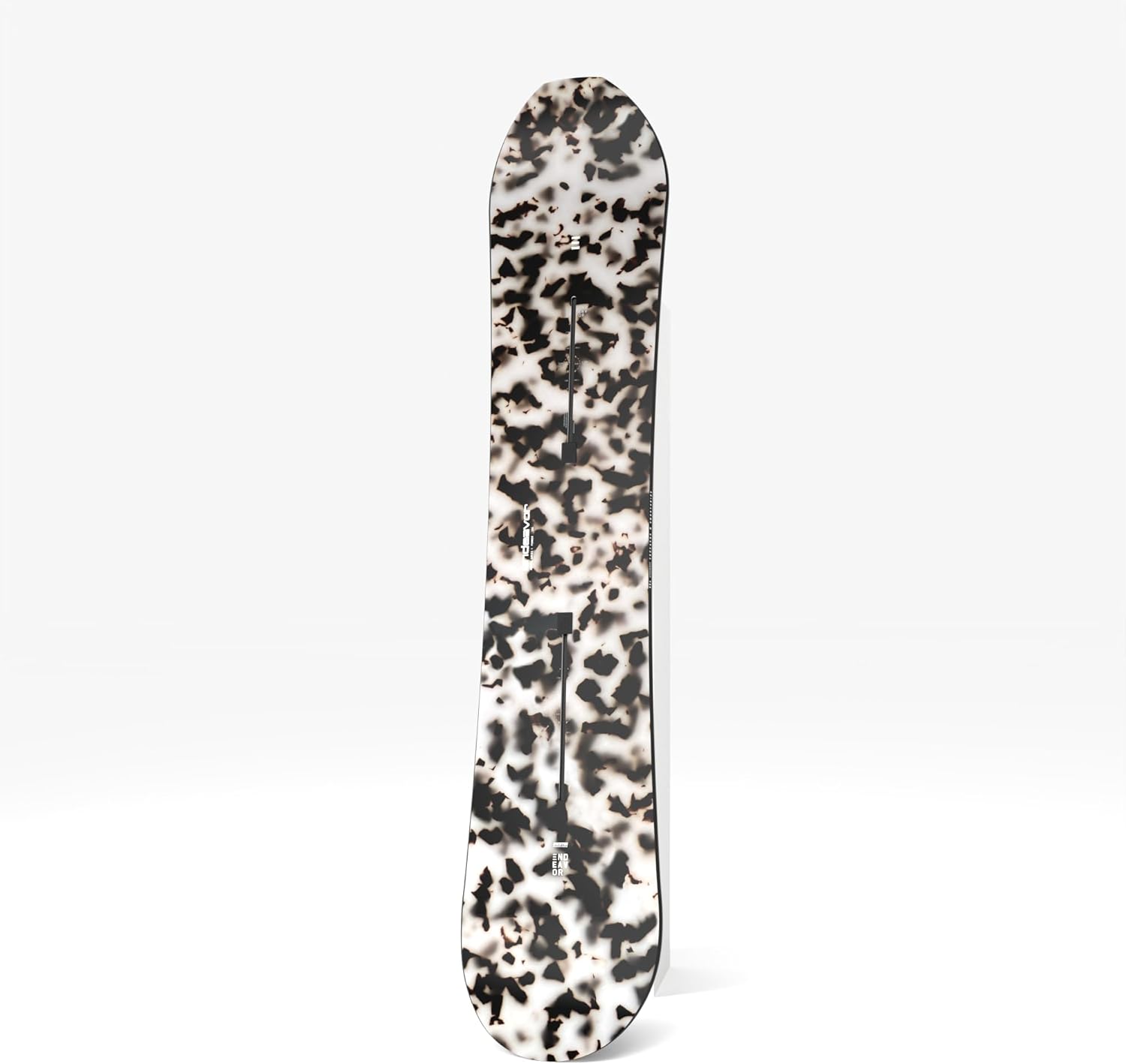
Under the top sheet, the core is poplar and paulownia with birch reinforcement, which keeps weight down. It is blended with pre-cured tri-axial fiberglass for lively pop and torsional rigidity, plus Inertia Carbon Rods for snap. Smoothride sidewalls, a Dura Surf 4001 sintered base and The Channel round it out.
The Channel Question
The Channel is the feature that gives some riders pause. It replaces traditional inserts with a single track, so you can slide your bindings to the exact stance position you want instead of being locked into fixed increments. It is a great option for riders who obsess over stance.
The usual concerns: you need Channel-compatible bindings (most modern bindings are), and you should check your hardware now and then. Owners have a more relaxed view. One long-time Endeavor rider says the Channel never slips or loosens, and that Endeavor has improved on the system. The same owner says the board is also available with standard inserts, and another buyer reported a Pioneer with regular screws instead of the Channel. So if the Channel worries you, check which version you are buying.
How It Rides
Owners who have ridden Endeavor boards for years say the Pioneer is close in shape to the Ranger, but a little stiffer thanks to the tri-axial fiberglass. The shape makes for snappy turns when you lean into them.
It is stout rather than noodle-soft. If you are lazy with your form, the board will take you for a ride. If you drive into your turns, you get good energy back out of the edge, and the carbon and fiberglass give you pop for side hits.
In variable snow, the damping stands out. A newer owner on a slushy day described it as much smoother than their previous park board. The board handles chunder and chattered-out snow without sending every vibration up into your shins, which counts on long days where snow texture changes every few hundred feet of vertical.
Where It Excels
Versatility. It sits in the middle. It has enough nose for a soft day and enough balance to ride switch and hit the park.
Build quality. Owners praise the construction and the quality control, and they report no issues across several Endeavor boards over many years.
Value. Endeavor boards often sell for far less than similar boards from bigger brands, which makes the Pioneer an attractive pick.
Where It Falls Short
It does not master any one niche. It is not a powder boat with a swallowtail, and it is not a soft jib board you can press with no effort. If you want a specialist, look elsewhere.
Limited feedback. There are few reviews or videos, so you are partly trusting the specs and a small group of owners.
It may feel stiff to casual riders. The tri-axial layup and medium flex ask for input.
Channel compatibility. If you buy the Channel version, you need compatible bindings and should check your hardware.
The Debate: Is the Channel a Risk?
You will see riders hesitate over the Channel. The practical view from owners: it does not slip or loosen, and you can avoid it altogether with a standard-insert version. The caution is mostly about unfamiliarity, not performance.
Pro tip: Check which mounting version a retailer is selling before you order, and confirm your bindings fit.
Who Should Buy It
Buy it if you want a one-board West Coast quiver, like adjustable stance options, and want a lively directional twin that does not cost as much as a big-brand flagship. It suits intermediate to advanced riders who like to drive their board.
Look elsewhere if you want a super-soft park board, a dedicated powder deck or a very forgiving beginner ride. A Burton Custom or a CAPiTA Birds of a Feather is a more widely tested all-mountain alternative.
Verdict
The Pioneer is a well-built, good-value, directional twin with a lively tri-axial feel. It will not turn heads on name alone, but it rides well and shows good quality. For riders who value feel over hype, it is a smart pick.
Rating: 7.8/10