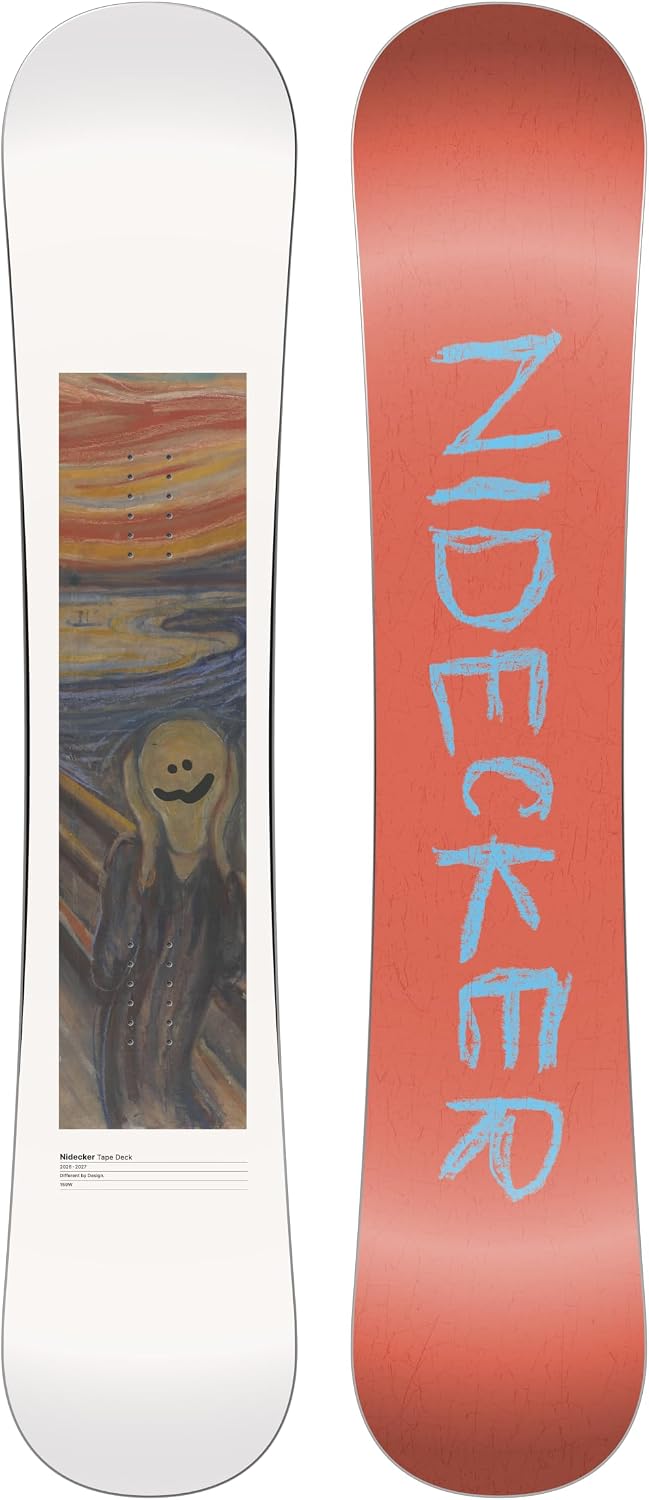
You see the Nidecker Tape Deck on the rack and you want it. The graphic hits a nostalgic nerve: a classic cassette, all clean lines and retro charm. Most riders will admit to being a little shallow about gear. If a board looks this good, you find reasons to buy it.
But boards are for riding, not for hanging on a wall. The question is whether the build inside matches the style outside. It is a freestyle board at its core, but Nidecker built it to handle more than park laps.
The Build: Classic Recipe, Modern Materials
The core mixes poplar and paulownia. It is light and feels strong underfoot. Nidecker runs carbon stringers from the inserts out toward the tips, which help the board snap back when you load it up for an ollie. A damping layer under the topsheet takes the edge off chatter. We have all felt that high-frequency buzz that numbs your feet by noon. This layer soaks a lot of it up.
The fiberglass is a classic biaxial weave, with more glass than usual. That makes the board responsive. It is stiffer than a dedicated jib board but stays agile. The base is a hybrid that sits between extruded and sintered. You get much of the glide of a sintered base without needing fresh wax every few days. It suits the rider who would rather be on the snow than in the tuning room.
On-Snow Impressions: The Cruiser Feel
On snow, the Tape Deck feels like a cruiser. The camber is full but mellow. It gives you traditional pop without the catchiness of an old-school race board. Edge to edge it is smooth. It is not as playful as the Capita Spring Break Resort Twin, and you have to work harder to butter it, but the stability is there. The stiffness shows at speed. It does not wash out when you lay down a carve on a groomer.
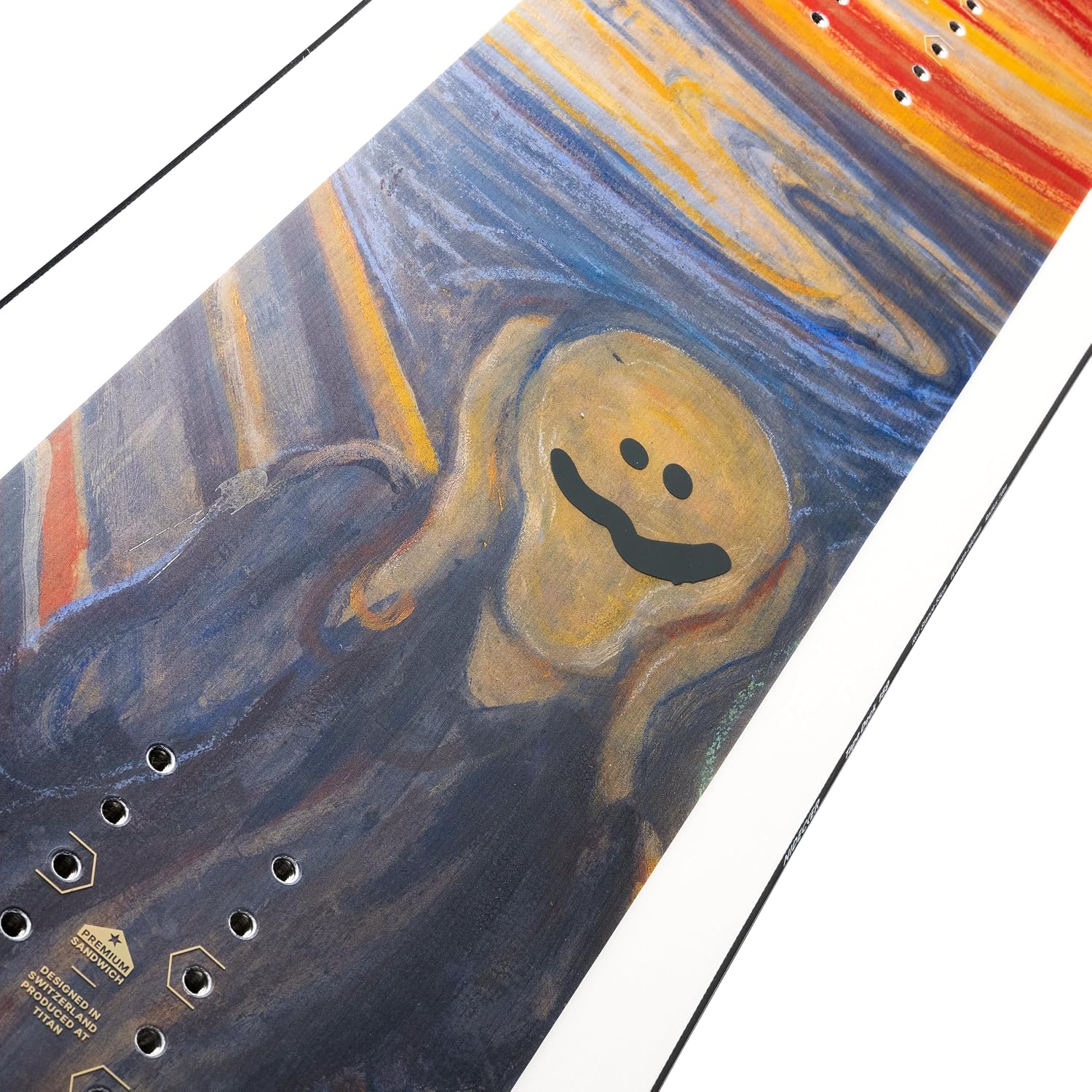
It is stable on landings. The carbon toward the tips gives you a solid platform. Land a little heavy on the tail and the board does not fold. It stays under you. The damping layer really shines when the groomers get chewed up and you are charging through afternoon chop. It handles the rest of the mountain with relaxed confidence.
Where It Excels
This board excels in the park and on side hits. It loves to jump. The carbon gives you the snap for clean ollies and stable takeoffs. It also suits riders who value a smooth ride. The damping is not just marketing talk. You feel the difference when the snow gets firm and bumpy. If you like to cruise the whole mountain looking for natural hits, the Tape Deck is in its element.
It also wins on durability. The hybrid base holds up well against a hidden rock or a rail scrape, and it is low maintenance. Pro tip: Even with a durable base, a hot wax once a month makes it noticeably faster on long cat tracks. It is a versatile choice for an intermediate rider who is not ready for a punishing expert deck.
Where It Falls Short
Edge hold is decent, but it has limits. On East Coast ice it will slip sooner than a board with more aggressive edge tech, and it lacks the bite of the Nidecker Escape. It also struggles when you try to get really horizontal. It is not a dedicated carving machine. The waist is wide for a twin, but it tops out at about 270mm, so riders with large boots who want deep, elbow-dragging carves like Ryan Knapton should look elsewhere.
It is also stiff for riders who want a butter-knife feel. If your day is mostly nose rolls and presses, the Tape Deck can feel stubborn. It takes more input to get the nose up than a softer park board. The mellow camber is forgiving, but it still wants you centered and active.
The Carving Versus Buttering Debate
Owners debate the Tape Deck's personality. Some look at the wide twin shape and expect a carving monster that also butters with ease. Reddit reports put it firmly in the middle. Owners call it more of a cruiser than a dedicated park toy. A common observation is that it does not punish you like a stiff traditional camber board, but it won't give you the effortless butters of a soft Capita either.
You will find reviews saying it does everything well, and others calling it a master of none. The take here is that it is a balanced board for the rider who does not want to specialize. If you want the best carving board, buy a dedicated carver. If you want the easiest butters, buy a soft park twin. The Tape Deck lives in the middle ground, and that is the point.
Who Should Buy It
This board is for the intermediate to advanced rider who wants a stylish daily driver. If you like retro looks but want modern damping and pop, this is your deck. It is perfect for the rider who hits the park for a few laps and spends the rest of the day finding side hits and cruising groomers. It also suits anyone who wants a board that is easy to maintain and comfortable in mixed conditions.
Look elsewhere if you are an ice-coast carver who needs maximum grip, or a park rat who only cares about rails and a soft flex. If you wear boots bigger than a size 11 and want extreme carves, the waist width will likely cause toe drag. This is a board for the stylish generalist.
Alternatives
If you want something easier to butter and more playful, the Capita Spring Break Resort Twin is the main alternative. It feels more effortless and has a softer personality. Read our full Capita Spring Break Resort Twin review.
For a board that handles ice better and stays stable at higher speeds, the Nidecker Escape is a better fit. If you want more aggression in a stiffer, carving-focused directional shape, look at the Nidecker Thruster.
Verdict
The Nidecker Tape Deck is a solid daily driver for the freestyle-minded rider. It looks better than almost anything else on the mountain right now, and it rides well enough to justify the price, as long as you are not expecting a carving specialist or a wet-noodle jib board. It is a fun, damp, responsive twin. Buy it for the looks, but keep it for the smooth ride.