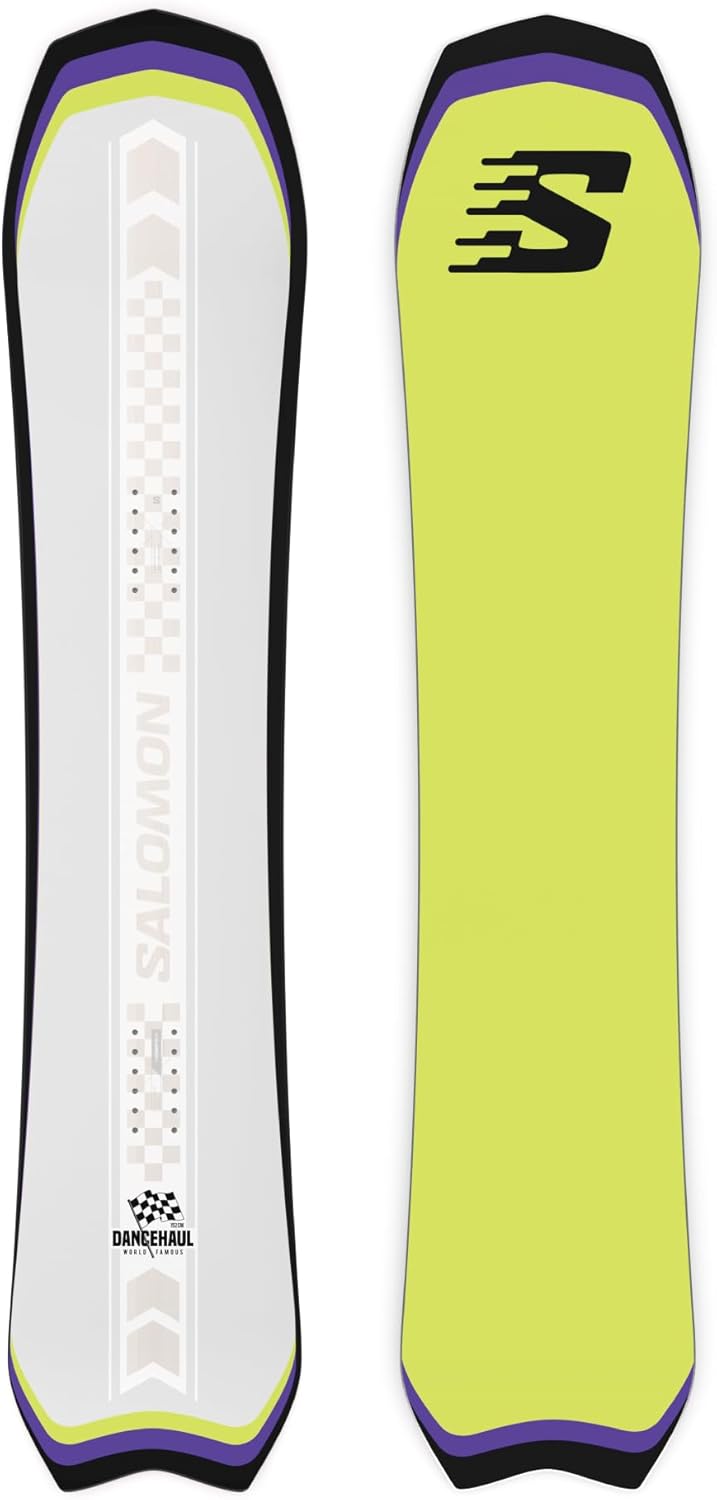
Volume shifting is a polarizing idea. Add width to the waist, cut length, and keep the surface area and stability. The Salomon Dancehaul Pro takes that formula and adds backbone. It is built for advanced riders who want a quiver of one with a freestyle soul. The question this review answers: does the wide, stiff package work, or is it a lot of board to manage?
What It Is
The standard Dancehaul is known as a playful, loose, fun-loving board. The Pro is the serious version: stiffer, more driven and made to be pushed. It is a volume-shifted design with a 264 mm waist on a 152 cm length. Check current size charts before buying, because the Pro has been offered in very few sizes.
Think of it as a wide-bodied carving machine, not a child's board. The width is there to support weight and power through the turn, and the stiffness backs that up.
Volume Shift: Strange for About Three Turns
Owners say the Pro looks and feels odd for the first few turns. A short board with that much waist breaks your habits. Then it clicks. Once the board is under you, it feels like a wide platform that stays out of its own way in the turns, not a short board.
The practical benefit is clear. The extra width kills toe and heel drag, so deep carves are possible without fear of the boot catching. Owners also ride volume-shifted decks like this at shorter lengths than they would pick on a standard board.
Carving and Speed
The sidecut is aggressive. Put the board on edge and it locks in, building real force through the middle of the turn. The stiffness keeps the tips quiet at speed, so you avoid the tip flutter that short boards often show. Riders used to stiff, snappy twins will find the feel familiar.
Trees, Side Hits and Powder
The short length makes the Pro easy to pivot around obstacles. A flick of the back foot swings it through tight spots, and the wide nose keeps it up in soft snow. You get the nimble nature of a short board with the stability of a longer freeride deck.
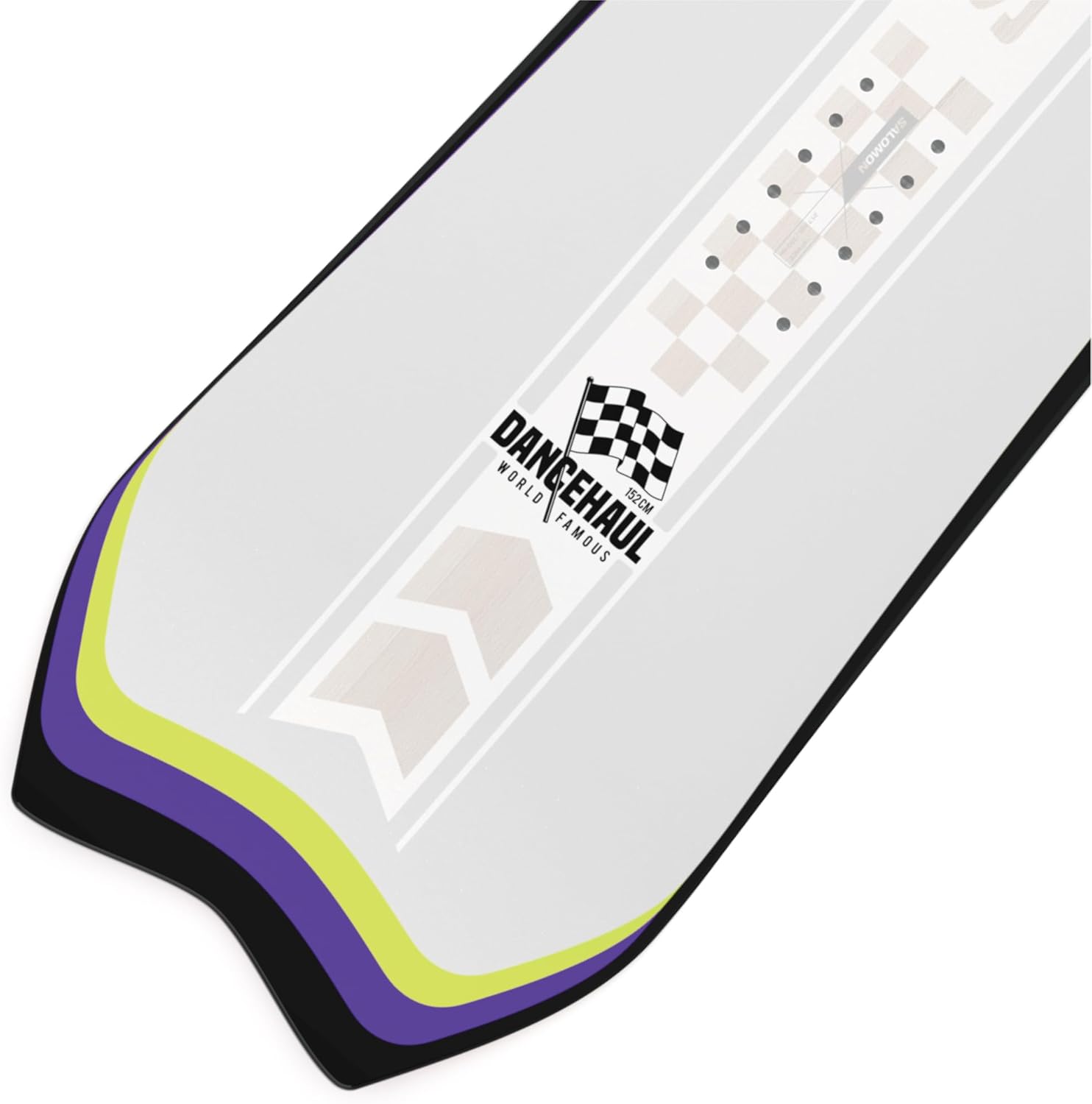
Side hits and natural features turn into launch pads, because the platform handles the impact. It stomps off-kilter landings that would wash out a narrower deck. If your idea of freestyle is high-speed hits, big transitions and flat-landing drops, the Pro is a strong tool.
Where It Falls Short
The park. A wide waist means your foot travels farther to reach the opposite edge. Edge-to-edge changes ask for more rider input, and it is not as telepathic as a narrow park twin. Technical rail riders will find it a lot of board.
Jibbing and low-speed play. The stiffness makes jibbing harder. Owners of the standard Dancehaul describe a board that is stiff when you need it and soft when you want to play, with softer tips that make it easy to jib. The Pro gives that up.
Sizing. Limited sizing is the biggest point of contention. For riders at either end of the weight range, a single size is a gamble. Some owners sold theirs because their preferred stance width changed the ride drastically, and went up to the regular 157.
Smaller boots. Riders on smaller boots should expect a wide feel and slower edge changes.
The Debate: Pro or Standard?
Owners split here. Some say just buy the regular Dancehaul. They describe it as aggressive enough to charge hard, with slightly softer tips that let you play. A stiffer board is harder to jib. Others say the Pro is where it is at: they love the stiffness under foot and the playful edge-to-edge feel. Another owner on the smaller end of the size range reports it feels strange at first and very smooth afterwards.
The honest take: if you want a looser, jibbier ride, the standard model is the better fit. If you want drive and stability and you do not mind the width, the Pro is the one.
Who Should Buy It
Advanced riders who like stiff boards and want one deck for freeride and the parts of the park that reward speed. It suits riders who like to carve deep, hit natural side hits and ride trees without sacrificing stability.
Who Should Look Elsewhere
Beginners and riders who want a soft, jibby feel. Technical rail riders. Anyone at the extreme ends of the sizing range.
Alternatives
The standard Dancehaul is softer and more playful. The Capita Mercury and Outsiders are narrower, snappy stiff twins that feel more direct. A freeride-leaning option such as the Jones Howler gives a more conventional width. Read our full CAPiTA Mercury review. Read our full Jones Howler review.
Pro tip: Try wider stance setups and watch how stance width changes the ride, as owners report the board is sensitive to it.
Verdict
The Dancehaul Pro is a specialized tool that rewards a confident rider. It is stable, grippy and nimble in the trees, and it lands big hits without drama. The limited sizing, the width and the extra effort on edge changes are real costs. For the right rider it carves and floats in ways traditional shapes do not.