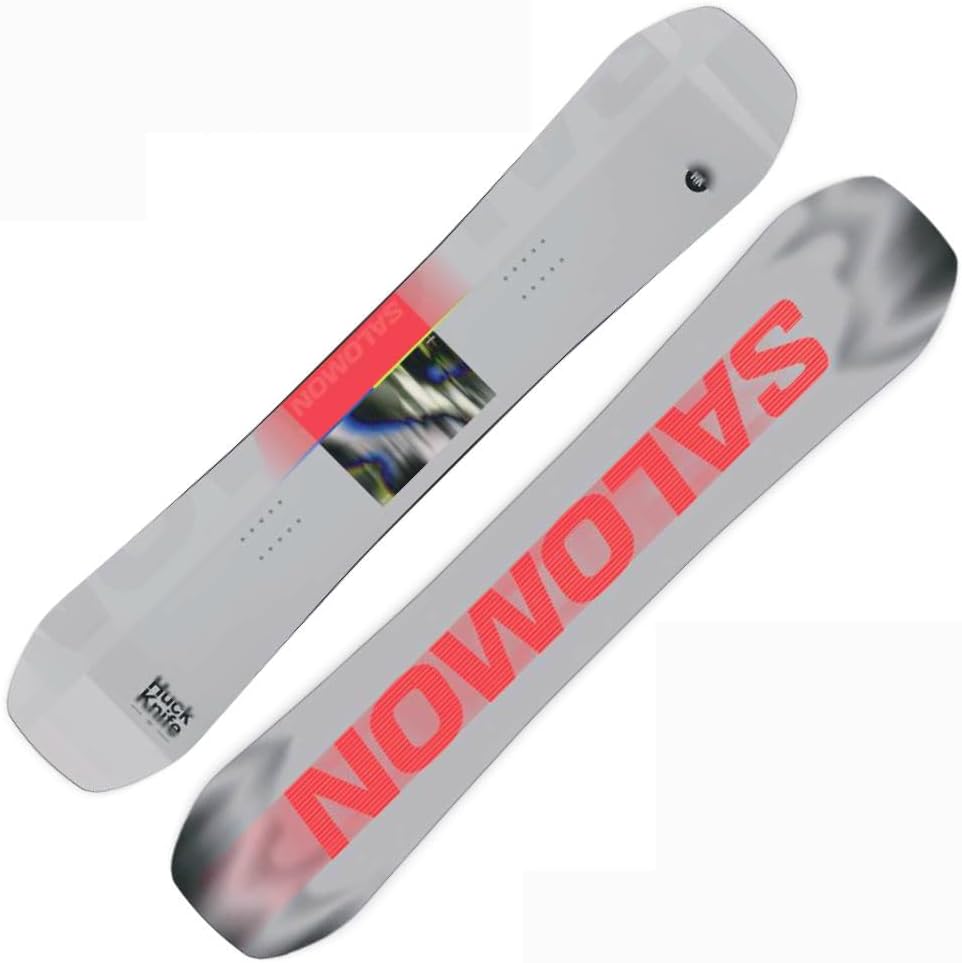
The Salomon Huck Knife is the board you see in every lift line from Mammoth to Mayrhofen. It is a true twin freestyle board that has defined the park category for years. You buy it because you want to spend your day in the jump line and hunt side hits on the way back to the chair. It is a high-performance tool, but it does not demand that you be a pro to ride it.
The question isn't whether this board is good. It is. The question is whether you ride enough park to justify a true twin, or whether you need something more versatile for the rest of the mountain.
The Build: Camber Where It Counts
The Huck Knife is a camber board at heart. Camber underfoot gives you the load-and-release pop you need to clear the knuckle, and Salomon softens the profile toward the tips so a lazy landing or transition is less likely to hook an edge. You get the spring of camber without constantly fearing a caught edge. The core is light and snappy. It feels alive under your boots.
The sidecut blends several curves. In practice, the board starts a turn quickly but holds a steady line once you are on edge. It does not have serrated edges, but it bites well enough on firm snow. The flex sits right in the middle, about 3 out of 5 on Salomon's scale. That is stiffer than Salomon's softer jib boards, which many riders find too noodly for big jumps, but far more approachable than a stiff freeride deck.
On-Snow: Playful but Precise
Strap in and the Huck Knife feels familiar. There is almost no learning curve. On groomers it carves well, tracks straight and does not chatter when you point it. At speed it stays quiet; the nose does not flap. It wants to go fast and rewards aggressive input. If you are coming off a soft beginner board, you will notice right away that this one asks you to be present. You cannot just stand on it. You have to ride it.
In the park it comes alive. The pop is predictable: load the tail for an ollie and it snaps back with the same energy every time. On rails, owners say it feels locked in and resists slipping out on technical tricks. Landings are where it shines. It has enough backbone to stomp a landing that is a little in the backseat without washing out. It builds confidence for anyone stepping up from small jumps to the bigger line.
Where It Excels
This board is a master of freestyle terrain and one of the best boards for park progression you can buy. If your day is lap after lap through the park, you will struggle to find a better partner. Stability on jumps is top-tier. It feels light in the air, which makes spins feel more natural. It is also durable. Owners report these boards take seasons of rail abuse and keep their snap.
Outside the park it is a capable carver. On side hits it feels like a trampoline, and you will find air on bits of snow you used to ride right over. If there is a bump or a transition, the Huck Knife wants to boost off it. It is for the rider who treats every groomer as a long approach to the next natural feature.
The Shortfalls
The Huck Knife is a true twin, so the nose and tail are identical. Take it into deep powder and you will feel it. You have to work to keep the nose up. There is no setback to help you float and not much surface area for deep days. If you wake up to a foot of fresh, this is the wrong tool.
It can also punish you if you get lazy. The softer tips help, but camber still has consequences. Land sideways or catch an edge on a butter and it will put you on the ground. Some riders say it lacks the grip of a board built for East Coast ice on truly frozen mornings. It is a great park board, but not a one-board quiver for someone who spends most of their time hunting stashes in the trees.
The Pro Debate: Is Stiffer Better?
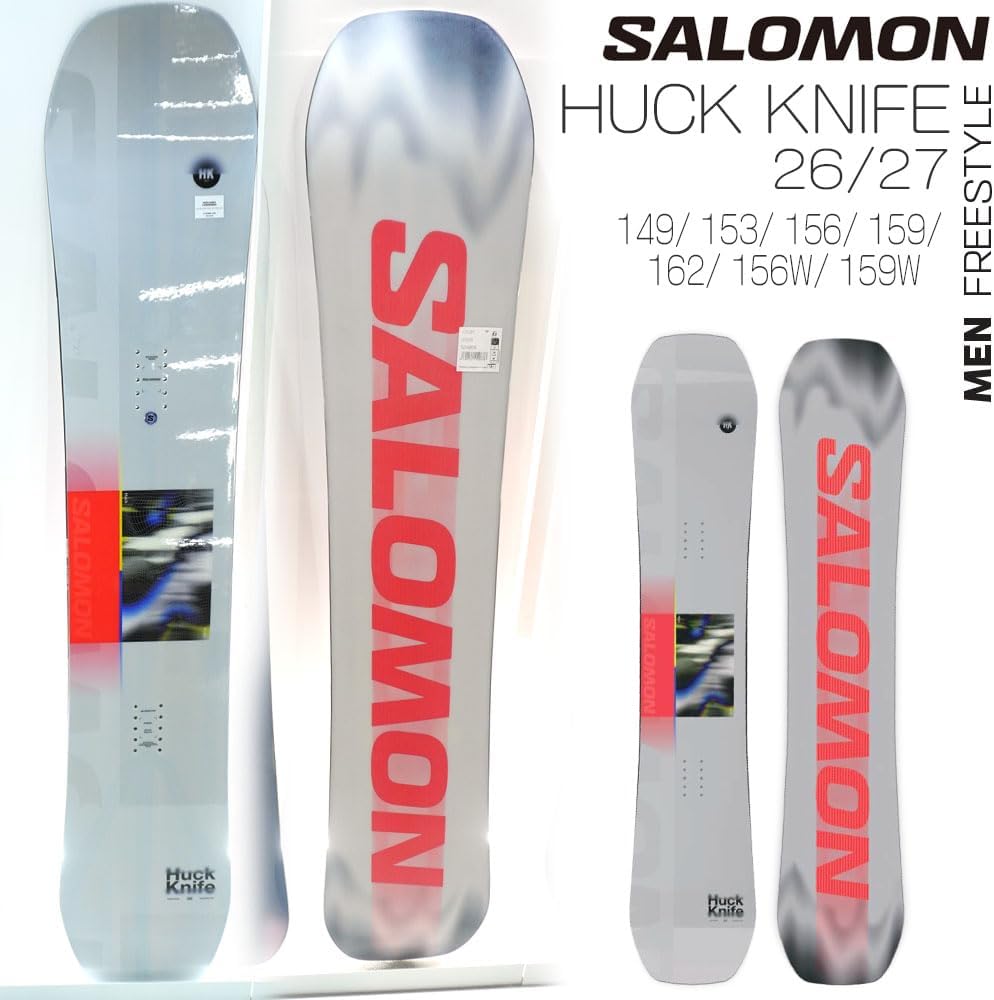
You will hear a lot of talk on the lift about the Huck Knife Pro. Many riders assume the Pro is the natural upgrade once they get better. Owners mostly say the opposite. The Pro is much stiffer and built for contest-size air. Unless you regularly hit the biggest jumps in the park, the standard Huck Knife is the better choice. The Pro can feel dead at low speed and is much harder to press on rails. If you have to ask whether the Pro is too much for you, it probably is.
The wide sizes come up too. Salomon builds them for heavier riders, so if you have big feet but a light frame, a wide Huck Knife can be hard to flex. Check Salomon's weight chart instead of picking a size on boot size alone, or you may end up with a board that feels like a 2x4 under your feet.
Who Should Buy It
Buy the Huck Knife if you are an intermediate to advanced rider who puts freestyle first. If you want to learn spins, hit bigger features and improve on rails, this board will get you there. It is for the rider who values pop and stability over powder float, and it is a great fit for places like Ontario or the Midwest, where park laps are the main event.
Look elsewhere if you are still learning to link turns. The Huck Knife is forgiving for its class, but there are better boards for the basics. Pass on it too if you are a big-mountain rider who wants to surf trees and deep snow. Pro tip: If you plan to ride it all over the mountain, sizing up a few centimeters adds stability at speed and a little more float.
Alternatives
If the Huck Knife sounds too park-specific, the Salomon Assassin is the logical next step. It has a directional twin shape that handles powder and mixed terrain much better. If you like the idea of the Huck Knife but want the best-known name in the category, the Capita DOA is the direct rival. The DOA feels damper and more locked-in on groomers, while the Huck Knife feels more explosive in the park. Read our full Capita DOA review.
For a more skate-like, loose feel on rails, the Yes Jackpot is a common comparison among park riders.
Verdict
The Salomon Huck Knife is a benchmark for a reason. It gives you a precise, poppy ride that makes park riding feel natural. It won't save you in a powder field, and it will bite if you get sloppy. But for the rider who lives for transitions, it is close to essential. It is a specialized tool that does its job with honest, predictable excellence.