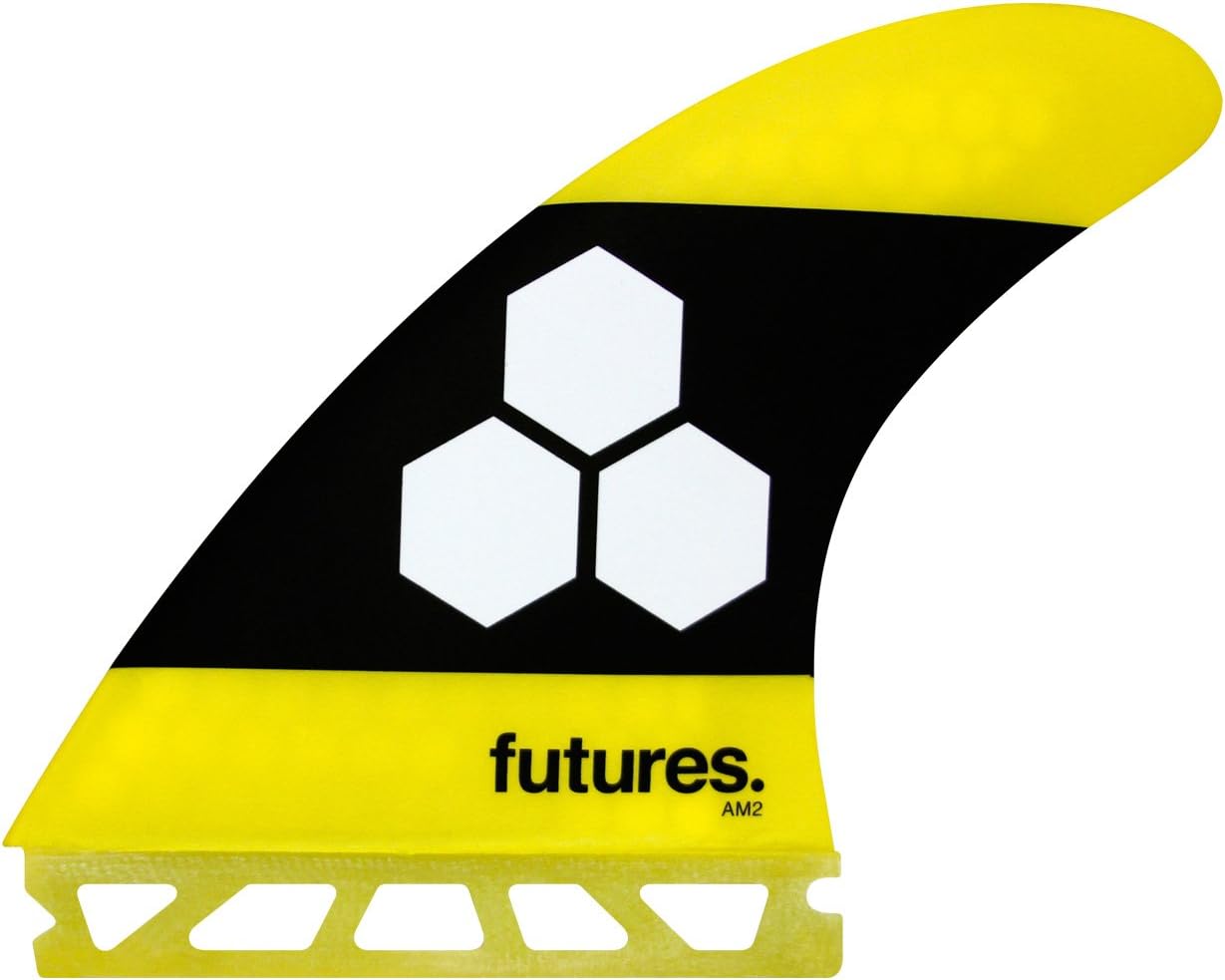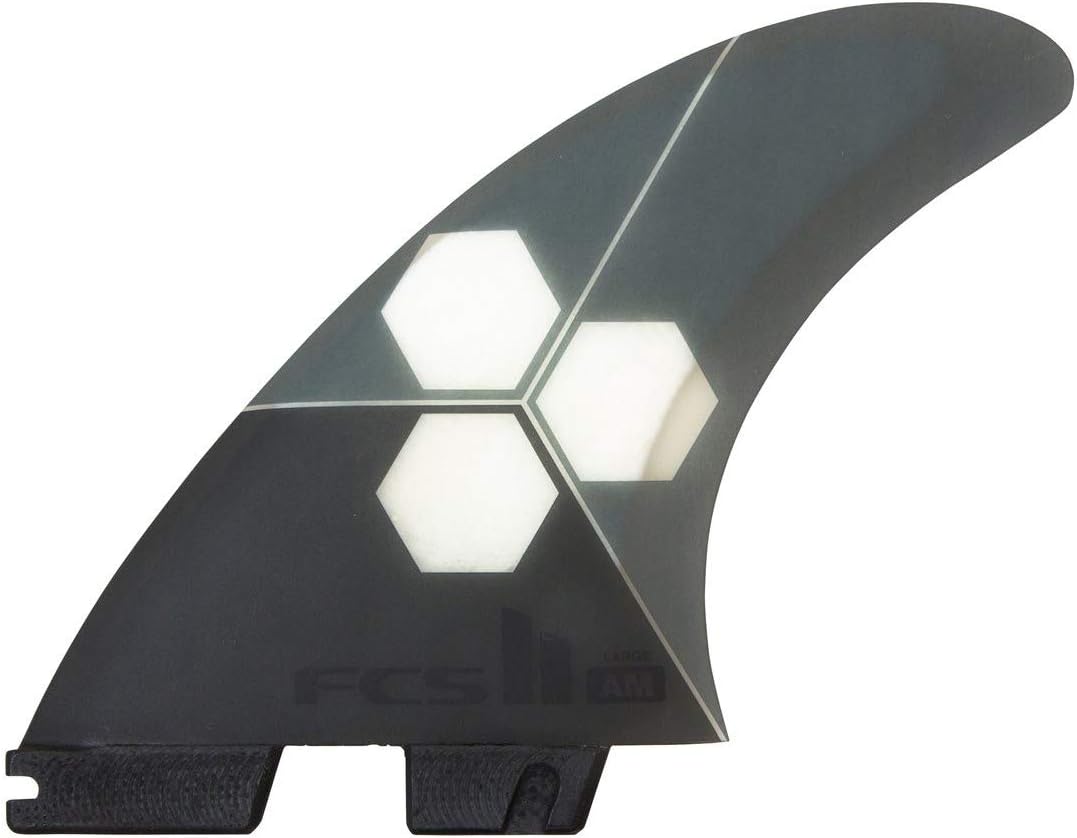
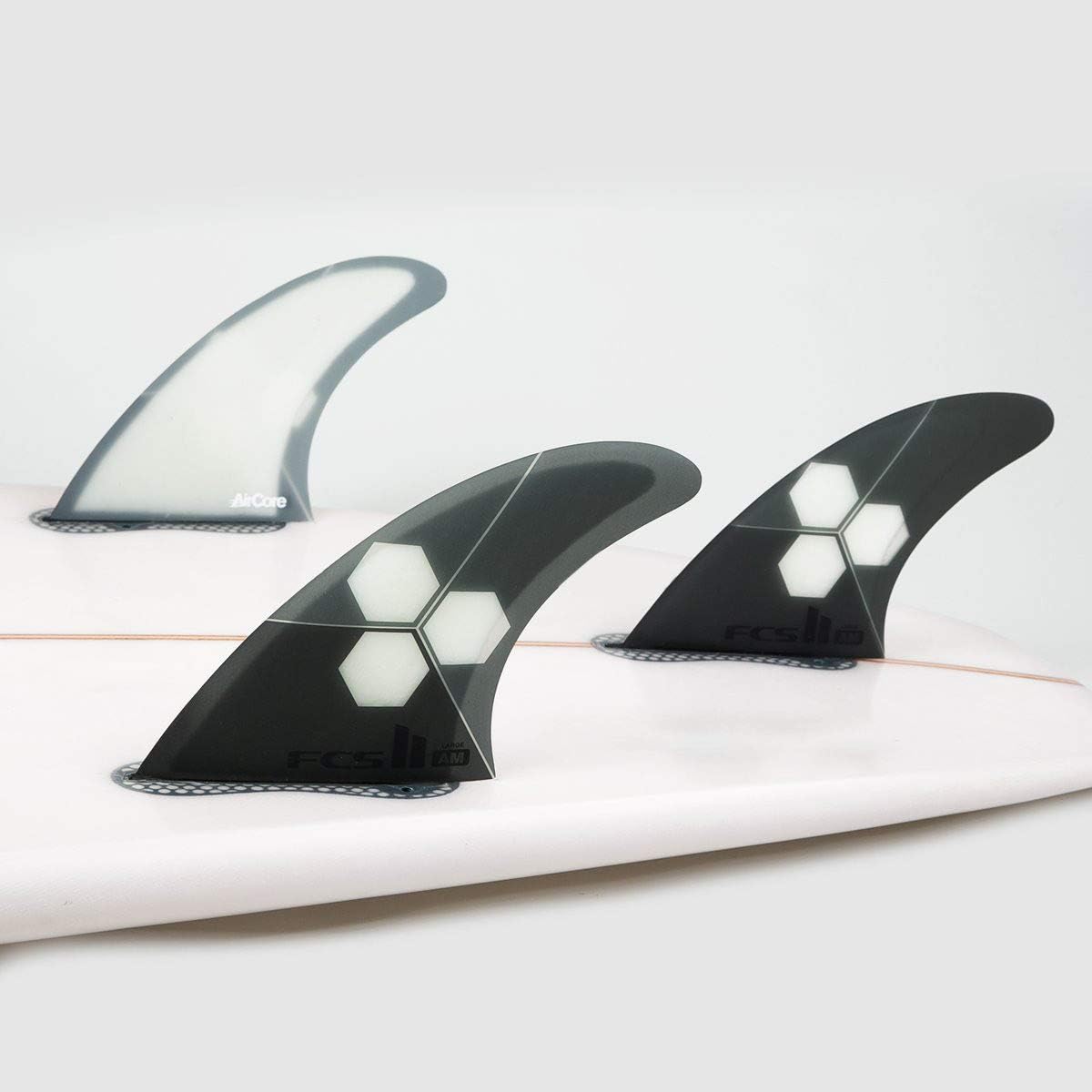
The Al Merrick (AM) template is the fin shape you see under half the performance boards in any lineup. The FCS II AM PC Tri is the original FCS take on it: three fins, Performance Core (PC) construction, and the tool-less FCS II system that clicks into the plugs. The question it answers is simple. Is this still the standard for a drive-first, release-when-you-want-it thruster?
What You Are Getting
The AM template is a raked, big-sided design. The two side fins are large and swept back, which gives you plenty of hold and speed out of the bottom turn. The center fin (the trailer) is smaller than the sides on the medium and large sizes. That one detail is the whole idea. Less area at the back means less drag and a tail that breaks free more easily at the top of the wave.
It is built for powerful, progressive surfing. Think hollow, steep faces and punchy beach breaks, where you want to bury a rail and still be able to snap the tail around.
FCS II fins click in and out without a screw or key. Pull the tab and the fin comes away. That is handy for travel and for swapping sets between boards. Just know the system is its own thing: these fins only fit FCS II boxes, so check your plugs before you buy.
How It Surfs
Performance Core is FCS's mid-range performance construction, tuned so the tip flexes while the base stays rigid. In the water that shows up as a snappy return out of a turn. It does not feel mushy or slow to recover the way a cheap, uniformly soft fin can.
On a rail-to-rail section, the AM set feels purposeful. There is real hold when you load the board, and then the smaller trailer lets you whip it around in the pocket. That classic Merrick feel is drive plus release, and this set delivers both without feeling pinned to the wave.
It is not a set for everyone. If you want a loose, skatey feel in weak surf, this much rake and area can feel like a lot. And if you are still working on basic rail turns, the hold will not do much for you.
The Debate: FCS or Futures?
This is where owners argue. The same template exists in both systems, and people who have used both say the two are not identical. The common report is that the FCS large AM has a smaller surface area than the Futures large, with a thicker foil and a stiffer feel. The rake and tip size also differ slightly.
Part of the confusion is naming. The two brands do not label sizes the same way, so a "medium" in one system can line up with a different letter in the other. Do not assume the size names match. Compare the area charts for the exact set you are considering.
My take: if you are used to the FCS version, the sizing is consistent with FCS's own charts and the fin feels refined rather than oversized. Switching systems means relearning a little, and you should expect a small change in feel.
Durability and Setup
Owners generally describe FCS fins as tough enough for normal use. They handle sand, a bump on the reef and the odd drop in the car park without losing their shape. The weak point on any click-in fin is the plug and the tab, so rinse the box after sandy sessions and make sure the fin seats fully before you paddle out. A fin that is not fully clicked in will rattle and feel dead underfoot.
Tuning is simple. If the board feels stiff and tracky, try the set one size down. If it feels loose and skips out in bigger surf, go up. Small changes in area change the feel more than you would expect, which is another reason the cross-brand size confusion matters.
Who Should Buy It
Buy this if you ride a board with FCS II plugs and want a proven, high-performance thruster that carries speed and still releases. It suits intermediate to advanced surfers in decent waves, where the fin can do its job.
Look elsewhere if you surf mostly small, weak waves and want maximum looseness, or if your board has Futures boxes. A lighter, smaller template will feel livelier on soft days, and these fins will not drop into Futures plugs.
Pro tip: FCS lists the AM template in several sizes and constructions. Match the size to your board and the construction to your wave type, and keep in mind that construction changes flex and feel even when the shape is the same.
Verdict
The FCS II AM PC Tri is the baseline for a reason. The template is balanced, the flex is snappy, and the click-in system is convenient. It is a premium set and it asks for good waves, but when you have them, it delivers.