The Candy Shop on the Beach
Bubble Gum has been hand pouring wax in California since 1984, and you know it the second you open a bar. The smell is pure pink gum, sweet and loud, and a lot of surfers buy it for that alone. The better reason is the wax itself. Owners who drift away from the biggest brand often land here and stay.
This review covers the five Original Formula bars: Cold, Cool, Warm, Tropical and Basecoat. Each one has its temperature range, feel and rating below.
Quick pick:
- Cold water, thick suit: Cold (purple)
- Spring and fall water: Cool (blue)
- Summer water: Warm (orange)
- Hot water: Tropical (red)
- A hard foundation under any of them: Basecoat (teal)
How the Bubble Gum Range Works
Every Original bar weighs 85 grams and is rated by water temperature, softest to hardest: Cold, Cool, Warm, Tropical. Basecoat is the hard bar that goes underneath. The brand describes the formula as a blend of tackifiers with natural and synthetic wax compounds, made in the USA.
One thing to know before you shop: Bubble Gum has moved from paper wrappers to boxes, and the ranges shifted a little. The newer boxes read Cold 58 F and below, Cool 58 to 68 F, Cool to Warm 60 to 74 F, Warm to Tropical 68 to 78 F and Tropical 80 F and above. The ranges below are the ones printed on the bars I surfed. The differences are a few degrees, and the order is the same.
Original Cold (Purple)
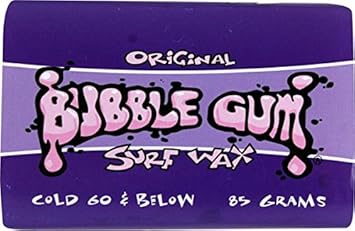
- Water temperature: 60 F (15 C) and below
- Hardness: Softest in the range
- Scent: Bubble gum
- Rating: 7.5/10
- Check the price on Amazon
Press a thumbnail into this bar and it leaves a dent. That is the point. Cold-water wax has to stay tacky on a chilled deck instead of hardening into slick plastic, and this one does. It goes on easily even when the board is cool and a bit damp from the morning, and a few cross-hatch passes give you tacky bumps that hold through a bottom turn in a thick suit.
The cost of a soft bar is upkeep. It wears down, needs frequent touch-ups and picks up sand and grit. In warm water or a hot car it smears into a greasy puddle. In extreme sub-zero cold it loses some of its stick, though it still beats the harder bars in the same conditions.
Pro tip: Keep the bar in an inside pocket or your bag, not on the dashboard.
Original Cool (Blue)
- Water temperature: 58 to 68 F (14 to 20 C)
- Hardness: Medium soft
- Scent: Bubble gum
- Rating: 8.3/10
- Check the price on Amazon
If your water sits between wetsuit-optional and thick rubber, this is the bar you will use most. It rubs on fast: a cross-hatch over a clean deck gives tacky bumps in a minute or two, with none of the forearm workout a basecoat needs. The wax has a slightly soft, rubbery feel that grips bare feet and neoprene alike.
On its own it flattens faster than a harder wax, which is normal for a cool formula. Lay it over a basecoat and it lasts. Push it into warm water and it smears. Push it into properly cold water and it loses bite, and the Cold bar is the better pick. If the bar has been sitting in a cold car, warm it in your hands before the first strokes.
Original Warm (Orange)
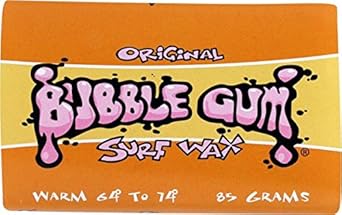
- Water temperature: 64 to 74 F (18 to 23 C)
- Hardness: Medium firm
- Scent: Bubble gum
- Rating: 9.1/10
- Check the price on Amazon
This is the best bar in the range and the one owners talk about most. It goes on smoothly with a light touch and builds consistent small bumps without crumbling or flaking. Owners report traction at the end of a long session close to what it was at the start, and it tolerates a board left in the sun for a few minutes while you grab a coffee.
Several surfers rank it among the best warm waxes where they live, often in the same breath as Matunas. Others say it lasts longer between re-waxes than the biggest brand. Press hard on a hot day and it can smear, so let the bar glide. Outside its range it behaves like any warm bar: hard and slick in cold water, soft in tropical heat.
Original Tropical (Red)
- Water temperature: 80 F (27 C) and above
- Hardness: Hardest top coat in the range
- Scent: Bubble gum
- Rating: 7.7/10
- Check the price on Amazon
Warm water softens wax, and a cool formula in the tropics turns into a greasy smear almost as soon as you paddle out. Tropical has a higher melting point, so the bumps stay put. The beads are firm and tight. They give you mechanical grip, a rough texture your feet bite into, rather than flypaper tackiness.
It takes patience to apply. Work diagonal lines across a clean deck, cross them, then finish with small circles, and do it in the shade. The trade-off is stick: it is firm and slightly less grabby than an extra-sticky modern wax, so hard surfers sometimes add a light coat of Warm on top. In cool water it is as slick as a candle. It is gentler on bare chests and ribs than the grippiest formulas.
Original Basecoat (Teal)
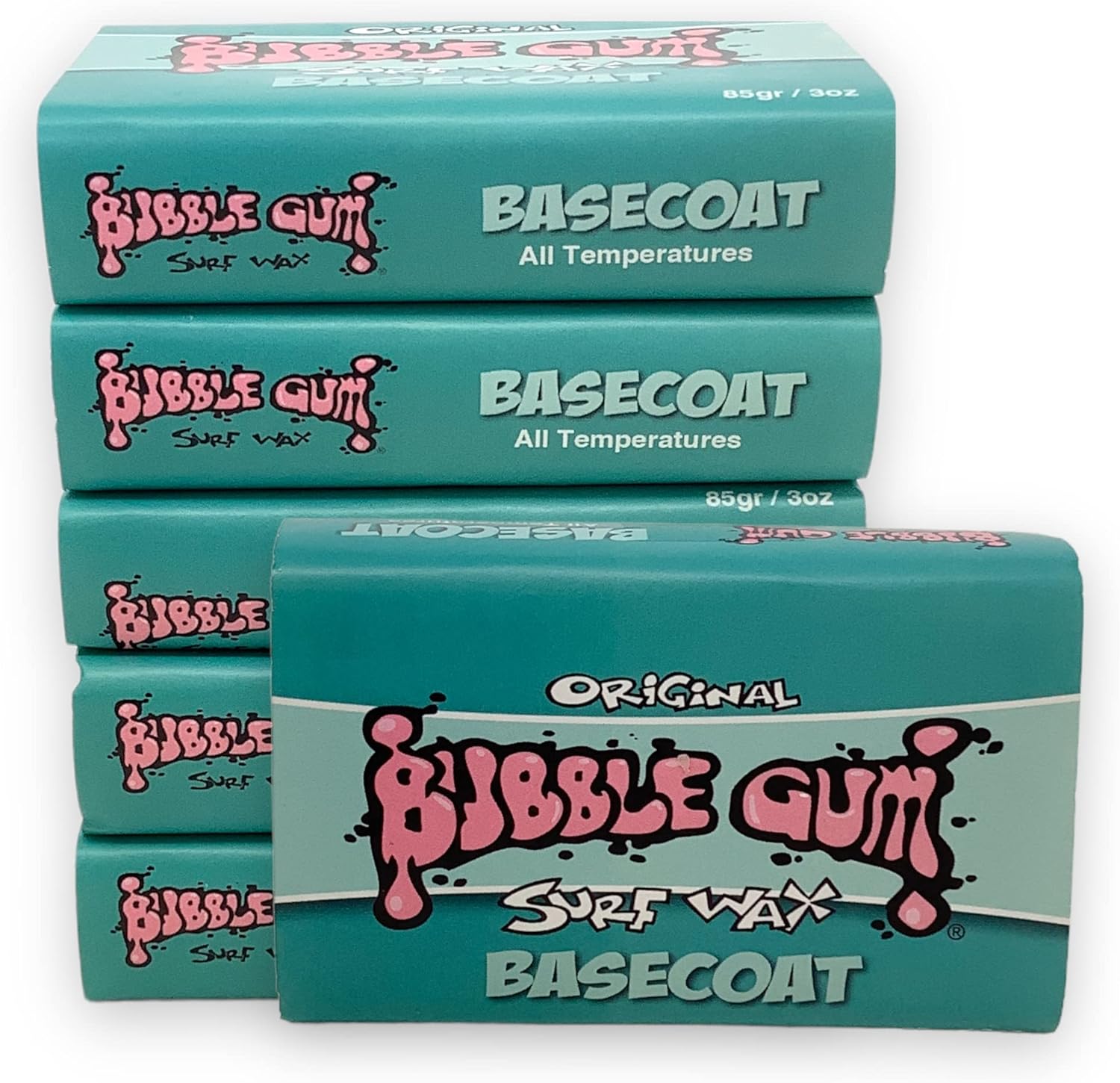
- Water temperature: All temperatures, under a top coat
- Hardness: Hard
- Scent: Bubble gum
- Rating: 7.2/10
- Check the price on Amazon
Basecoat does one job: it lays down a firm grid of bumps for your softer top coat to grab. Out of the wrapper it is noticeably firmer than a top-coat bar. It is often sold in packs, and each bar breaks in two so you only use what a session needs.
Putting it on is the slow part. Rub straight diagonal lines, cross them the other way, and keep going until you have small, hard bumps. Expect several minutes of work and a sore forearm. The payoff comes later: the beads don't smear or flatten under your feet. On its own it is not sticky, and in cold water with no top coat it feels slick. Add a temperature-matched bar on top and you get the full setup.
Is Basecoat Worth It?
You will find surfers who call basecoat marketing and say the right temperature bar is all you need. Others point out it is just a harder wax, and a firm foundation means less top coat and fewer re-waxes. Both camps surf happily.
My read: if you re-wax rarely and surf cold water, basecoat under a soft top coat is worth the extra ten minutes. If you wax every session in warm water, the difference is small. The Tropical bar is close to a basecoat already, and some warm-water surfers run a Tropical-only deck and never touch another grade.
Waxing and Care
Start with a clean, dry deck in the shade. Hot wax goes on smooth, and smooth is the opposite of what you want. Cross-hatch first, then small circles to raise the bumps, with a little extra under your front foot and along the rails. Over-waxing a hard bar only builds a lumpy surface that sheds in chunks.
Before each session, run a wax comb across the deck to set the bumps back up. When the surface turns smooth and grey, scrape it clean with a plastic scraper, use a little citrus cleaner on the residue, and start fresh. Keep bars wrapped and out of a hot car. A full strip once or twice a year, usually when you change grades for the season, is enough.
On a Snowboard Topsheet
Park riders have rubbed surf wax on topsheets for years, and the Cold bar is the right choice because it doesn't go hard and glassy in freezing air. I rub a cross-hatch between the bindings and a few patches on the rails where I grab. It leaves a slightly opaque, tacky film that is hard to see from a few feet away, so the graphic stays intact.
Getting off the lift on an icy ramp is where it earns its keep. With a fresh coat, the back boot stays planted as you skate, and on grabs it adds friction between glove and board. It is a sacrificial layer, though: plan to touch it up every few sessions, and expect the patch to go grey in slush. The harder Basecoat holds its texture longer in the cold but grips less. Either way, it is a cheap trick, not a spiked stomp pad.
Where Bubble Gum Falls Short
The scent is the pitch, and it is not for everyone. A bar in a gear bag perfumes everything around it, and some surfers would rather their board smelled of nothing. The soft bars also wear down and collect dirt faster than harder waxes, so plan on regular touch-ups.
Each bar is also strict about temperature. Use one out of range and it will feel wrong, which is true of every wax but worth repeating. And the switch to boxes with new ranges means the label in the shop may not match an older review. Read the numbers on the box, not the name.
Verdict
Bubble Gum is a quiet favorite for good reason. It applies easily, grips well and, owners say, lasts longer between re-waxes than the biggest brand. My picks: the Warm bar for most of the year, Cold for winter, and Basecoat under either if you re-wax rarely. It also smells like a candy shop, which is either a bonus or a warning.