The Default Bar in Every Surf Shop
Sticky Bumps has been hand made in the USA since 1971, starting in Encinitas, California, and it is the wax most surf shops push first. In threads asking for favorite waxes it wins by a mile, mostly for value: it is cheap, it is everywhere, and the blueberry smell is so loved that the brand sells it as a car air freshener.
This review covers the Original Cool, Warm, Tropical and Basecoat bars, the Original Cold, and the two Super Sticky bars. Each one has its temperature range, feel and rating below.
Quick pick:
- Cold water: Original Cold (purple)
- Spring and fall water: Original Cool (blue)
- Summer water: Original Warm (orange)
- Hot water: Original Tropical (yellow)
- More stick in any water: Super Sticky Cool/Cold or Warm/Tropical
- A hard foundation under any of them: Original Basecoat (green)
How the Sticky Bumps Range Works
Every bar weighs 85 grams (3 oz). The Original bars have a blue tint and the blueberry scent, and the box color tells you the grade:
- Cold: 60 F (16 C) and below
- Cool: 58 to 68 F (14 to 20 C)
- Warm: 64 to 74 F (18 to 24 C)
- Tropical: 75 F (24 C) and above
- Basecoat: all temperatures, white with no scent
The Super Sticky line, which some shops list as Premium, is a white wax with an orange and mango scent. It comes in only two grades: Cool/Cold for 69 F (21 C) and below, and Warm/Tropical for 69 F (21 C) and above. The brand calls it five times stickier. I cannot confirm that number without a lab, but the difference under your hand is obvious.
Original Cool (Blue)
- Water temperature: 58 to 68 F (14 to 20 C)
- Hardness: Medium soft
- Scent: Blueberry
- Rating: 7.5/10
- Check the price on Amazon
For San Diego water, this is the bar. It applies smoothly and builds up well with a cross-hatch, and over a basecoat it gives the combination of stick and release that lets you surf hard without feeling glued down. It holds its grip through several surfs in the right water, with touch-ups on pressure points like the chest area.
Take it to Hawaii or a summer trip and it melts and loses its tack, so switch to Warm or Tropical. Its biggest strength is that you can buy one at nearly every surf shop before an unplanned session.
Original Warm (Orange)
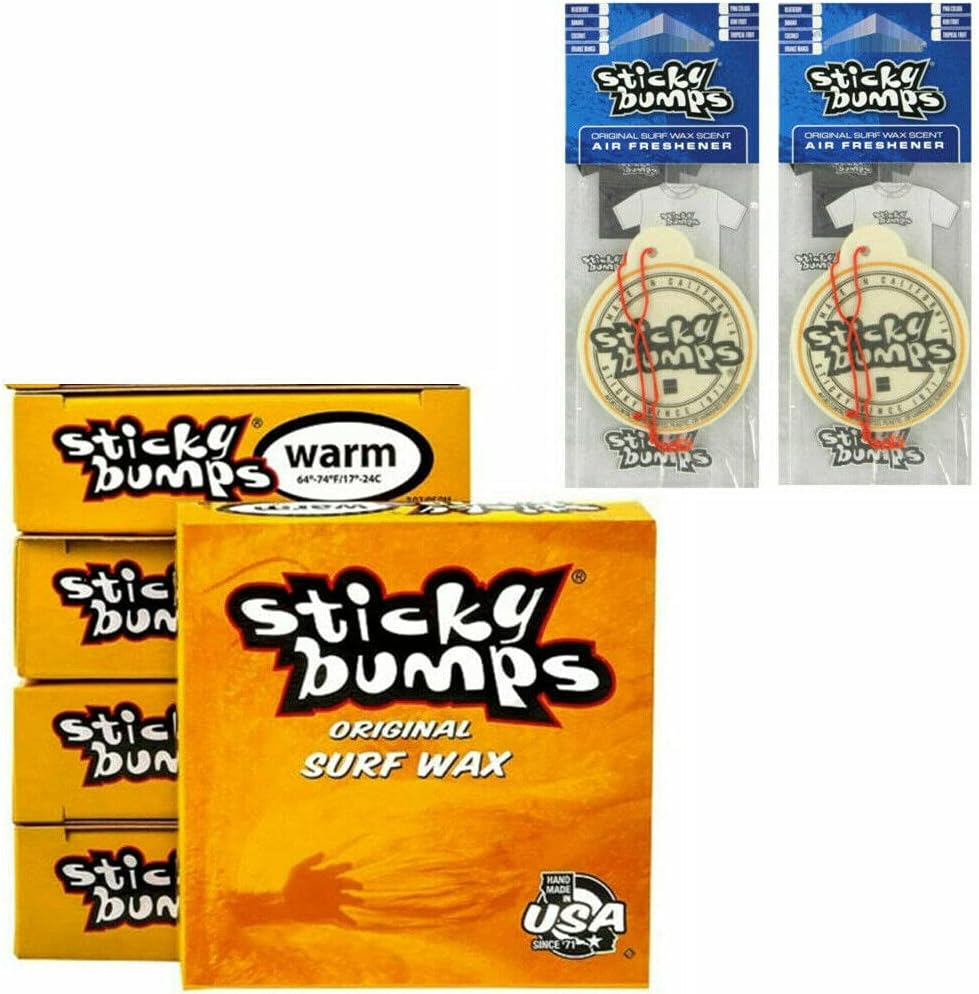
- Water temperature: 64 to 74 F (18 to 24 C)
- Hardness: Medium firm
- Scent: Blueberry
- Rating: 8/10
- Check the price on Amazon
Warm is the bar most surfers end up with in spring and fall. It goes on without effort, builds visible bumps in a minute or two and leaves a slightly tackier surface than Tropical. In its window the bumps hold, your feet stay put and you stop thinking about it.
Temperature mismatch is brutal, though. In cold water it turns hard and slides; in hot sun it smears. Threads asking why Sticky Bumps feels slippery get the same reply again and again: check the temperature. Put it over a base, too. Owners who skip the base report the wax flattening out faster.
Original Tropical (Yellow)
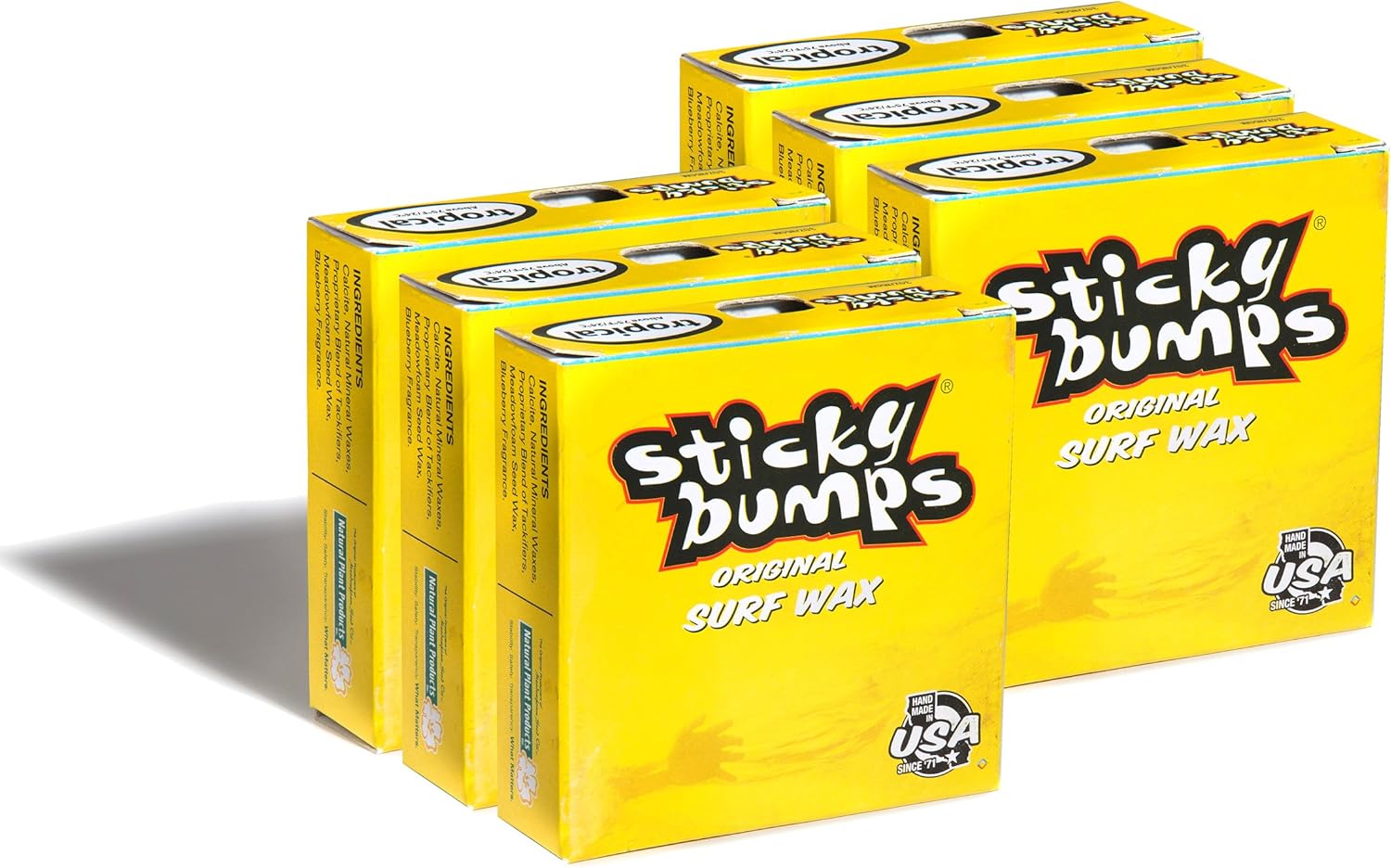
- Water temperature: 75 F (24 C) and above
- Hardness: Hardest top coat in the range
- Scent: Blueberry
- Rating: 7.9/10
- Check the price on Amazon
Every wax line has one bar that stays solid when everything else turns to soup, and this is it. It builds bumps slowly and cleanly, lower and tighter than a soft bar. On a cold deck it skips and chatters; on a warm one it bites at once. In warm water the bumps stay put through a long session and the surface never turns greasy.
It is a firm, even grip, not a tacky one, and it resists a hot car better than any of the softer bars. Hard wax wears slowly, so warm-climate owners get many sessions from one coat. Below 70 F or so it is not soft enough to bite.
Pro tip: Wax in the shade on a hot day, then dip the board in the water for a minute to firm the wax before you paddle out.
Original Basecoat (Green)
- Water temperature: All temperatures, under a top coat
- Hardness: Hard
- Scent: None
- Rating: 7.7/10
- Check the price on Amazon
Basecoat is the hard layer that holds the bumps; your top coat supplies the grip. It goes on dry and does not glob. With patience, the thin lines turn into small, defined bumps that run taller and crisper than soft-bar bumps and stay put. A properly laid base can last weeks or months while you refresh the top coat lightly.
On its own it is not meant to be sticky. That is the most common mistake: a post about a slippery basecoat-only wax job drew a pile of "you only used the basecoat" replies. In a cold garage the bar fights you, so warm the deck in the sun for a few minutes first.
Super Sticky Cool/Cold
- Water temperature: 69 F (21 C) and below
- Hardness: Soft
- Scent: Orange and mango
- Rating: 8.1/10
- Check the price on Amazon
Super Sticky Cool/Cold goes on quickly and feels tacky from the first pass. It is forgiving on a cold morning because it needs little warmth to bite. Grip is easy to feel at takeoff and on the bottom turn, and surfers who like a planted stance tend to love it.
It leans soft, so it picks up sand and dirt faster and smears in a hot car. Pair it with a basecoat if you want the bumps to last. The Super Sticky bars cost a little more than the Originals.
Super Sticky Warm/Tropical
- Water temperature: 69 F (21 C) and above
- Hardness: Medium
- Scent: Orange and mango
- Rating: 8.2/10
- Check the price on Amazon
This is the best Sticky Bumps bar I have used. It is noticeably softer in the hand than the Original Warm and builds bumps in a few passes. Pull your palm off a fresh deck and you can feel it resist, almost stringy. It feels closer to a traction pad than a normal wax. Around 68 F the bumps stayed prominent through a three-hour session, and it kept its bite across more sessions than the Original Warm, so I combed it less often.
The tack that grips your feet also grips the beach. Drop the board face-down on the sand and you get a sandpaper finish. In real tropical heat the gain over the hard Original Tropical is smaller, because a hot-water bar has to be firm anyway.
Original Cold (Purple)
- Water temperature: 60 F (16 C) and below
- Hardness: Softest in the range
- Scent: Blueberry
- Rating: Not rated
- Check the price on Amazon
Cold is the soft bar for winter water and thick suits. I have not surfed it, so it has no rating here. If you like the Original Cool, it is the natural pick when the water drops below 60 F.
Sticky Bumps or Sex Wax?
Whole threads exist for this fight. One camp says Sex Wax builds better bumps and smears less; the other says Sticky Bumps sticks to your feet better and forms bumps in more conditions. A few surfers report an odd slip once a session with Sticky Bumps that they never get from Sex Wax. Practical surfers settle it by using both: one brand as the base and the other on top.
The brand also calls its wax non-toxic and nature safe. Skeptics point out that most waxes share a paraffin-style backbone, so treat it as a brand claim rather than a reason to choose it.
Waxing and Care
Start with a clean deck in the shade. Lay the Basecoat with long diagonal lines, cross them, then rub small circles over the grid. Add a top coat that matches the water. In warm water a Tropical bar can be both your base and your top. In cool and cold water a basecoat under a soft top coat lasts far longer.
Comb the deck before each session. When the surface turns grey and flat, scrape it with a little warmth and a citrus cleaner, and start fresh. Carry a second bar for the shoulder seasons.
On a Snowboard Topsheet
Snowboarders borrow Sticky Bumps for a traction patch between the bindings, with mixed results. The hard bars work best. Basecoat and Original Tropical stand up to boot edges, stay dry and do not gather lift-line grease. Expect to refresh them every few days of riding. Super Sticky Cool/Cold locks the back foot in, but on a minus 10 F day it hardened and lost its tack.
Skip the Original Warm. In cold air it turned into a slick, marble-like surface, my boot slid across it, and within a handful of runs it chipped off in flakes.
Where Sticky Bumps Falls Short
Each bar is strict about temperature, and most "Sticky Bumps is slippery" complaints come down to the wrong bar for the water. The hard bars build bumps slowly, and old wax takes a scraper and heat to remove. The Super Sticky bars pick up sand and smear in heat. None of them is the stickiest wax you can buy: FU Wax sits above them all for tack, at a much higher price.
Verdict
Sticky Bumps is the safe default: cheap, everywhere and good when you match it to the water. My picks: Super Sticky Warm/Tropical if you want a locked-in stance, Original Warm for a budget bar most of the year, Original Tropical for hot water, and the Basecoat under any of them in cool water.