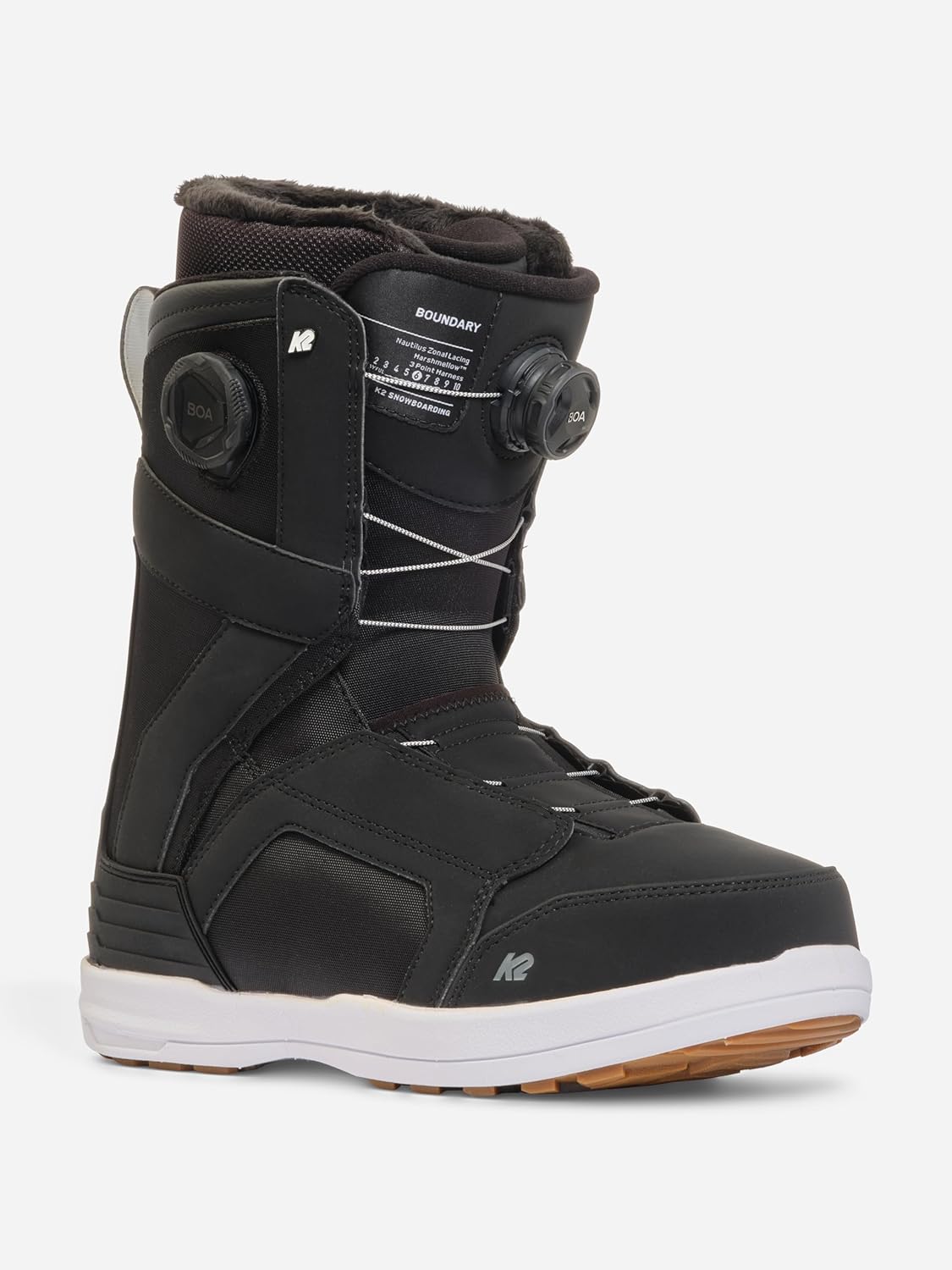
Say "K2 boot" and most riders think of the Maysis. That makes the K2 Boundary the overlooked model, and a lot of the time that is a good thing. It is a BOA boot with solid support for charging groomers and dipping into freeride terrain, without the pressure points some riders get from stiffer, more locked-in rivals. Here is how it compares, and who it suits.
What It Is
The Boundary is a BOA boot rated about 6 out of 10 in flex, aimed at intermediate to advanced all-mountain and freestyle riders. Per the product details:
- An H4 Coiler / M+2 zonal BOA Fit System with TX3 BOA rope lacing.
- An articulating upper cuff.
- HDR premium synthetics in the upper.
- An Intuition Control Foam 3D liner.
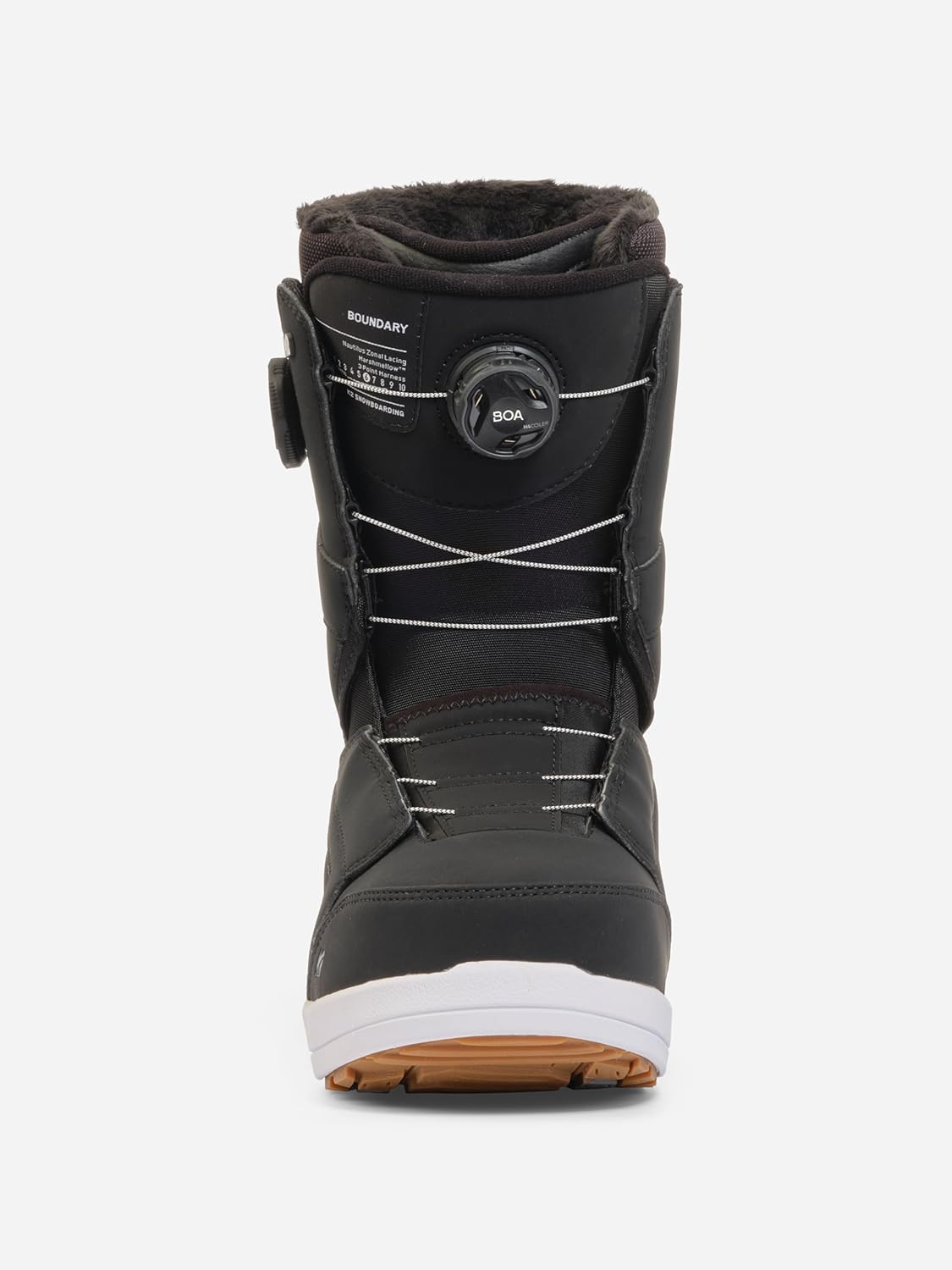
The lacing is the interesting part. One BOA dial handles the main boot, and a second side BOA works the toe-area lacing. That zoning lets you cinch the forefoot separately from the rest of the boot.
How It Differs From the Maysis
The two boots get compared constantly, so it is worth being clear. The Maysis has a plastic heel and ankle plate above the liner, controlled by its side BOA, that locks the heel down. This is the part that makes the Maysis feel more locked in. Owners say it can be noticeable when pressing your shins forward, and it either works for your foot or does not.
The Boundary skips that. Its side BOA controls the lacing around the toe instead. Owners say the overall flex is close, but the Boundary feels simpler and a little more general-purpose. If you do not know whether a heel-lock system will agree with your ankle, the Boundary is a safer bet.
On the Snow
For a rider moving away from the park and toward freeride lines, the Boundary hits a useful spot. It is not a soft noodle. It gives you enough resistance to power through a turn without punishing small mistakes, which matters when you are still refining technique.
On groomers it feels stable. It does not chatter or collapse under a carved turn. Response is predictable: shift your weight to the toe edge and the boot moves with you. It has none of the lag of entry-level boots, so you can gain confidence at speed.
Owners describe it as great control with a little play. That play is useful in variable snow and choppy terrain, where a stiffer boot can feel harsh.
Support around the ankle is solid, which is where freeride boots often win or lose. It handles the occasional side hit, but it does best locked into a high-speed carve.
Where It Falls Short
The flex ceiling is the main limit. Expert riders who spend days on steep, firm faces may want something with more rigidity. It is also not designed for dedicated park riding, where a looser, softer boot is more fun on rails.
Durability is worth watching. Owners of the Maysis report mixed experiences, from five seasons to broken lace guides and soles after 25 days. The Boundary uses similar BOA hardware, so the same care applies: avoid resting a sharp board edge on exposed lacing on the lift, and check the dials and rope.
One more note: a Maysis owner says that boot's BOA wire loosens every few runs and needs retightening, while others have no issue. If it bothers you, cinch it again at the top of the lift.
Boundary owners are mostly happy. One rider who has used it for two seasons says it fits great and has no complaints. An owner of a 2020 Boundary says the boot now feels roomy, which is a sign that it has packed out after several seasons. Riders shopping in this range also compare it with the K2 Hanford, which has a dual-zone closure, and the K2 Thraxis, which is stiffer.
The Debate: Do You Need the Stiffest Boot?
Many riders assume freeriding demands the stiffest boot on the rack. The thread consensus is that extreme stiffness can hinder technique, especially for intermediates. A boot that is too stiff makes it harder to initiate turns properly. The Boundary gives you the backbone for freeriding with a little forgiveness, which is a good fit for riders who ride a modest number of days.
Pro tip: Many steep discounts are final sale. If you cannot try a boot on, the Boundary is the lower-risk choice compared with the Maysis, since its fit depends less on a heel plate matching your ankle.
Who Should Buy It
Buy it if you are an intermediate rider pushing toward freeride, you charge groomers, and you want a BOA boot with real support and reasonable comfort. It also suits riders who found the Maysis uncomfortable at the ankle.
Look elsewhere if you are an expert looking for maximum stiffness, a park rider, or someone who wants a lace-only boot.
Alternatives
- K2 Maysis: the heel-plate version, with more lockdown and more fit risk.
- Burton Ion BOA: stiffer, with a famous fit and a higher price.
- K2 Thraxis: K2's stiffer boot, with an inner ankle strap for heel hold. Read our full K2 Thraxis review.
- Burton Moto BOA: a softer, lighter boot for riders still learning.
Verdict
The K2 Boundary is a solid, honest all-mountain boot. It does not have the cult following of the Maysis, but it supports you where it counts: on the snow, under pressure, and at speed. For intermediate and advancing riders who want to skip the park and focus on the turn, it is a smart choice.