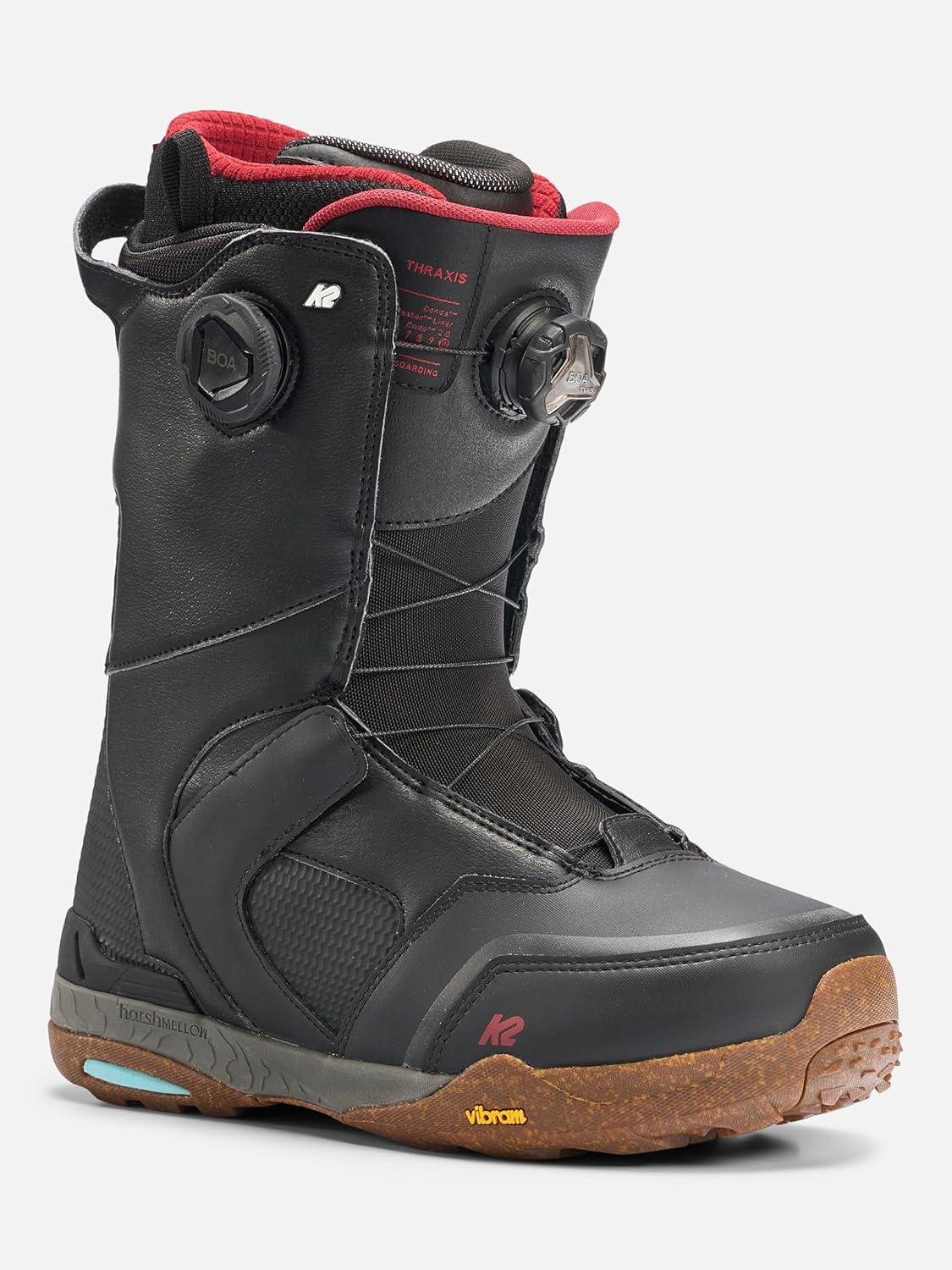
Stiff boots have a reputation. They carve like a dream, and they also leave a lot of riders with a bruised instep, a sore Achilles and toes that scream by lunch. The K2 Thraxis is K2's answer: a firm, high-performance boot with a triple BOA setup and the Conda heel harness, built to give you power without punishing your foot. The question is whether it can be that firm and still be livable.
What It Is
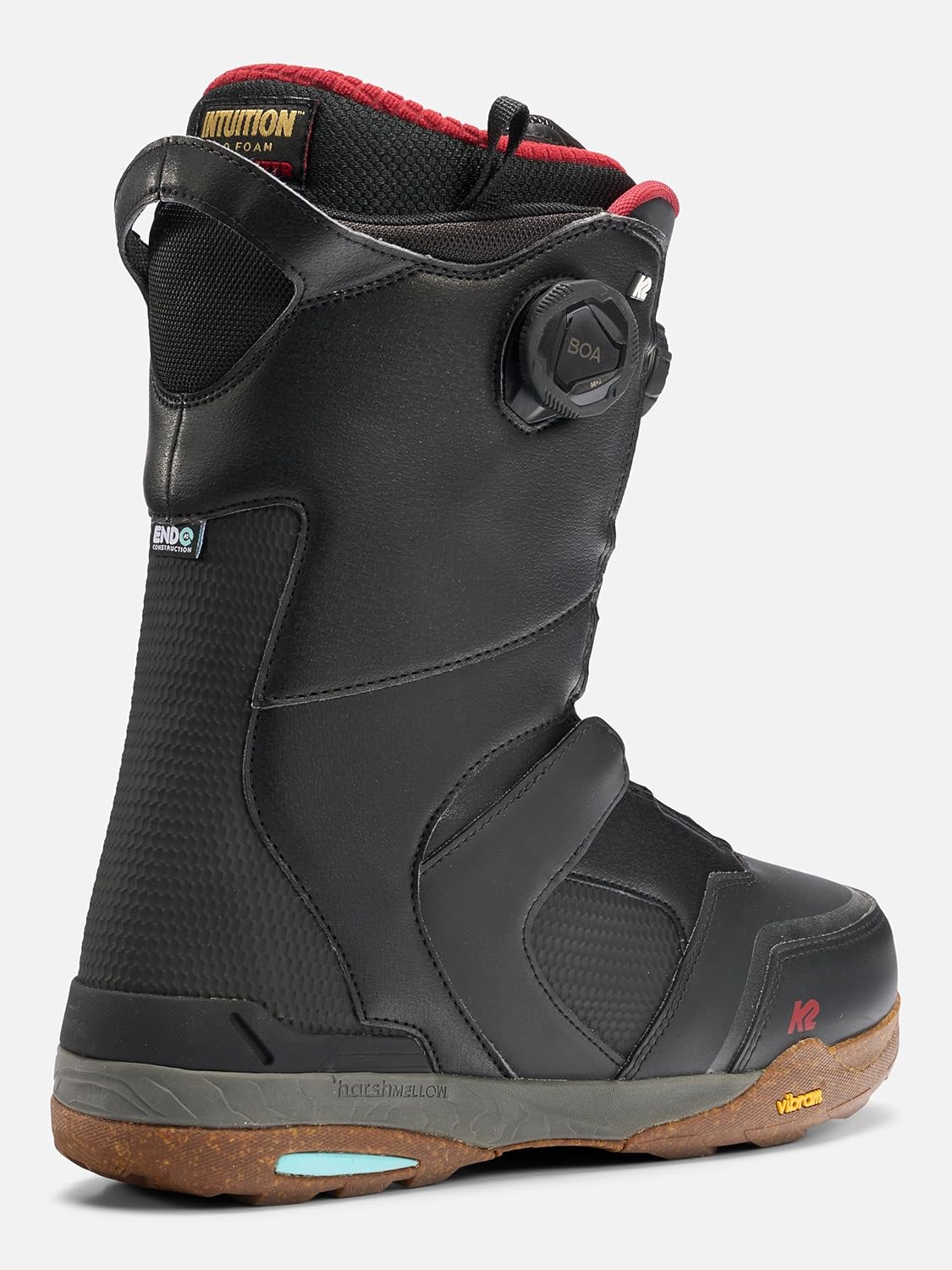
The Thraxis is K2's top performance boot for resort riding. The closure is a triple BOA system: an H4 BOA Focus Fit system with TX3 rope lacing, split across three dials that tune the outer boot, the internal harness and the upper fit. The Conda system is the heart of it. Instead of relying on the outer shell to push the foot into the heel pocket, a harness inside the liner pulls the liner itself back and down, controlled by its own dial.
The rest of the build supports that stiff, responsive character. The upper cuff is rubber reinforced, the shell uses K2's Endo 2.0 construction around the heel, and the liner is Intuition Pro Foam 3D. The lining is meant to be breathable and heat reflective. K2 targets it at intermediate to advanced riders and at all-mountain freestyle and freeride use. Treat it as a boot for people who ride groomers, steeps and variable resort terrain at speed.
Solving the Fit Puzzle
The classic problem with a stiff double BOA boot is the trade-off. Crank the top for support and it crushes the bridge of your foot. Tighten the bottom to stop heel lift and your toes go numb. Two zones end up fighting each other.
The Thraxis splits the job into three. The dials let you set the lower boot, the heel and liner, and the upper separately. Owners who came from standard double BOA boots say this is the big difference: you can lock the heel without strangling the instep, and you can keep the upper supportive without losing blood flow to the forefoot.
The result is a boot that feels surprisingly comfortable for how stiff it is. It does not have the rigid, plastic feel of some stiff boots. Riders trying it on in a shop often say it feels premium the second they slide a foot in.
The Conda Advantage
If there is one trick in K2's lineup, it is Conda. Pulling the liner back into the heel pocket means your heel stays put when you lean into a toeside carve, and that is when heel lift hurts the most. It also helps the front of the foot. When your heel is held down, your foot does not slide forward into the toe box on every bump, which is a common cause of big toe pain by the end of the day.
You also get a benefit you do not appreciate until you have gone without it: less pressure on the Achilles and the top of the foot. Because you do not have to crank the shell to stop heel lift, the pressure points that come from over-tightening mostly disappear.
Triple BOA Versus Laces
There is always a debate about whether you should skip BOA entirely and go back to laces. Laces are cheap to replace, easy to fix in a parking lot and offer a distinct kind of tweakable flex. That is why backcountry riders and splitboarders stick to them. K2's own Aspect, which shares the Conda heel lock, is built for that job and is heavier and more rugged.
For resort riding, owners overwhelmingly say the Thraxis is the better choice. The convenience of adjusting on the fly is hard to beat. If pressure builds on the bridge of your foot on the lift, a quick pop of a dial releases it. Back on snow, a few clicks and you are at full stiffness. Many owners say they have had no problems with the BOA hardware and are glad to be done with laces.
The downside is mechanical parts. Three dials means more things that can wear or break than a pair of laces. BOA covers the hardware with a warranty and the cables are replaceable, but if you are miles from a lodge, a broken cable is a worse day than a snapped lace.
On the Mountain
Because the Thraxis is stiff, it is built for response. If you like to ride fast, carve hard and have the board react the instant you think about a turn, this is the tool. There is no lag like you get in softer boots. The liner and the Conda interaction with the shell keep the boot from feeling like a concrete cast, so the stiffness is bearable over a full day.
It is less happy in the park or on a mellow, playful day. A boot this firm does not tweak sideways, and it can feel like overkill for butters and jibs.
Where It Excels
- Heel hold. Conda is among the best heel locks in the business.
- Comfort for the stiffness. It feels better than most boots this firm.
- Tunability. Three dials, three zones, lots of control.
- Response. Direct power transfer for carving.
Where It Falls Short
- Price. It sits at the premium end of the market.
- Complexity. More dials and cables than a simple boot.
- Park and play. Too stiff for a soft, freestyle feel.
- Not for the backcountry. It is a resort boot and not a hiking one.
Who Should Buy It
The Thraxis suits resort riders who want a stiff boot and have struggled with heel lift, instep pain or big toe pressure in other stiff boots. It is a strong match for carvers and fast all-mountain riders. Look elsewhere if you ride mostly park, if you want a softer boot that eases you into a day, or if you do any real hiking or splitboarding. For that, K2's Aspect or a lace-up boot is the more sensible tool.
Alternatives
The K2 Maysis offers a similar stiff feel with a simpler single-dial system. The K2 Aspect is the laced, backcountry-ready cousin with the same Conda heel lock. Double BOA boots from other brands, such as the ThirtyTwo TM-2, are common starting points, but many riders find them harder to tune for pressure points.
Verdict
The K2 Thraxis solves the main problem of stiff boots: the pain. It is firm, responsive and surprisingly comfortable, with a heel lock that works. It costs more and has more moving parts, but for a resort rider who wants maximum response with minimum agony, it is one of the best answers around. It's a premium product for a rider wants comfort and good mileage out of their gear but wont be abusing it regularly.