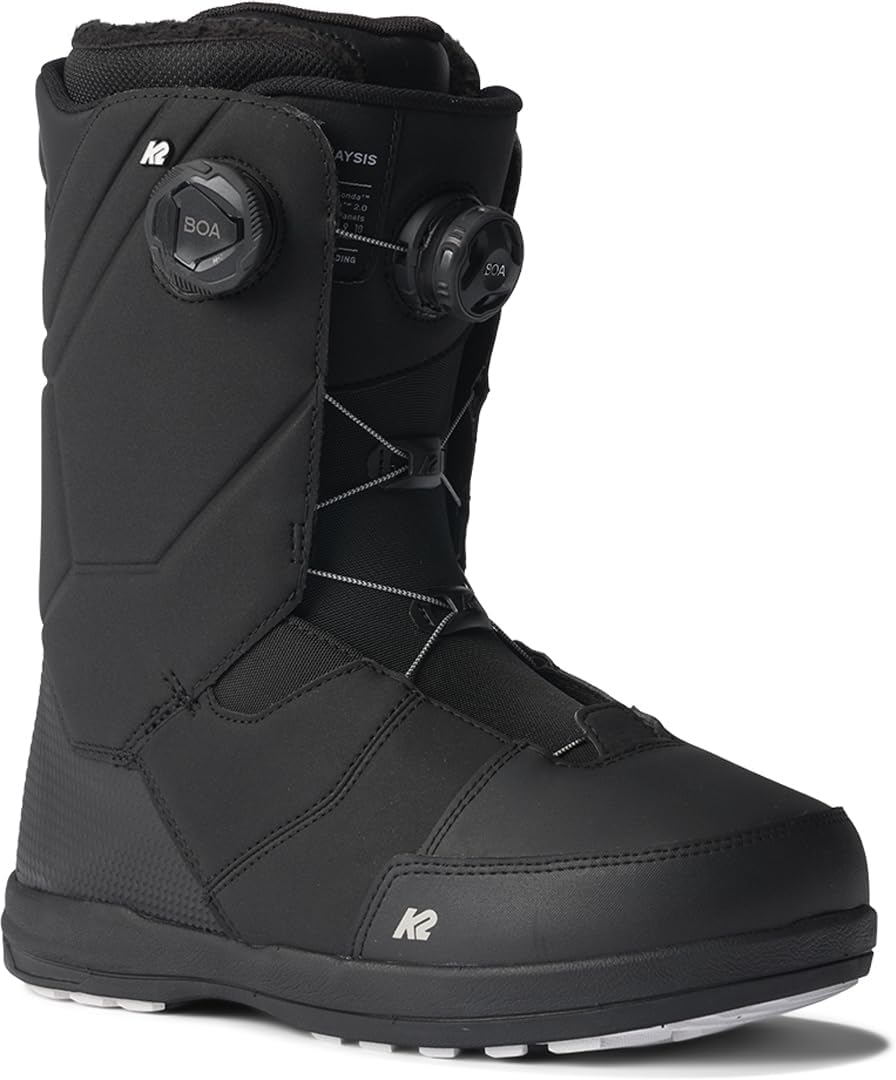
The K2 Maysis sits at the performance end of K2's boot range. It is built for riders who want a firm boot that transfers every shin movement straight to the board. For years the benchmark for that kind of boot has been Burton's Ion, and a lot of riders look at the Maysis as the alternative to try when they want a similar feel from a different brand. So the question is simple: does it deliver that stiff, responsive ride, and does it hold up while it does?
What It Is
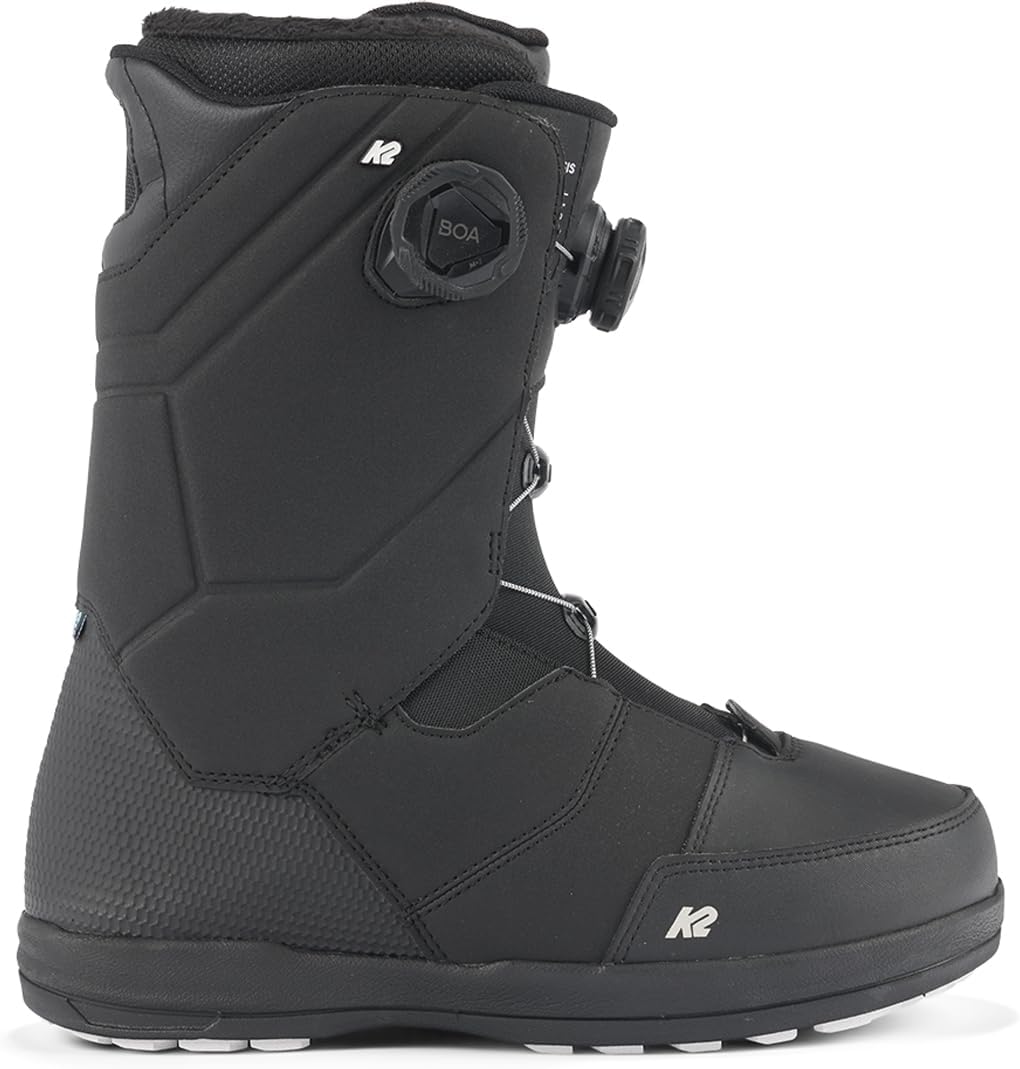
The Maysis is a single-dial BOA boot. The current version uses an H4 Coiler dial on a TX3 rope, plus K2's Conda system inside. Conda is a lace harness built into the liner that pulls the heel back and down into the pocket, so you are not relying only on shell pressure. That matters, because the usual trick for stopping heel lift is to over-tighten everything, and then your instep and toes pay for it.
K2 rates the flex at 7 out of 10 and aims the boot at all-mountain and freeride riding. The liner is Intuition Control Foam 3D with J-bars and cored ankle pockets, and the sole is a premium rubber outsole with a cushioning midsole layer. The shell has an articulating cuff and an Endo heel construction to keep the heel seated. None of this is flashy. It reads like a boot designed by people who ride in cold, hard conditions.
First Steps and Flex
The first thing you notice is structure. The Maysis feels solid and a little industrial when you first step in. It is undeniably stiff, and it does not have the soft, wrapped feel that some boots offer from the first lap. Expect to spend a few days getting used to it.
Once you are riding, the stiffness pays off. Energy goes from your shins to the toe edge with almost no lag, which is exactly what you want when you are carving hard, charging through chunder or holding an edge on a frozen face. The flex is consistent from the top of the stroke to the bottom, so the boot does not collapse halfway through a turn.
There is not much lateral give. If you like to tweak your boot sideways for butters and jibs, a softer boot suits that better. The Maysis wants to go straight and fast.
Dialing It In: BOA and Conda
The single BOA dial is simple to use and quick to adjust with gloves on. With one dial, you get one tension for the whole boot. If you like different pressure on the forefoot and the cuff, you will need to find a compromise.
The Conda harness is where this boot earns its keep. It pulls the liner back into the heel pocket, which means you do not have to over-crank the outer shell to stop heel lift. Riders who fight heel lift in other stiff boots tend to like this setup. It also helps your toes: when the heel stays down, your foot is less likely to slide forward into the toe box on bumps.
The system is mechanical in feel. Compared to the organic, molded wrap of some competitors' liners, the heel hold on the Maysis feels engineered rather than hugged. That is a matter of taste, but it works.
Durability and Longevity
Stiff boots have a reputation for breaking down: a firm shell in November turns into a mushy one by February. Owners generally describe the Maysis as a tough boot, and the exterior materials feel thick and robust. The trade-off is weight and bulk. It feels more substantial than a minimalist boot, and it does not have the sleek profile some riders prefer.
The rubber outsole grips well on icy walkways and in parking lots, and the sole is not the first thing to give out. The BOA hardware is the standard TX3 rope and H4 dial, which are replaceable. As with any boot, the liner is where you will see packing out first, so expect the fit to loosen a touch over a long season.
Fit Reports
Fit is where the debate lives. Owners disagree on sizing: some say the Maysis runs long and size down by a half size, while others found their usual size crushed their toes and went with their true size or a wide. That split is common with stiff boots and tells you one thing: try before you buy.
The forefoot is a bit roomier than the narrowest performance boots, which suits riders with average to wide feet and does not suit riders with narrow feet. A few owners swap the insole for one with more arch support to pull the toes back and tidy up the fit, and they report that it makes a real difference. The Intuition liner is heat moldable, so a shop mold can fix pressure points.
Pro tip: If you are between sizes, go with the one that feels snug but not painful in the shop. The liner packs out a little, and a pair that is too big will undermine the Conda system's heel hold.
Where It Excels
- Response. Immediate power transfer for carving and high-speed riding.
- Heel hold. Conda keeps the heel down without a vise grip on the shell.
- Toughness. The build feels thick and made to last.
- Feel. You feel the terrain through the sole, which a lot of technical riders prefer to a very dampened sole.
Where It Falls Short
- Break-in. It is firm out of the box and needs days to settle.
- Comfort. It is not plush. If you want a slipper, look elsewhere.
- Weight and bulk. Heavier and chunkier than minimal designs.
- Single zone. One dial for the whole shell means less tuning.
- Upper fit. Several owners say the upper liner and BOA do not hold the shin well. One rider had almost two fingers of space between the boot and their shin after a couple of runs, even with everything cranked down. The liner closes with Velcro, which can loosen during the day. Some owners fixed it with a booster strap, and one says it was the best $40 they ever spent. Others sold the boots.
Fit opinions split the other way too. One rider tried every wide boot at their local shop and found the Maysis the most comfortable. Others found it too tight over the instep or felt heel pain in the store. On sizing, some owners went half a size down from their street shoe and others went true to size, so try them on.
Pro tip: Do not rest your board edge on your boot on the lift. One owner's BOA lace split open on the fifth day, and riders in the thread pointed to edge cuts on the tongue. Most shops will replace a BOA lace for free, and BOA will send a free replacement kit.
Who Should Buy It
The Maysis suits intermediate to advanced riders who want a stiff all-mountain or freeride boot, especially those who carve, ride fast and ride a lot. It also suits riders who have had trouble with heel lift in other boots. Look elsewhere if you are a park rider who wants a soft, playful boot, if you have narrow feet, or if you want a boot that feels perfect on day one.
Alternatives
The Burton Ion is the boot most people compare it to, with a more refined fit and out-of-the-box comfort at a higher cost. The K2 Thraxis steps up with a triple-dial system and stiffer feel. Read our full K2 Thraxis review.
The Ride Lasso Pro is the other common comparison, and some riders find it more comfortable and tighter around the upper. Read our full Ride Lasso Pro review. For something softer and more playful, look at K2's lower-flex models.
Verdict
The K2 Maysis is a stiff, sturdy boot that rewards riders who value response over comfort. It is not the most refined fit on the market, and it asks for patience in the first few days. But if you want a boot that holds a line, locks the heel and keeps its structure, it earns a place on the short list.