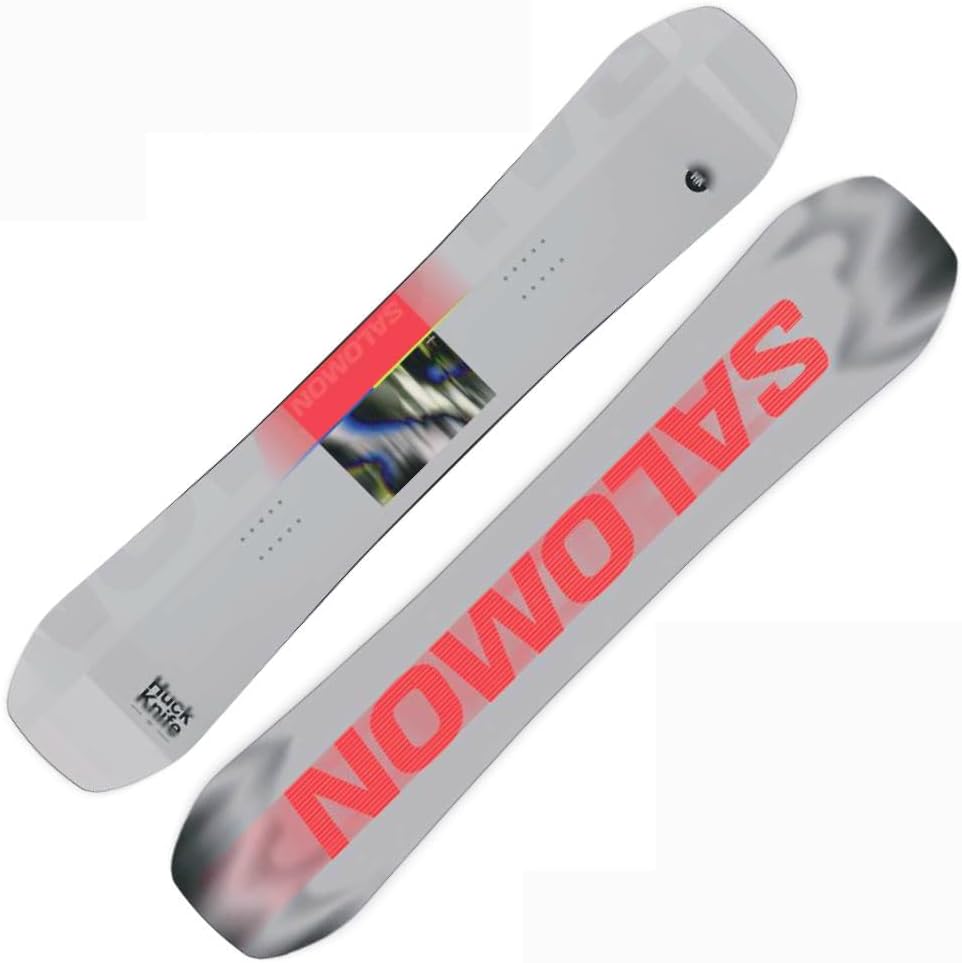
The original Jones Frontier earned a following by being the board you grab when you don't know what the day will bring. The Frontier 2.0 keeps that job. Jones pitches it as a daily driver for riders who go out whatever the forecast, with a bias toward deep days.
The question is how soft is too soft. The 2.0 is friendlier than most Jones boards, and that is both its charm and its limit.
What It Is: A Softer Jones
The Frontier 2.0 is a directional board with a directional flex. That means the nose and tail do different jobs: a softer front for turn entry and float, a firmer back for drive out of the turn. The profile mixes camber and rocker. You get camber for grip and pop, with rocker in the nose to keep it up when the snow gets deep.
Jones lifts the edges at the tip and tail into a spoon shape. It sounds like a small detail, but it makes the board less likely to catch and quicker to roll from edge to edge. The edges are serrated near the contact points for extra bite on firm snow, and the sidecut is progressive, so turns tighten the further you lean in. Jones rates the flex at 4 out of 10. That is soft for a brand known for stiff freeride decks.
On the Snow: Loose and Friendly
The Frontier 2.0 wants to turn. Owners describe it as fast edge to edge and easy to throw around, especially when sized down. You don't have to wrestle it into a carve. Tip it over and it goes. In tight trees that is exactly what you want: the board pivots where you look, and it doesn't punish a late decision.
On groomers it is fun at cruising speed. The serrated edges help when the morning is firm, and the progressive sidecut lets you mix short turns and long arcs without much thought. Owners who bought it after a demo day describe it as super fun and say they ordered their own before the lifts closed.
Where It Excels: Storm Days and Trees
Fresh snow is where the Frontier 2.0 makes its case. The rocker nose and setback feel keep you on top without burning your back leg, and the soft flex lets the board bend around bumps and buried stumps. Owners in the Pacific Northwest use it as a daily driver for trees, groomers and powder, and they say it handles all three well.
It also suits riders who want to ease off. If you have been on a stiff camber board and your riding has shifted toward cruising and exploring, the 2.0 gives you back some energy. It is a board for long days, not a board you fight by lunch.
Where It Falls Short: Speed and Hard Snow
The soft flex has a cost. Push the Frontier 2.0 at speed through chop or on hardpack and it starts to feel loose. Some owners call it a noodle. One owner sold it after a season because the softer flex let it down in uneven conditions and on hard snow. If you ride the Ice Coast and like to point it, take that seriously.
It is also not a park board. It will handle a side hit, but the directional shape and soft tail are not built for switch landings or a jump line. Look at a twin if the park is part of your week.
The "Is It a Noodle?" Debate
Owners split on this board, and the split comes down to what you want. Riders who cruise, ride trees and chase storms love it. Riders who charge hard call it too soft for a daily driver and see it as a quiver board for mellow days.
There is also the question of the original. Owners of the first Frontier praised its edge hold, and many wonder how the 2.0 compares. So far, few riders have ridden both back to back. If you loved the old one for its stiffness, demo the 2.0 first. Pro tip: If quick turns are your goal, don't size up from your current board. The soft flex and rocker already make it feel nimble, and extra length takes some of that away.
Who Should Buy It
Buy the Frontier 2.0 if you are an intermediate or advanced rider who spends the day on groomers and in the trees and lives for fresh snow. It suits riders who want quick turns, a forgiving flex and one board for most of the season. It is also a smart pick if you are stepping down from a stiff board and want riding to feel easy again.
Look elsewhere if you like to charge at top speed, ride mostly hardpack, or spend real time in the park. A stiffer all-mountain board or a twin will serve you better.
Alternatives
The Jones Mountain Twin is the stiffer, twin-shaped sibling. It holds a better line at speed and rides switch more naturally. Read our full Jones Mountain Twin review.
For an even friendlier Jones, the Jones Rally Cat is the softer step. Read our full Jones Rally Cat review.
If you want more snap and a more precise carve, the Burton Custom Camber is the classic all-mountain benchmark. Read our full Burton Custom Camber review.
Verdict
The Jones Frontier 2.0 is an honest, fun all-mountain board. It turns easily, floats on deep days and makes the trees feel friendly. It is too soft for riders who want to charge, and it is not a park tool. For everyone else, it is the board that makes you want one more lap.