Some days the surf is soup. The swell is weak, the wind is wrong, and the shortboard feels like a waste of a drive. The Catch Surf Beater Original 54 is built for exactly those days. At 54 inches it is closer to a skate deck than a surfboard, and the question this review answers is whether it is a real wave-riding tool or a pool toy with fins.
What It Is
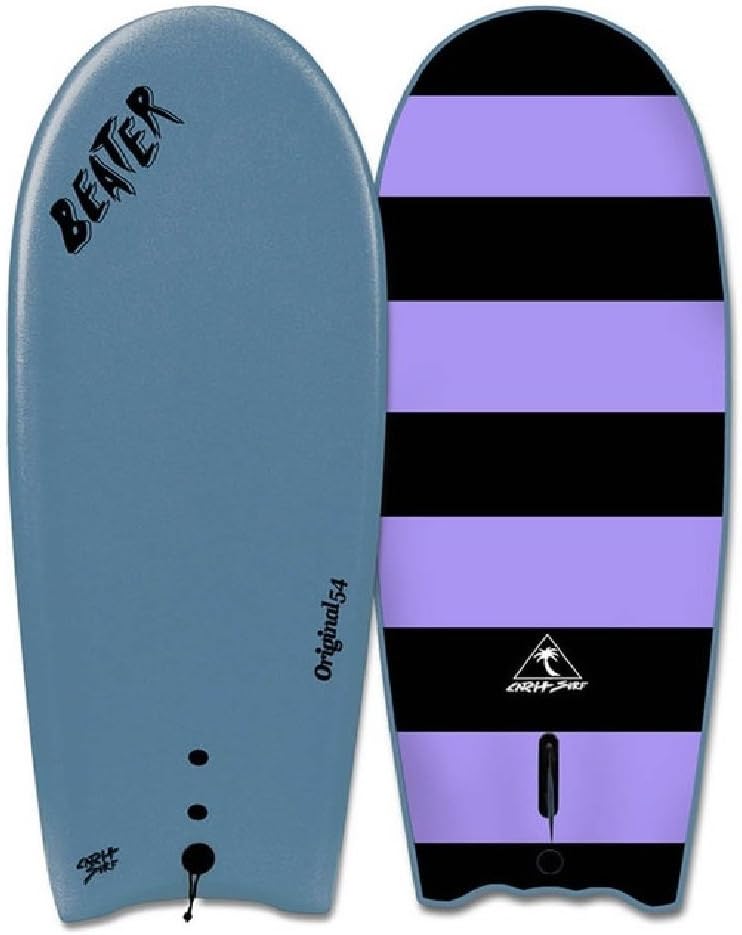
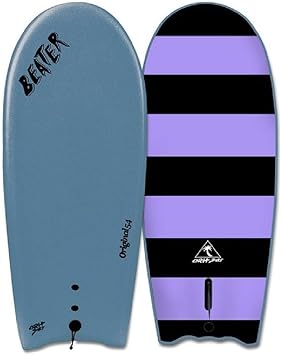
The Beater is Catch Surf's tough, short, slick-bottomed board. The 54 measures 4'6" long, 20 inches wide and 2.5 inches thick, with about 30 liters of volume. The core is a dual composite build with two maple stringers and a high-density bottom, topped with a PE foam deck and an HDPE slick skin underneath. Catch Surf pitches it as the stiffest, most durable Beater yet.
It comes in several fin setups. The version most owners talk about is the twin fin, which adds bite and direction over the finless and single-fin versions. Check the listing for the fin setup you are buying, since the same board is sold with different fins.
The tail is a twin-channel crescent with tapered rails, which are the shape details that make the board skate across flat water.
How It Surfs
Owners agree on one point: there is a steep learning curve. The board is very short with almost no rocker, so it is hard to angle into a wave and easy to nose-dive or spin out until you find the sweet spot. The twin fin setup is loose and skatey. It is fast when you pump it through flat sections, and it turns tightly, but it needs finesse when the face gets steep.
Once you get the hang of it, owners say it is genuinely fun. It opens up breaks you would not think of surfing on a glassed board: shorebreak, closeouts, soft crumbly peaks. You can charge a closing-out wave with almost no consequence. The one real hazard is the same as on any board: getting hit by a fin or the rail. It hurts just as much.
This is not a performance board. If the wave has real punch or a steep face, a board this short gets hard to control, and the twin fin setup is loose enough to spin out.
The Durability Question
You will see people ask whether the Beater survives being left in a car. Owners who keep theirs in the car all the time report no problems, and the board's whole reputation is that it is close to invincible. Several surfers use it in the shorebreak precisely because it will not break.
That said, foam-skinned boards in general do not love extreme heat. A sealed car in direct summer sun is a risk for any foam board, and I would not leave one baking for hours. A few minutes in the shade is a different story. The practical point: it is a board you can throw in the back and not worry about, but there is no reason to tempt fate.
The Debate
Opinions split on whether the Beater is the right way to go. Fans say it is a great addition to any quiver, tough, easy to carry, and a way to have fun in surf that would otherwise keep you onshore. Others say a Stump or a similar Catch Surf model is easier to ride and feels more like a surfboard. The Beater's short length and flat rocker are the reason.
That sums it up. The Beater is a specialty tool. If you want something you can ride on average days, a longer, more forgiving board will serve you better.
Who Should Buy It
Buy it if you want a second, beat-up board for shorebreak and closeouts, if you have a small car or travel a lot, and if you like the idea of a board you do not need to baby. It suits confident swimmers and intermediate surfers who enjoy figuring out a quirky shape.
Look elsewhere if you are a beginner who wants to learn to stand up and trim, or if you need one board for everything. A longer soft-top or a Catch Surf Stump will be easier.
Pro tip: Do not buy it expecting your first waves to go smoothly. Plan on a few sessions to learn where to sit on the board and how to angle in.
Care and Setup
Rinse the board after sessions, especially if you use it in sandy shorebreak, and let it dry out of direct sun. Check the fins and plugs now and then, since sand gets into everything. Because the Beater is so short, wax is not the issue it is on a fiberglass board: the foam deck has grip built in, and most owners ride it without wax.
If you are new to short boards, start in knee to waist-high whitewater and get used to where your weight sits. Move your feet closer together than you would on a normal board and stay low. A few sessions in small surf will teach you more than a dozen frustrating ones in waves that are too big.
Verdict
The Beater 54 does one job well: it makes bad surf fun, and it is tough as nails. It is also short, twitchy and not forgiving. A great beater for the right surfer, a frustrating first board for the wrong one.